Andrew Krasnow: skin in the climate game


dn28073-1_800

Interviewing the artist Andrew Krasnow for New Scientist

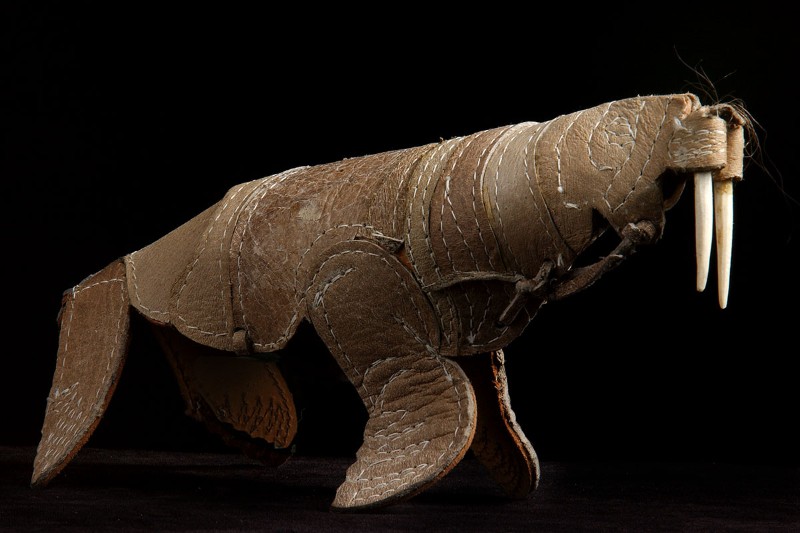
It’s part walrus, part human. This is the first picture released of a controversial sculpture made from human skin combined with leather, complete with tusks made from animal bone from the 1960s. “Whiskers” of human hair are also attached near its nose.

Created by US artist Andrew Krasnow, Walrus Souvenir, which is based on a pattern from a leather craft hobby kit, incorporates some of the artist’s own skin. “The rest was obtained from skin donors in the 1980s who gave their living consent,” he says.

Completed in 2000, the walrus was first exhibited in the US in response to then president George W. Bush’s recommendation to start exploratory oil drilling in the Arctic National Wildlife Refuge. The recently released photo allows the piece to be seen by the rest of the world for the first time.

Although Krasnow was originally targeting the Bush administration’s obsession with uncertainties around climate change, he now hopes Walrus Souvenir will serve to highlight the global scale of the problem. His sculpture alludes to the interconnection between human and other animal life, raising the possibility that human handiwork may one day lead to the extinction not only of the walrus, but of humanity itself, he says.

Over the years, Krasnow’s bleak and uncompromising view of US political history has landed him in just as much trouble as the human skin used in his artwork. The irony of having exhibitions rejected in the 1980s, when prior to the NAGPRA Act the US government held about 15,000 indigenous human remains without the communities’ permission, isn’t lost on him. “In terms of purposeful intent, the only agenda I have in mind for this piece is that it does some good,” he says.

The GV Art gallery in London is hoping to exhibit the walrus later this year, once they obtain permission from the UK’s Human Tissue Authority.

How we see now


mg22630260.800-1_800

For New Scientist, a review of Nicholas Mirzoeff’s book How to See the World

NICHOLAS MIRZOEFF, a media, culture and communication professor at New York University, wants to justify the study of visual culture by describing, accessibly, how strange our visual world has become.

This has been done before. In 1972 artist and writer John Berger made Ways of Seeing, a UK TV series and a book. This was also the year that astronaut Harrison Schmitt took the Blue Marble picture of Earth from Apollo 17, arguably the most reproduced photograph ever.

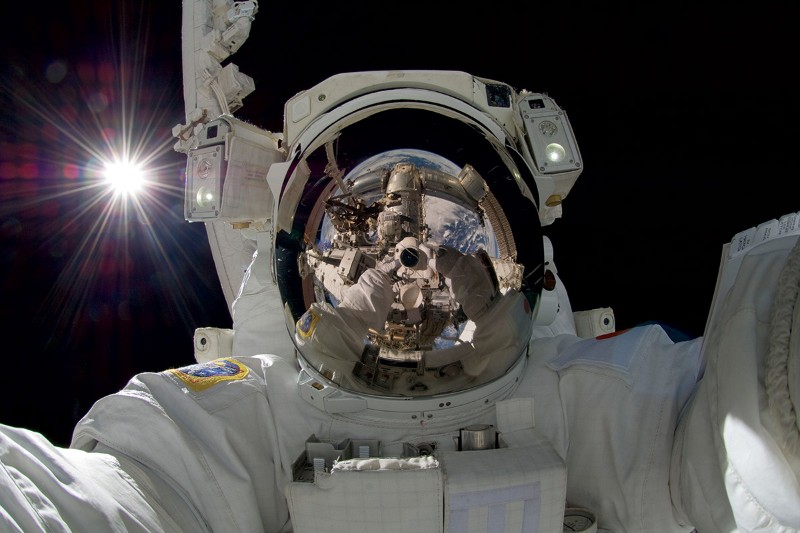
By contrast, in How to See the World, Mirzoeff’s mascot shot is the selfie taken by astronaut Akihiko Hoshide during his 2012 spacewalk. This time, Earth is reflected in Hoshide’s visor: the planet is physically different and changing fast. Transformations that would have been invisible to humans because they took place so slowly now occur in a single life. “We have to learn to see the Anthropocene,” writes Mirzoeff.

Images are ubiquitous, and we have learned to read them as frames in a giant, self-assembling graphic novel. Visual meaning is found in the connections we make between those images. We used to flock to the cinema for that sort of peculiar dream logic, but now we struggle to awaken. Mirzoeff cites artist Clement Valla writing that “we are already in the Matrix”.

Simple iconography is in retreat. During the 1962 Cuban missile crisis, Soviet missile trailers were visible in photos shown to the media. By 2003, the photos that US general Colin Powell showed of supposed weapons-making kit were lathered in yellow labelling, claiming to show what we could not in fact see.

Tracing the political, social and environmental implications of our visual culture, in words and black and white images, is a job of work. Mirzoeff succeeds: this is a dizzying and delightful book.

More than human


mg22630211.000-1_500

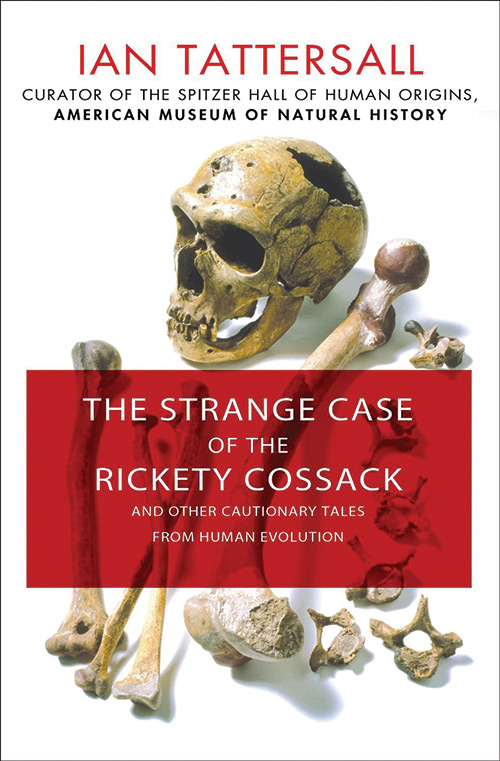
For New Scientist: a review of Ian Tattersall’s The Strange Case of the Rickety Cossack, and other cautionary tales from human evolution

THE odd leg bones and prominent brow ridges of a fossil hominid found in Belgium in 1830 clearly belong to an ancient relative of Homo sapiens. But palaeontologist August Mayer wasn’t having that: what he saw were the remains of a man who had spent his life on horseback despite a severe case of rickets, furrowing his brow in agony as a consequence, who hid himself away to die under 2 metres of fossil-laden sediment.

The “Cossack” in Ian Tattersall’s new book, The Strange Case of the Rickety Cossack, exemplifies the risk of relying too much on the opinion of authorities and not enough on systematic analysis. Before they were bureaucratised and (where possible) automated, several sciences fell down that particular well.

Palaeoanthropology made repeated descents, creating a lot of entertaining clatter in the process. For example, Richard Leakey’s televised live spat with Donald Johanson over human origins in 1981 would be unimaginable today. I think Tattersall, emeritus curator at the American Museum of Natural History, secretly misses this heroic age of simmering feuds and monstrous egos.

The human fossil record ends with us. There are many kinds of lemur but, as he writes, only one kind of human, “intolerant of competition and uniquely able to eliminate it”. As a result, there is an immense temptation to see humans as the acme of an epic evolutionary project, and to downplay the diversity our genus once displayed.

Matters of theory rarely disturbed the 20th-century palaeontologists; they assigned species names to practically every fossil they found until biologist Ernst Mayr, wielding insights from genetics, stunned them into embarrassed silence. Today, however, our severely pruned evolutionary tree grows bushier with every molecular, genetic and epigenetic discovery.

Some claim the group of five quite distinct fossil individuals discovered in 1991 in Dmanisi, east of the Black Sea, belong to one species. Use your eyes, says Tattersall; around 2 million years ago, four different kinds of hominid shared that region.

Tattersall explains how epigenetic effects on key genes cascade to produce radical morphological changes in an eye blink, and why our unusual thinking style, far from being the perfected product of long-term selective pressures, was bootstrapped out of existing abilities barely 100,000 years ago.

He performs a difficult balancing act with aplomb, telling the story of human evolution through an accurate and unsparing narrative of what scientists actually thought and did. His humility and generosity are exemplary.

VR: the state of the art


mg22730320.500-1_800

For New Scientist

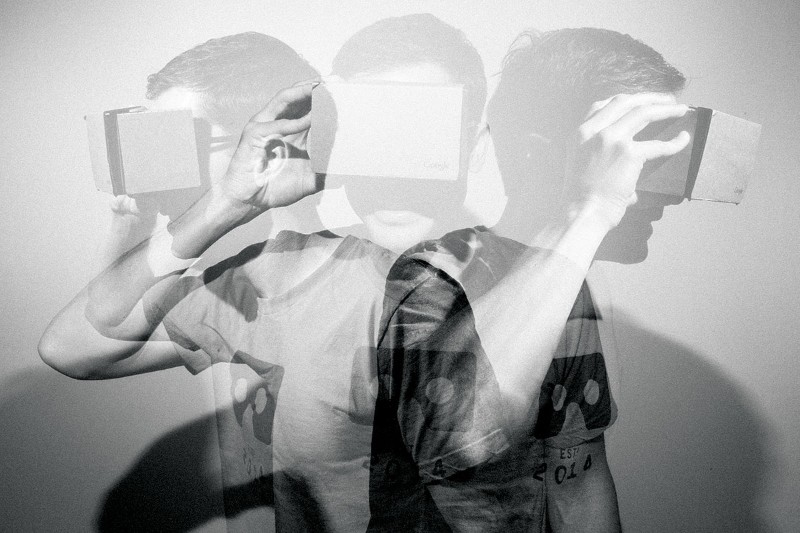
THEY will tell you, the artists and engineers who work with this gear, that virtual realities are digital environmental simulations, accessed through wearable interfaces, and made realistic – or realistic enough – to steal us away from the real world.

I can attest to that. After several days sampling some of the latest virtual environments available in the UK, I found that reality righted itself rather slowly.

Along the way, however, I came across a question that seemed to get to the heart of things. It was posed by Peter Saville, prime mover of Manchester’s uber-famous Factory Records, and physicist Brian Cox. They explained to an audience during Manchester’s International Festival how they planned to fit the story of the universe on to sound stages better known for once having housed legendary soap Coronation Street.

Would The Age of Starlight, their planned immersive visualisation of the cosmos, give audiences an enriched conception of reality, or would people walk home feeling like aliens, just arrived from another planet?

Cox enthused about the project’s educational potential. Instead of reading about woolly mammoths, he said, we will be able to “experience” them. Instead of reading about a mammoth, trying to imagine it, and testing that imagined thing against what you already know of the world, you will be expected to accept the sensory experience offered by whoever controls the kit.”We will be able to inject people with complex thoughts in a way that’s easier for them to understand!” Cox exclaimed. So, of course, will everyone else.

Institutions of learning, then, had best associate their virtual reality experiments with the most trustworthy figure they can find, such as David Attenborough. His First Life is the London Natural History Museum’s joyride through perilous Cambrian shallows, built on the most recent research.

“When the film starts, try to keep your arms to yourselves,” begged the young chap handing out headsets at the press launch, for all the world as though this were 1895 and we were all about to run screaming from Louis Lumière’s Arrival of a Train. The animator, given free rein, renders tiny trilobites on human scale. This is a good decision – we want to see these things, after all. But such messing around with scale inevitably means that when something truly monstrous appears, we are not as awed as we perhaps ought to be.

VR sets awkward challenges like this. From a narrative perspective, it is a big, exciting step away from film. Camera techniques like zooming and tracking ape the way the eye works; with VR, it is up to us what we focus on and follow. Manipulations have a dreamlike effect. We do not zoom in; we shrink. We do not pan; we fly.

Meanwhile, virtual reality is still struggling to do things everyone assumes it can do already. Accurately reading a user’s movements, in particular, is a serious headache. This may explain the excitement about the two-person game Taphobos, which solves the problem by severely limiting the player’s movements. Taphobos, a play on the Greek words for “tomb” and “fear”, traps you in a real coffin. With oxygen running out, the entombed player, equipped with an Oculus Rift headset, must guide their partner to the burial site over a radio link, using clues dotted around the coffin.

“This combination,” say the makers, master’s students in computing at the University of Lincoln, UK, “allows you to experience what it would be like if you were buried alive with just a phone call to the outside world.” Really? Then why bother? By the time you have addressed virtual reality’s many limitations, you can end up with something a lot like, well, reality.

London’s theatre-makers know this. At first, immersive entertainments such as Faust (2006) and The Masque of the Red Death (2007), pioneered by the theatre company Punchdrunk, looked like mere novelties. Now they are captivating bigger audiences than ever.

Traditional theatregoers may grow weary of running confused across gargantuan factories and warehouses, trying to find where the action is, but for gamers such bafflement is a way of life, and to play scenarios out in the real world is refreshing.

Until 27 September, London-based Secret Cinema offers a similar sort of immersion: inviting you to come battle the evil Empire through several meticulously realised sets as a warm-up to a screening of The Empire Strikes Back. It’s all played at a gentle, playful pace: something between a theatrical experience and a club night.

Right or wrong, VR promises to outdo these entertainments. It’s supposed to be better, more engaging than even the most carefully tailored reality. That’s a very big claim indeed.

More likely, VR may be able to present the world in a way that would otherwise be inaccessible to our unaugmented senses. The first tentative steps in this direction were apparent at this year’s Develop games conference in Brighton, where the Wellcome Trust and Epic Games announced the winner of their first Big Data Challenge. Launched in March, the competition asked whether game designers could help scientists to better visualise incomprehensibly large data sets.

Among the front runners was Hammerhead, a team taking on the enormous task of designing a decent genomics browser. They have barely changed in a decade. Once they held barely a dozen data fields, now they need hundreds since studying the behaviour of different genes under different conditions is a multidimensional nightmare. Martin Hemberg of the Sanger Institute, who set the challenge, explained: “Genomics is very data-intensive. Trying to integrate all this and make sense is a huge challenge. We need better visualisation tools.”

Hammerhead’s proposal promises something close to SF writer William Gibson’s original conception of cyberspace: a truly navigable and manipulable environment made of pure information. Not surprisingly, it will take more than the challenge’s modest $20,000 to realise such a vision.

Instead, the prize was handed to two London studios, Lumacode and Masters of Pie, who collaborated on a tool that is already proving itself as it takes the 14,500 family health records in the Avon Longitudinal Study of Parents and Children, and spits them out in real time so researchers can follow their hunches. It even boasts privacy tools to facilitate the work of hundreds of researchers worldwide.

On current evidence, today’s VR is going to change everything by just a little bit. It will disconcert us in small ways. It will not give us everything we want. But reality doesn’t either, come to that. We can afford to be patient.