Andrew Robinson‘s study of genius, reviewed for History Today.


Professor John Guillebaud has his heart in the right place, but his speech to GPs on 8 October sounds a bit of a mess, frankly. He urges new British families to have no more than two children, in order to help save the planet. Fair enough: you don’t have to be a population extremist to find something horrifying in the prospect of nine billion monkeys setting fire to things by 2050. More problematic is the way Guillebaud makes a porridge of quite different and distinct issues – at least as reported by Rebecca Smith in the Telegraph. What on earth has Kenya’s “youth boom” (49 per cent of the country’s population is under 15) got to do with the UK’s wobbly teenage pregnancy rate? The fact is, the world’s human population is likely to collapse in our children’s lifetime: a classic case of population overshoot that within a hundred years will reduce human civilisation to a handful of nomadic tribes stumbling around a resource-depleted planet.
In the long term, the values we teach our children are likely to have more impact on the planet than our mere begetting of them. Educating, investing in and dealing fairly with women in poor countries will bring down world birthrates faster than depriving the developed world of children. And, in case that doesn’t work, I’m teaching my two to grow food…Sent from my iPhone
I’m writing some biographical sketches of Soviet scientists and academicians
Aleksandr Aleksandrovich Bogdanov, philosopher (1873–1928)
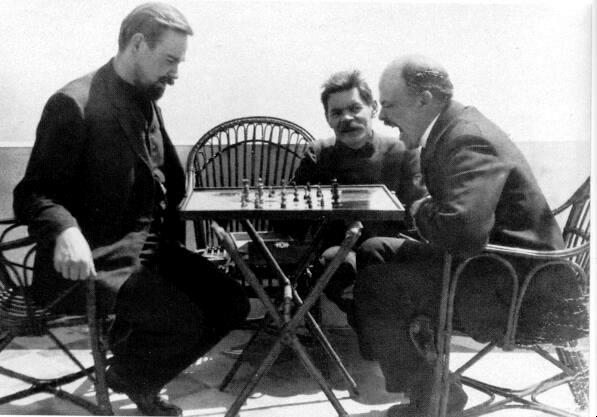
The moment he stepped off the boat, Lenin went on the offensive: “I know, Aleksey Maximovich, you’re always wanting to reconcile me with those Machists. I told you in my letter it’s pointless, so don’t even try.”
For months, the writer and political activist Aleksey Maximovich Peshkov – better known as Maxim Gorky – had been trying to bring the twin stars of the Bolshevik movement back together. Aleksandr Bogdanov was already staying with Gorky at his residence on the mediterranean island of Capri, once the favourite resort of Roman emperors. Valdimir Lenin had a standing invitation tovisit. The men had once been the closest of friends. Bogdanov had helped Lenin through his split with Trotsky, and the consequent crisis in the party, and between 1906 and 1907, while hiding out in Finland, Bogdanov, Lenin and his family had lived practically out of each others’ pockets.
But as the forces of reaction dismantled the gains of the 1905 uprising, Bogdanov and Lenin had grown further and further apart. Lenin still held out hope that the Bolshevik cause might be furthered within the Duma – the constitutional parliament established in 1905. Bogdanov thought this was a waste of time. His radical politics had been acquired during his first Tsarist exile, while delivering lectures to factory workers; he wanted the Bolsheviks to align themselves much more strongly with the old underground workers’ organisations.
The disagreement between Lenin and Bogdanov was a crucial one for the Party, and the men’s more or less equal standing only made things worse. Bogdanov – likeable, gentle, and a little bit full of himself – was also a loose cannon, preaching revolution for its own sake, as man’s only significant form of self-assertion. And he was extraordinarily good at getting hold of money. The Bolsheviks’ sometimes terroristic “expropriations” of funds from political opponents, and from the districts that harboured them, were Bogdanov’s idea. Bogdanov held the party’s purse-strings; since 1907, Lenin had found it harder and harder to fund his own projects.
Immediate and violent action might have drawn the two men together under the banner of a common cause – but there was no action to be had. With the decision to work within the Duma, 1905’s exciting world of barricades and mutinies had to be given up, and Bogdanov bitterly resented the fact.
The Bolsheviks seemed to be getting further and further away from any real action. In typical Chekhovian style, their factional arguments grew ever more rarefied. One contemporary memoirist wrote: “When Ilyich began to quarrel with Bogdanov on the issue of empiriomonism, we threw up our hands and decided Lenin had gone slightly out of his mind.”
Bogdanov, the son of a rural teacher, was an urbane thinker. He had read his Kant. He followed the theories of Ernst Mach and Richard Avenarius. He admired Marx, but he did not believe that Marx should have the last word on every topic. Above all, he understood that the sciences of mind lagged painfully far behind the physical sciences. So it was important to be as honest as possible about where one’s information about the world was coming from. The Austrian physicist Ernst Mach had pointed out that, real as the world may be, we can never apprehend it directly: our knowledge of it comes through our senses. Bogdanov’s “Machism” was an attempt to apply that honest admission consistently across all bodies of knowledge—
Bogdanov knew far more than was good for him: that afternoon in May 1908, as he vainly tried to explain his position, he stumbled over his words.
“Drop it,” Lenin snapped.
Perhaps it was Gorky who suggested a friendly chess game to clear the air. At any rate, he is there in the photograph, looking on as Lenin, seated on a balcony with his back to the Tyrrhenian Sea, steadily loses control of the game, and himself. It astonished Gorky how angry and childish he became.
Lenin believed in Marx. He believed in the natural sciences. He believed that some things had been discovered once and for all. He was no philosopher, and he imagined that Bogdanov was a dangerous relativist. Bogdanov believed in nothing and so, whether he knew it or not, he was siding with the priests and the mystics. “Somebody or other – Juarez, I think – said, ‘It is better to speak the truth than be a minister.’ Or a Machist, I would add.”
Aleksandr Bogdanov had always revered Lenin, but the differences between the men were becoming unbridgeable. Bogdanov was the more intellectually adept of the two, but he lacked Lenin’s appetite for political infighting. Bogdanov was a novelist: his science fantasy Red Star was being published that year, and he hankered for more writing time.
Bogdanov and the others went out for a walk, and Lenin unburdened himself to his hostess, Gorky’s common-law wife, Maria Andreyeva. Of Bogdanov and his set, Lenin said, more in sorrow than in anger, “They are intelligent, talented people. They have done a great deal for the Party, they could do ten times more, but they won’t go with us! They can’t. Scores and hundreds like them are broken and crippled by this criminal system.”
With hindsight, it’s clear enough that Bogdanov’s philosophy foreshadows the greatest achievements of Soviet science in the first half of the twentieth century. Marxism’s greatest intellectual challenge was to to make room for human experience, while at the same time doing away with God. It wasn’t enough to be crudely materialist, because Mind wasn’t a thing. You couldn’t point to it the way you could point to a chair or a table. And you couldn’t make mind a special case, either, because that led straight to mysticism. Mind, therefore, had to be an “emergent property” – something that arose, not from matter itself, but from the way matter was organised.
Bogdanov’s breakthrough was to realise that this is true of everything. Everything is as it is because it is arranged in a certain way. If you understand how something is organised, then you understand its essence. If you can describe things in terms of their organisation, then you really can talk about human minds and even whole societies in the same breath as chairs and tables, since all these things are simply more or less complex arrangements of matter. Bogdanov envisaged a science which would embrace the biological and social worlds in the way that mathematics had described classical mechanics. In the West, we call this science “systems theory”: our entire digital culture is built upon it.
It has been said that Russian philosophy has a Messianic streak a mile wide, and Bogdanov’s writings certainly lend credence to the claim. Bogdanov attempted to apply what was essentially a scientist’s philosophy over the whole of human experience. He believed that the world’s “biological-organisational” tendencies could and should be mastered to control human society on an economic, political, psychic, and even sexual level. Bogdanov’s schemes were at once grander and vaguer than Marxism itself. They were – or seemed to be – wildly impractical. No wonder, then, that come the October Revolution, and the Bolshevik takeover of the State, Lenin was prepared to tolerate his old friend’s “infantile” social experiments.
Following his visit to Capri, Vladimir Lenin had split from Bogdanov and his followers. He had attacked Bogdanov’s work in print and in person, and had him expelled from the party. Bogdanov had responded by walking away with the Bolsheviks’ monies, and using them to set up an experimental revolutionary school on Capri with his brother-in-law, Anatoly Lunacharsky. The experiment had faltered. By 1917, Bogdanov’s ambition to manufacture and manage a truly proliterian culture must have seemed a harmless dream – harmless enough that Lenin appointed Bogdanov’s co-experimenter Lunacharsky Commissar of Education, charged with the development of Soviet culture as well as its learning. Lunacharsky, in turn, made room for his brother-in-law’s ‘Proletkult’ experiment: an attempt to bootstrap an entire proliterian culture out of little more than a heap of good intentions.
Incredibly, it succeeded. At its height, Bogdanov’s cultural movement boasted 400,000 members, published twenty journals, and had won the public allegiance of virtually every significant artist, musician and writer in Russia. Experimental art, music and theatre flourished. The Tula Proletkult music section had a symphony orchestra, a brass band, an orchestra for folk instruments, and special classes in solo and operatic singing. Even tiny arctic Archangel, perched on the coast of the White Sea, boasted a choir. Lunacharsky greeted Proletkult’s meteoric rise with bemusement; Lenin’s reaction was one of barely-disguised horror. He insisted Lunacharsky’s Commissariat take over the running of the Proletkult: the Commissariat itself was closed down soon after. Now that the Bolsheviks were in power, Bogdanov’s anarchic inclinations could no longer be indulged.
Like many an intellectual who followed him into semi-obscurity, Bogdanov responded by devoting his time to his writings, and to science. In 1924, he began to investigate scientifically a folk idea about blood that had cropped up once or twice in his science fiction: the idea that transfusions might rejuvinate the body. His studies were perfectly serious: in 1925-1926, he founded the Institute for Haemotology and Blood Transfusions, which was later named after him. But here too, and critically, Bogdanov’s ambition got the better of him: on 7 April 1928 he died following a transfusion of infected blood.
Artist-filmmaker Nichola Bruce and digital impresario Will Pearson take my luckless Brazilian footballer for a kick-about in the Cloud. Download the app here.

Artist-filmmaker Nichola Bruce and digital impresario Will Pearson take my luckless Brazilian footballer for a kick-about in the Cloud. Download the app here.

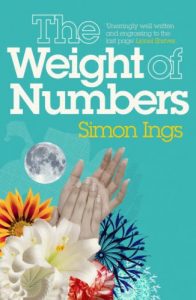
On July 21, 1969 two astronauts set foot on the moon; far below, in ravaged Mozambique, a young revolutionary is murdered by a package bomb.
Strung like webs between these two unconnected events are three lives: Anthony Burden, a mathematical genius destroyed by the beauty of numbers; Saul Cogan, transformed from prankster idealist to trafficker in the poor and dispossessed; and Stacey Chavez, ex-teenage celebrity and mediocre performance artist, hungry for fame and starved of love. All are haunted by Nick Jinks, a man who sows disaster wherever he goes. As a grid of connections emerges between a dusty philosophical society in London and an African revolution, between international container shipping and celebrity-hosted exposés on the problems of the Third World, The Weight of Numbers sends the spectres of the baby boom’s liberal revolutions floating into the unreal estate of globalization and media overload
Having cut his teeth on a series of intelligent thrillers, Ings makes a bid for the literary big time with this stunning, gutsy novel that takes a single incident—the suffocation of 58 immigrants in a lorry bound for Scotland—and traces back its causes through the life stories of those involved. Dozens of deftly drawn characters, an acute understanding of geopolitics, an epic historical sweep and a serious talent for storytelling make this one of the most exciting—and relevant—books of the last year. Booker material, for sure.
Arena
In the corner of the literary landscape in which a few of us sit, hunting for ways to work ever exciting and dynamic thinking from the sciences into the contemporary novel, The Weight of Numbers is extremely good news. It’s a dynamic, innovative, and compelling book that brings into focus some of the most interesting trends in contemporary fiction, and Simon Ings deserves more than a sniff of at least one prize for his efforts.
James Flint, The Daily Telegraph
It is unlikely there will be a finer written fiction this year. . . . Ings stalks his targets with the relentlessness of a bounty hunter, until he arrives at a new heart of darkness with the important discoveries that in the vacuum of contemporary life there is nothing to distinguish the apparently morally dubious world of human trafficking from the ‘migrainous white noise of the subsidised arts,’ and that self-expression is no more guarantee of satisfaction than silence.
Chris Pettit, The Guardian
[An] ambitious, exciting novel . . . Ings’s prose can ascend into theoretical, visionary territory, but is rooted in the mess of human experience. A sudden sexual encounter in a bombed-out London library, an anorexic slicing a muffin in a Florida restaurant, a horror show of violence in Mozambique — these are unforgettable scenes, evoked with a lean, immediate physicality.
Tom Gatti, The Times
Its stupendous breadth leaves you giddy.
Nottingham Evening Post
The scale of Ings’s ambition is proportionally matched by the precision of his prose. Every sentence, image and line of dialogue is balanced and true. It isn’t its clever design or technical achievement that makes it compelling so much as its beating human heart.
The Independent on Sunday (UK) (5/5 Stars)
This novel could have collapsed under the scale of its own ambition. But instead it triumphs.
Sunday Business Post
Ings weaves an ingenious, shimmering web of contiguity and chance. . . . A feat of meticulous plotting . . . Ings’s project is not dissimilar from David Mitchell’s Cloud Atlas, with which it has been compared.
Alistair Sooke, The New Statesman
Characters emerge from different places, periods and experiences, and yet their fraying threads are teasingly revealed to be of the same fabric….Ings has wrought an unorthodox anti-history of the past six decades. The Weight of Numbers is a dizzying feat, redolent of Don DeLillo and David Mitchell in its density. Only when its framework is revealed are its mysteries unraveled.
Gavin Bertram, New Zealand Listener
Simon Ings’ ambitiously genre-defying The Weight of Numbers is a virtuoso display of imaginative plotting.
Financial Times, ‘Novels of 2006’
A Scheherazade of a novel, executed with scope, daring, and humour. The Weight of Numbers is unerringly well written, and engrossing to the last page.
Lionel Shriver, author of We Need to Talk About Kevin
Like Don DeLillo’s Underworld, Simon Ings’s remarkable new work delivers nothing less than a secret key, a counterhistory, of the last sixty years. Ings’s fiction is vivid and swift, a thing of scenes and people, smugglers and astronauts, spies and revolutionaries. But beyond the topical excitements lies something even grander—a vision of our culture as a death ship. The Weight of Numbers is amazing.
Mark Costello, author of Big If
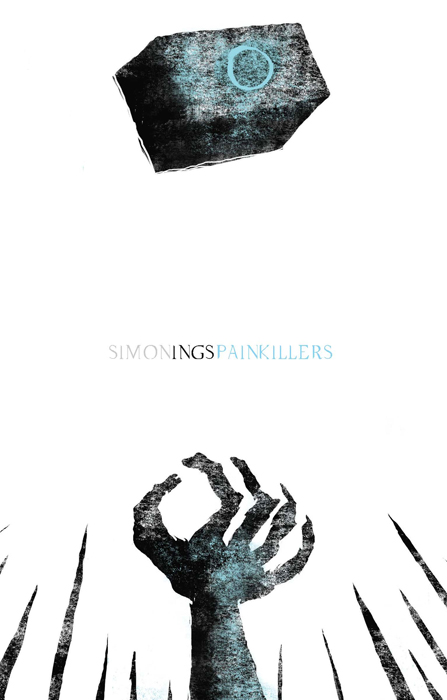
I remember them. Their mouths, and their needles. That is all. That, and their painted eyes. Their mouths. They never spoke… So begins Adam’s odyssey into a nightmare of corruption and violence, where it is only his forlorn hope that he is helping his autistic son Justin that offers any solace. As everything implodes around him, Adam risks everything – his marriage, his family, his life – to lay hands on the one thing that might save him. His way out. His grail. A small bakelite box with a dial.
A grim, gripping and unrelenting tale in which a neat and happy ending is simply not an option.
IRISH INDEPENDENT
Cinematically graphic yet deeply literate, Painkillers offers a chilling ride into a hell both individual and universal.
ASIMOV’S
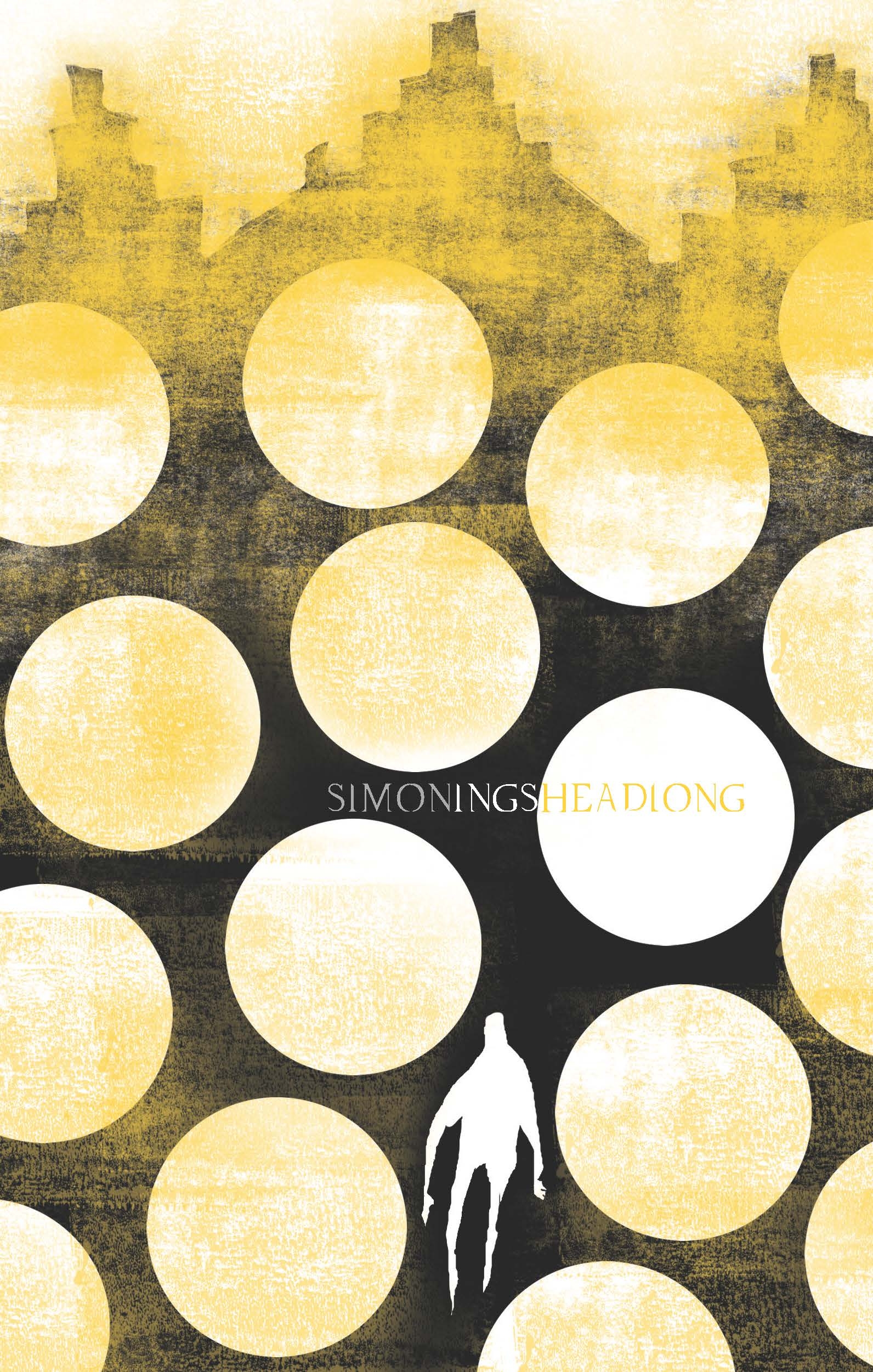
What do you do when your head’s full of useless sockets, when you’ve been superseded by AIs, when you’ve been dumped back into a world where you can’t function properly and even schoolchildren take the piss? Headlong follows its post-human protagonist along the rough and uneasy road to normality.
Headlong, Simon Ings’ fourth novel, is an intelligent, compassionate portrayal of one man’s struggle to rediscover his humanity after the plugs wiring him up to enhanced sensory input are disconnected. The focus is on Christopher and his grapplings with everyday life, told in well-chosen, prosaic detail… Unlike many who write about neural implants and cyberspace, Ings remains firmly grounded in the everyday, with its small triumphs and disasters and roots in human frailty. Yale’s relationship with his posthuman powers is not simply one of longing for paradise lost. Rather, the message of this mature and thoughtful book seems to be that, ultimately, the human condition is worth fighting for, and transcendent itself in comparison to the mire and immorality of a dystopia that may be just around the corner.
New Scientist, 27 February 1999
Simon Ings’s irrepressible imagination has fallen headlong into a world that is truly strange — and strangely true.
George Dyson (author of Darwin Among the Machines)
A weird, wired and wonderful book from one of the brightest stars of future fantasy.
Attitude
After the frenetic ultra-stylism of cyberpunk, science fiction has slowed down a little. This wistful novel is a terrific example of the new genre: its main character Christopher Yale has been augmented, uploaded and implanted, but all he wants is to be human again. When his wife Joanne is killed, he must overcome his alienation from the ‘real world’ to avoid suffering the same fate. Various conspiracies unfold around a strange new drug, but the real story is Yale’s painful devolution to a regular human being. Simon Ings, my telepathic abilities tell me, has a serious career ahead of him.
Carrie O’Grady in The Guardian, Saturday 20 January 1999
For over 300 pages we share the life of a post-human who has to learn, again, to be human. It’s a compassionate and engaging piece of work. And it is a seriously good book.
Keith Brooke, Infinity Plus
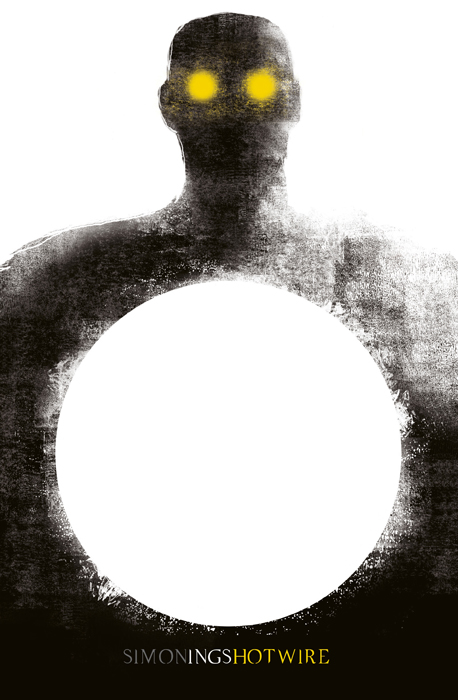
Not a sequel to his first novel Hot Head, but set in the same world and sharing some of the same preoccupations, Simon Ings’ Hotwire asks some interesting questions about how we become human, and how to become human again. Ajay made some bad choices once upon a time–he got his grandfather killed and his sister horribly mutilated; to pay to have her rebuilt, an organ at a time, he has become an all-purpose heavy, first a secret policeman and then an assassin. Rosa has never had any choices–she roams, inconsequentially, the corridors of the space station that is, in a very real sense, her mother, scared of everything she meets and sees. When these two find themselves in improbable alliance, the consequences could be scary, and are highly charged and erotic and at times touching. This is a book about coming to terms with reality, and the very improbability of much of the reality with which the central characters have to come to terms does not lessen the hardness of their choices and our sympathy with them. Full of strongly visualised exotic settings–the slums of Brazil and the interiors of mind human and artificial–this lives up to Ings’ early promise.
Roz Kaveney
How crude and primitive we first-generation cyberpunks and our works look now! Such anyhow were my thoughts upon finishing Simon Ings’s new novel Hotwire. Perhaps only a cusp writer like Ings (born 1965) could have produced this laser-gazed logicbomb of a book, simultaneously appalling and heartening, monitory and embracing. There is nothing extraneous in Ings’s writing, and much that is marvellous. Blink between sentences, and you might miss something. From the Carrollian environment of Rosa’s birthplace to the favelas of Rio, Ings offers cinematic thrills galore.
Paul Di Filippo in Asimov’s October/November 1996
Moving from a Trinidad wasted by the new drug ZB15 to an underworld Havana of organ bootlegging, Brit SF writer Simon Ings sketches out a corporate future that is both intriguing and unsettling. You should read Simon Ings.
iD, September 1995
Bursting with ideas bigger than many writers can cope with even as reading matter, Ings is second-guessing not only sf readers, but the planet.
Nick Royle, Dazed and Confused 13
Simon Ings has taken virtual reality way beyond the cyberpunk fathered by William Gibson. Ings is a young British writer with an assured future.
David Barrett in New Scientist, 14 October 1995
This is a book about the assertion of human values against those of the power broker and the machine. As such, it can lay claim to the credentials of a romance, and one played out against a more than usually bleak and hostile background. Ings lays it on the line.
Interzone 101, Autumn 1995

