Just how much does the world follow laws?

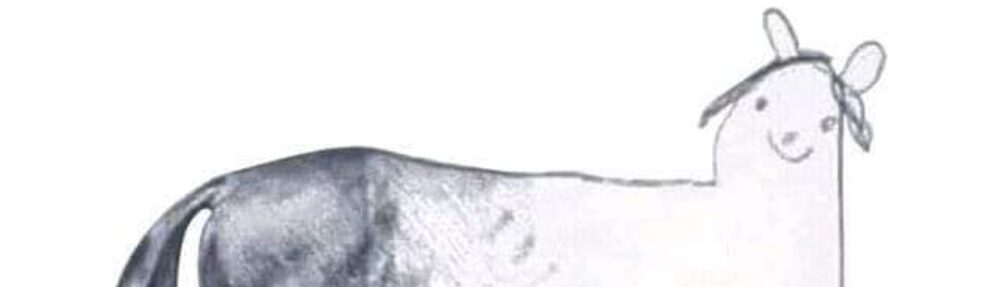
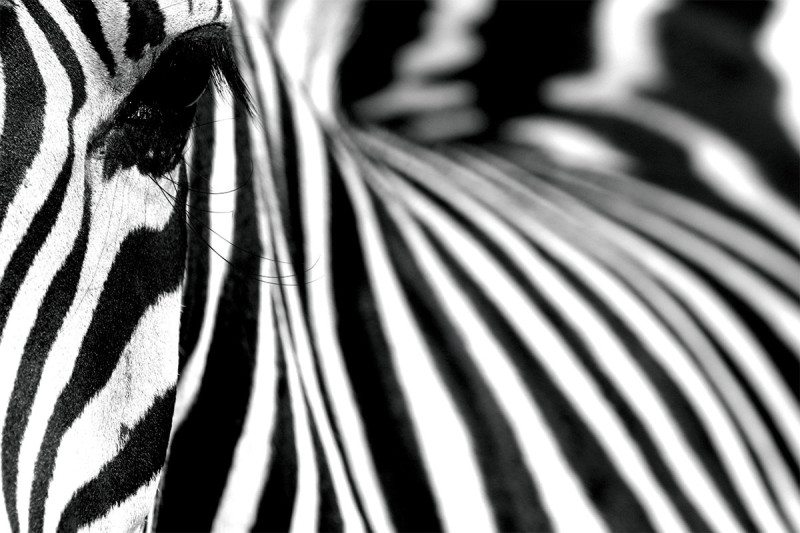
zebra

How the Zebra Got its Stripes and Other Darwinian Just So Stories by Léo Grasset
The Serengeti Rules: The quest to discover how life works and why it matters by Sean B. Carroll
Lysenko’s Ghost: Epigenetics and Russia by Loren Graham
The Great Derangement: Climate change and the unthinkable by Amitav Ghosh
reviewed for New Scientist, 15 October 2016

JUST how much does the world follow laws? The human mind, it seems, may not be the ideal toolkit with which to craft an answer. To understand the world at all, we have to predict likely events and so we have a lot invested in spotting rules, even when they are not really there.

Such demands have also shaped more specialised parts of culture. The history of the sciences is one of constant struggle between the accumulation of observations and their abstraction into natural laws. The temptation (especially for physicists) is to assume these laws are real: a bedrock underpinning the messy, observable world. Life scientists, on the other hand, can afford no such assumption. Their field is constantly on the move, a plaything of time and historical contingency. If there is a lawfulness to living things, few plants and animals seem to be aware of it.

Consider, for example, the charming “just so” stories in French biologist and YouTuber Léo Grasset’s book of short essays, How the Zebra Got its Stripes. Now and again Grasset finds order and coherence in the natural world. His cost-benefit analysis of how animal communities make decisions, contrasting “autocracy” and “democracy”, is a fine example of lawfulness in action.

But Grasset is also sharply aware of those points where the cause-and-effect logic of scientific description cannot show the whole picture. There are, for instance, four really good ways of explaining how the zebra got its stripes, and those stripes arose probably for all those reasons, along with a couple of dozen others whose mechanisms are lost to evolutionary history.

And Grasset has even more fun describing the occasions when, frankly, nature goes nuts. Take the female hyena, for example, which has to give birth through a “pseudo-penis”. As a result, 15 per cent of mothers die after their first labour and 60 per cent of cubs die at birth. If this were a “just so” story, it would be a decidedly off-colour one.

The tussle between observation and abstraction in biology has a fascinating, fraught and sometimes violent history. In Europe at the birth of the 20th century, biology was still a descriptive science. Life presented, German molecular biologist Gunther Stent observed, “a near infinitude of particulars which have to be sorted out case by case”. Purely descriptive approaches had exhausted their usefulness and new, experimental approaches were developed: genetics, cytology, protozoology, hydrobiology, endocrinology, experimental embryology – even animal psychology. And with the elucidation of underlying biological process came the illusion of control.

In 1917, even as Vladimir Lenin was preparing to seize power in Russia, the botanist Nikolai Vavilov was lecturing to his class at the Saratov Agricultural Institute, outlining the task before them as “the planned and rational utilisation of the plant resources of the terrestrial globe”.

Predicting that the young science of genetics would give the next generation the ability “to sculpt organic forms at will”, Vavilov asserted that “biological synthesis is becoming as much a reality as chemical”.

The consequences of this kind of boosterism are laid bare in Lysenko’s Ghost by the veteran historian of Soviet science Loren Graham. He reminds us what happened when the tentatively defined scientific “laws” of plant physiology were wielded as policy instruments by a desperate and resource-strapped government.

Within the Soviet Union, dogmatic views on agrobiology led to disastrous agricultural reforms, and no amount of modern, politically motivated revisionism (the especial target of Graham’s book) can make those efforts seem more rational, or their aftermath less catastrophic.

In modern times, thankfully, a naive belief in nature’s lawfulness, reflected in lazy and increasingly outmoded expressions such as “the balance of nature”, is giving way to a more nuanced, self-aware, even tragic view of the living world. The Serengeti Rules, Sean B. Carroll’s otherwise triumphant account of how physiology and ecology turned out to share some of the same mathematics, does not shy away from the fact that the “rules” he talks about are really just arguments from analogy.

“If there is a lawfulness to living things, few plants and animals seem to be aware of it”
Some notable conservation triumphs have led from the discovery that “just as there are molecular rules that regulate the numbers of different kinds of molecules and cells in the body, there are ecological rules that regulate the numbers and kinds of animals and plants in a given place”.

For example, in Gorongosa National Park, Mozambique, in 2000, there were fewer than 1000 elephants, hippos, wildebeest, waterbuck, zebras, eland, buffalo, hartebeest and sable antelopes combined. Today, with the reintroduction of key predators, there are almost 40,000 animals, including 535 elephants and 436 hippos. And several of the populations are increasing by more than 20 per cent a year.

But Carroll is understandably flummoxed when it comes to explaining how those rules might apply to us. “How can we possibly hope that 7 billion people, in more than 190 countries, rich and poor, with so many different political and religious beliefs, might begin to act in ways for the long-term good of everyone?” he asks. How indeed: humans’ capacity for cultural transmission renders every Serengeti rule moot, along with the Serengeti itself – and a “law of nature” that does not include its dominant species is not really a law at all.

Of course, it is not just the sciences that have laws: the humanities and the arts do too. In The Great Derangement, a book that began as four lectures presented at the University of Chicago last year, the novelist Amitav Ghosh considers the laws of his own practice. The vast majority of novels, he explains, are realistic. In other words, the novel arose to reflect the kind of regularised life that gave you time to read novels – a regularity achieved through the availability of reliable, cheap energy: first, coal and steam, and later, oil.

No wonder, then, that “in the literary imagination climate change was somehow akin to extraterrestrials or interplanetary travel”. Ghosh is keenly aware of and impressively well informed about climate change: in 1978, he was nearly killed in an unprecedentedly ferocious tornado that ripped through northern Delhi, leaving 30 dead and 700 injured. Yet he has never been able to work this story into his “realist” fiction. His hands are tied: he is trapped in “the grid of literary forms and conventions that came to shape the narrative imagination in precisely that period when the accumulation of carbon in the atmosphere was rewriting the destiny of the Earth”.

The exciting and frightening thing about Ghosh’s argument is how he traces the novel’s narrow compass back to popular and influential scientific ideas – ideas that championed uniform and gradual processes over cataclysms and catastrophes.

One big complaint about science – that it kills wonder – is the same criticism Ghosh levels at the novel: that it bequeaths us “a world of few surprises, fewer adventures, and no miracles at all”. Lawfulness in biology is rather like realism in fiction: it is a convention so useful that we forget that it is a convention.

But, if anthropogenic climate change and the gathering sixth mass extinction event have taught us anything, it is that the world is wilder than the laws we are used to would predict. Indeed, if the world really were in a novel – or even in a book of popular science – no one would believe it.


When art and technology pull each other to bits

ars-electronica

Visiting Ars Electronica for New Scientist, 21 September 2016

In a disused mail sorting office in Linz, Austria, an industrial robot twice my height has got hold of Serbian-born artist Dragan Ilic and is wiping him over a canvas-covered wall. Ilic is clutching pencils, and as the robot twirls and dabs him against the wall, the artist makes his own frantic marks – a sort of sentient brush head. These performances are billed as a collaboration between artist and machine. All I see is the user getting used.

Every September in Linz, the Ars Electronica festival tries to marry technology and art. Andy Warhol took up screen-printing in the 1960s, and a whole generation of gallery-goers have since grown up with the notion that this match is easy.

Indeed, the coupling of art and technology has become a solid pillar of art education, especially now that so much funding comes from IT big hitters such as Sony and private institutions like the Wellcome Trust.

But if the venerable Ars Electronica has demonstrated anything in its 37-year history – beyond the ability of the arts to remake and rejuvenate a city – it is that technology and art make astonishingly unhappy bedfellows.

This year, for example, Swiss artist Daniel Boschung used an industrial robot controlled by bespoke software to take 900-million-pixel portraits of people – forensic surveys so detailed that they drained all emotion from their subjects’ faces.

Not far away, another robot, Davide Quayola’s Sculpture Factory, chiselled through partially completed life-size stone renditions of Michelangelo’s David. The attention was directed to the pixelated nature of 3D scanning, which smeared, spread and tessellated the biblical giant-killer to the point of incoherence: here a limb, there an eye.

Walking the corridor towards the current sculpture-in-progress, one passed attempt after attempt of clone Davids peeking in more or less agonised fashion from their cuboid stone prisons, in a sort of mineral retread of that infamous scene from Alien: Resurrection.

The provoking thing about Ars Electronica is that it jams together boutique displays of the latest technology, trenchant criticisms of the post-industrial project, jokes and honest failures. It is a gargantuan vessel powered by enthusiasm, but steered by nothing remotely resembling taste.

Eventually, the visitor comes to rest against one of the more obvious wins. Boris Labbé’s film Rhizome, which netted the festival’s annual animation prize, unites watercolour illustration and digital effects to tell an epic tale of evolution, civilisation and cosmic transformation in one steady, heart-stopping reverse zoom.

And then there is Frank Kolkman’s OpenSurgery, which combines 3D printing and laser-cutting with hacked surgical pieces and components bought online. This is a DIY robot that can perform laparoscopic surgery – a terrifying comment on the way that hacking and “making” are increasingly expected to stand in for the real thing.

You’ll need a drink after all that, so head for Max Dovey’s A Hipster Bar. And good luck – this genuine pop-up drinking hole will, in true neo-liberal fashion, keep the gate shut unless its face-recognition system considers you “90 per cent hipster”.

As you sip, ponder this: it was the assertion of the Romantic movement that art makes us appreciate the beauty, richness and sheer size of the world. And technology, used appropriately, brings us closer to that sublime. As the Romantics’ acolyte, the writer and pioneering pilot Antoine de Saint-Exupéry, put it: “The machine does not isolate man from the great problems of nature but plunges him more deeply into them.”

Even if that was true in 1939, it’s not true now: not now our drones do our flying for us; not now our technology has got away from us to the point where large portions of nature are being erased; not now we live mired in media and, indeed, have to make special efforts to escape it.

Naturally, artists want to explore the new technology of their day, but these days the best results seem to come when we misappropriate the machines and kick them into new shapes, or simply point and laugh.

Talk, 25 September: Stalin and his scientists visit Hampstead

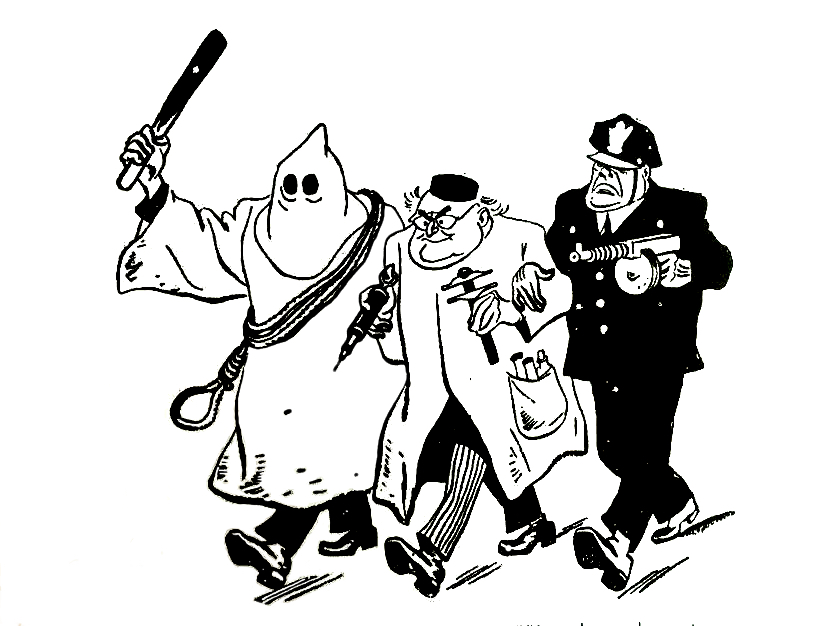
On Sunday 25 September at 1:00pm I’ll be speaking to writer Marcel Theroux about Stalin and the Scientists, and explaining how a handful of impoverished and underemployed graduates, professors and entrepreneurs, collectors and charlatans, bound themselves to a failing government to create a world superpower.

!19 fly lovers cartoon

Tickets are £10 from JW3, the London Jewish Cultural Centre. Part of the Hampstead and Highgate Literary Festival 2016


Colour and Vision at London’s Natural History Museum

colour

for New Scientist, 3 August, 2016

TAKE time over Liz West’s captivating neon artwork in the foyer of London’s Natural History Museum, because darkness awaits at Colour and Vision, its latest exhibition. It’s not that the sun didn’t shine 550 million years ago, where this story begins – just back then there were no eyes to see.

The basic chemical and structural components of vision existed long before it evolved. Something happened to make eyes viable, although the exact nature of that innovation remains mysterious. But once visual information meant something, there was no stopping it – or life. For with vision comes locomotion, predation, complex behaviour, and, ultimately, consciousness.

Colour and Vision does a great job of explaining colour’s role in this story, although sometimes the curators bite off more than they can chew, as when they try to explain the difference between half a dozen kinds of compound vision.

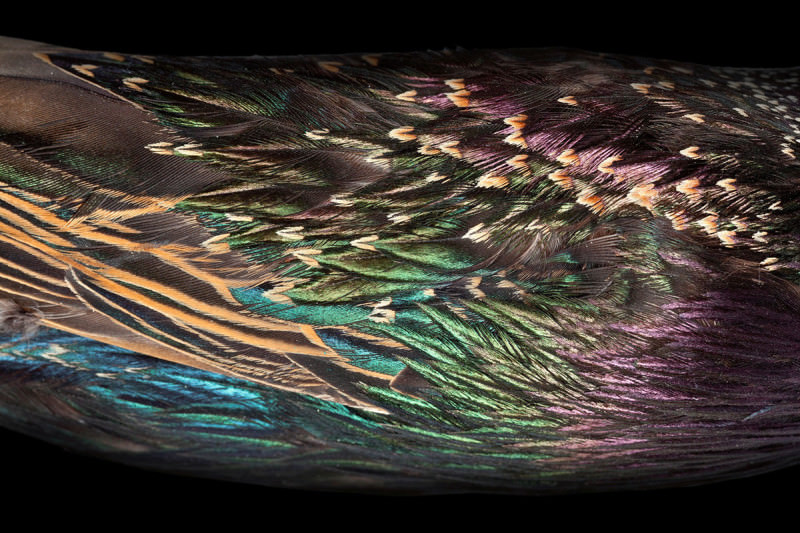
The best insights come from the objects themselves. A sample card of dyed wools reminds us just how hard it has been for humans to extract colours from their environment. For most of our history we have used a dead-leaf palette. In contrast, Gouldian finches boast heads of different colours (black, red, yellow), cowries wrap their bodies around colourful shells, and molluscs lay down iridescent nacre – one of nature’s most beautiful materials – simply to strengthen their shells.

We, however, need an entire industrial base before we can say with any honesty, as the exhibition does, that “we are the only species with the power to choose what colour means for us”. Even then we are constantly reminded that our colour vision is a relatively recent acquisition, and that it’s a mess genetically. This means that there’s a world of variety, beauty and meaning out there humans simply can’t see.

Visit this exhibition, and brush up against it. It’s an uncanny trip.


Northern lights

Penelope Umbrico, 30,400,020 Suns from Sunsets from Flickr (Partial) 04/04/16, photographs, machine c-prints, in the Collection of the Artist

The Starry Skies of Art, Serlachius Museums, Mänttä, Finland, to 8 January 2017. For New Scientist, 20 July 2016.

A FEW hours north of Helsinki, Finland, on the shores of a lake, sits an art museum, opened in the 1930s and much expanded since. Now one of its galleries is filled with 200 years’ worth of artistic visions of the skies, the work of Helena Sederholm, an art-education professor, and science writer Markus Hotakainen.

Scientific approaches to the cosmos are affectionately parodied in Andy Gracie’s Drosophila Titanus – a breeding project to adapt fruit flies for life on Titan, Saturn’s largest moon – and Agnes Meyer-Brandis’s Moon Goose Analogue: Lunar migration bird facility (MGA), which tries to realise, NASA-style, English bishop Francis Godwin’s story The Man in the Moone, whose hero flies to the moon in a chariot towed by “moon geese”.

Reductive approaches to the cosmos reach pathological levels in Marko Vuokola’s Been There, Seen It, Done That, in which the phases of the moon are reduced to a pattern of shadows cast by glass discs resting on a glass shelf.

A more elegaic exploration of the same idea (that we murder to dissect) lies in Petri Eskelinen’s 2016 installation Dying Star. After a few minutes, the viewer’s dark-adapted eye makes out a beautiful and convincing cloud of stars. At regular intervals, lights come on, revealing the cloud for what it is: smeared, worn Perspex sheets stuck with scraps of Post-it note and scrawled over with whiteboard pens: “Yes”; “No”; “No life field”. The night sky is reduced to a bitterly precise, tiresome, anthropocentric hunt for an earthlike planet.

The lights go out. The magic reasserts itself. To comprehend the world, we must reduce it. But as Penelope Umbrico ably reveals in 30,400,020 Suns from Sunsets from Flickr, the world is big enough to take our abuse. And in the moonlit landscapes by 19th-century artists Fanny Churberg and Hjalmar Munsterhjelm, it swallows us whole.

Beware the indeterminate momentum of the throbbing whole

2ndfromright_speculative-realism-materialism

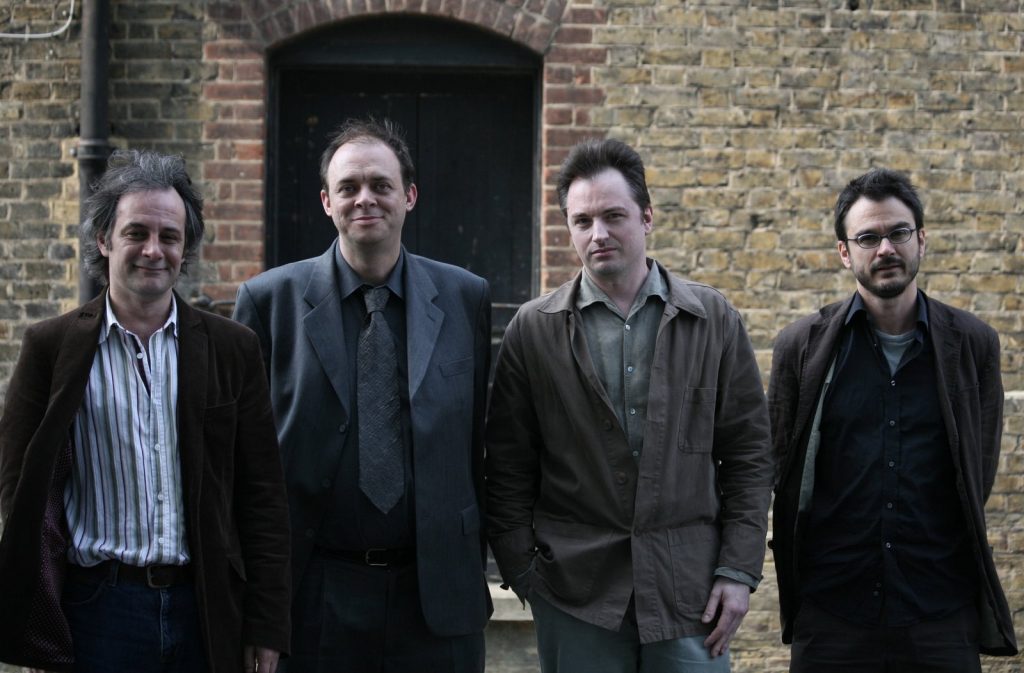
Graham Harman (2nd from right) and fellow speculative materialists in 2007


In 1942, the Argentine writer Jorge Luis Borges cooked up an entirely fictitious “Chinese” encyclopedia entry for animals. Among its nonsensical subheadings were “Embalmed ones”, “Stray dogs”, “Those that are included in this classification” and “Those that, at a distance, resemble flies”.

Explaining why these categories make no practical sense is a useful and enjoyable intellectual exercise – so much so that in in 1966 the French philosopher Michel Foucault wrote an entire book inspired by Borges’ notion. Les mots et les choses (The Order of Things) became one of the defining works of the French philosophical movement called structuralism.

How do we categorise the things we find in the world? In Immaterialism, his short and very sweet introduction to his own brand of philosophy, “object-oriented ontology”, the Cairo-based philosopher Graham Harman identifies two broad strategies. Sometimes we split things into their ingredients. (Since the enlightenment, this has been the favoured and extremely successful strategy of most sciences.) Sometimes, however, it’s better to work in the opposite direction, defining things by their relations with other things. (This is the favoured method of historians and critics and other thinkers in the humanities.)

Why should scientists care about this second way of thinking? Often they don’t have to. Scientists are specialists. Reductionism – finding out what things are made of – is enough for them.

Naturally, there is no hard and fast rule to be made here, and some disciplines – the life sciences especially – can’t always be reducing things to their components.

So there have been attempts to bring this other, “emergentist” way of thinking into the sciences. One of the most ingenious was the “new materialism” of the German entrepreneur (and Karl Marx’s sidekick) Friedrich Engels. One of Engels’s favourite targets was the Linnaean system of biological classification. Rooted in formal logic, this taxonomy divides all living things into species and orders. It offers us a huge snapshot of the living world. It is tremendously useful. It is true. But it has limits. It cannot record how one species may, over time, give rise to some other, quite different species. (Engels had great fun with the duckbilled platypus, asking where that fitted into any rigid scheme of things.) Similarly, there is no “essence” hiding behind a cloud of steam, a puddle of water, or a block of ice. There are only structures, succeeding each other in response to changes in the local conditions. The world is not a ready-made thing: it is a complex interplay of processes, all of which are ebbing and flowing, coming into being and passing away.

So far so good. Applied to science, however, Engels’ schema turn out to be hardly more than a superior species of hand-waving. Indeed, “dialectical materialism” (as it later became known) proved so unwieldy, it took very few years of application before it became a blunt weapon in the hands of Stalinist philosophers who used it to demotivate, discredit and disbar any scientific colleague whose politics they didn’t like.

Harman has learned the lessons of history well. Though he’s curious to know where his philosophy abuts scientific practice (and especially the study of evolution), he is prepared to accept that specialists know what they are doing: that rigor in a narrow field is a legitimate way of squeezing knowledge out of the world, and that a 126-page A-format paperback is probably not the place to reinvent the wheel.

What really agitates him, fills his pages, and drives him to some cracking one-liners (this is, heavens be praised, a *funny* book about philosophy) is the sheer lack of rigour to be found in his own sphere.

While pillorying scientists for treating objects as superficial compared with their tinest pieces, philosophers in the humanities have for more than a century been leaping off the opposite cliff, treating objects “as needlessly deep or spooky hypotheses”. By claiming that an object is nothing but its relations or actions they unknowingly repeat the argument of the ancient Megarians , “who claimed that no one is a house-builder unless they are currently building a house”. Harman is sick and tired of this intellectual fashion, by which “‘becoming’ is blessed as the trump card of innovators, while ‘being’ is cursed as a sad-sack regession to the archaic philosophies of olden times”.

Above all, Harman has had it with peers and colleagues who zoom out and away from every detailed question, until the very world they’re meant to be studying resembles “the indeterminate momentum of the throbbing whole” (and this is not a joke — this is the sincerely meant position statement of another philosopher, a friendly acquaintance of his, Jane Bennett).

So what’s Harman’s solution? Basically, he wants to be able to talk unapologetically about objects. He explores a single example: the history of the Dutch East India Company. Without toppling into the “great men” view of history – according to which a world of inanimate props is pushed about by a few arbitrarily privileged human agents – he is out to show that the EIC was an actual *thing*, a more-or-less stable phenomenon ripe for investigation, and not simply a rag-bag collection of “human practices”.

Does his philosophy describe the Dutch East India Company rigorously enough for his work to qualify as real knowledge? I think so. In fact I think he succeeds to a degree which will surprise, reassure and entertain the scientifically minded.

Be in no doubt: Harman is no turncoat. He does not want the humanities to be “more scientific”. He wants them to be less scientific, but no less rigorous, able to handle, with rigour and versatility, the vast and teeming world of things science cannot handle: “Hillary Clinton, the city of Odessa, Tolkein’s imaginary Rivendell… a severed limb, a mixed herd of zebras and wildebeest, the non-existent 2016 Chicago Summer Olympics, and the constellation of Scorpio”.

Immaterialism
Graham Harman
Polity, £9.99

The tomorrow person

gettyimages-480014817-800x533

You Belong to the Universe: Buckminster Fuller and the future by Jonathon Keats
reviewed for New Scientist, 11 June 2016.


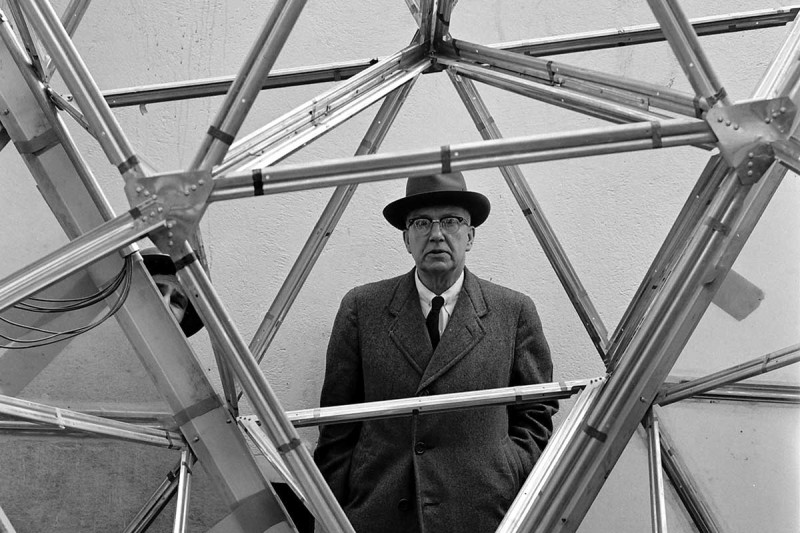
IN 1927 the suicidal manager of a building materials company, Richard Buckminster (“Bucky”) Fuller, stood by the shores of Lake Michigan and decided he might as well live. A stern voice inside him intimated that his life after all had a purpose, “which could be fulfilled only by sharing his mind with the world”.

And share it he did, tirelessly for over half a century, with houses hung from masts, cars with inflatable wings, a brilliant and never-bettered equal-area map of the world, and concepts for massive open-access distance learning, domed cities and a new kind of playful, collaborative politics. The tsunami that Fuller’s wing flap set in motion is even now rolling over us, improving our future through degree shows, galleries, museums and (now and again) in the real world.

Indeed, Fuller’s”comprehensive anticipatory design scientists” are ten-a-penny these days. Until last year, they were being churned out like sausages by the design interactions department at the Royal College of Art, London. Futurological events dominate the agendas of venues across New York, from the Institute for Public Knowledge to the International Center of Photography. “Science Galleries”, too, are popping up like mushrooms after a spring rain, from London to Bangalore.

In You Belong to the Universe, Jonathon Keats, himself a critic, artist and self-styled “experimental philosopher”, looks hard into the mirror to find what of his difficult and sometimes pantaloonish hero may still be traced in the lineaments of your oh-so-modern “design futurist”.

Be in no doubt: Fuller deserves his visionary reputation. He grasped in his bones, as few have since, the dynamism of the universe. At the age of 21, Keats writes, “Bucky determined that the universe had no objects. Geometry described forces.”

A child of the aviation era, he used materials sparingly, focusing entirely on their tensile properties and on the way they stood up to wind and weather. He called this approach “doing more with less”. His light and sturdy geodesic dome became an icon of US ingenuity. He built one wherever his country sought influence, from India to Turkey to Japan.

Chapter by chapter, Keats asks how the future has served Fuller’s ideas on city planning, transport, architecture, education. It’s a risky scheme, because it invites you to set Fuller’s visions up simply to knock them down again with the big stick of hindsight. But Keats is far too canny for that trap. He puts his subject into context, works hard to establish what would and would not be reasonable for him to know and imagine, and explains why the history of built and manufactured things turned out the way it has, sometimes fulfilling, but more often thwarting, Fuller’s vision.

This ought to be a profoundly wrong-headed book, judging one man’s ideas against the entire recent history of Spaceship Earth (another of Fuller’s provocations). But You Belong to the Universe says more about Fuller and his future in a few pages than some whole biographies, and renews one’s interest – if not faith – in all those graduate design shows.