
Komar & Melamid, Yalta Conference, 1982, tempera and oil on canvas, 72”X48”.
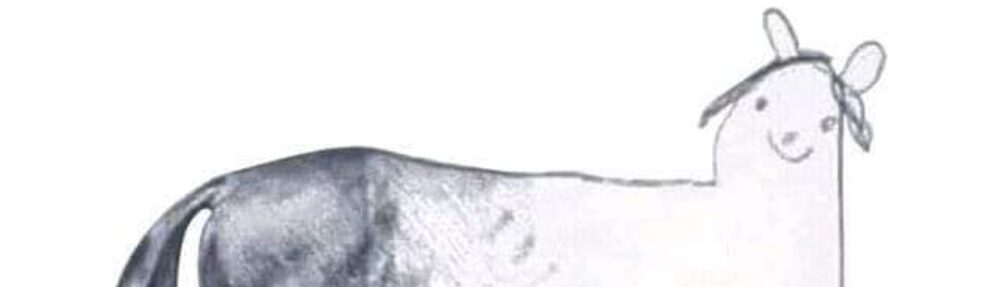
Komar & Melamid, Yalta Conference, 1982, tempera and oil on canvas, 72”X48”.
written for the Arcfinity blog:
Google’s swooshy new concept video for augmented reality goggles (or “spex”, if you will) has certainly put the virtual cat among the digital pigeons. An attempt, perhaps, to leapfrog the iPad – if Google can persuade us that what we really want is headwear that will let us see things that aren’t really there. [youtube http://www.youtube.com/watch?v=9c6W4CCU9M4?rel=0]I recently spent an entire evening doing just that. Aurasma, a start-up spun out of Autonomy (another search giant, incidentally), aims to bring AR to the masses;
that evening, its glamorous representatives pasted digital magic over a south London gallery’s functional white-and-grey surfaces.
Rice packets came to life in our hands to show us how to cook rice. Books spilled their letters into our laps; they took wing and flocked about our heads like so many starlings. Avatars swung their swords blindly about the gallery.
AR is one of a handful of technologies that are likely to transform our lives in the very near future. And I don’t use the ‘T’ word lightly. People talk about the great things AR can show you. Every wall becomes a picture! Every picture becomes a movie! Every object becomes something other, something better than itself – or seems to. Oddly nobody talks about AR’s ability to hide things. And since I’d been invited along in the role of Ancient Mariner (stopping one of three with tales of future horror – I am a writer after all; this is my job) it was this ability to subtract from the visual richness of the real which interested me the most. Never mind the avatars and the rice-packets: these are distractions, no different in kind to movies, posters, fiercely rung handbells, and all the other manifold calls to our attention. Let’s get back to basics here. What does it mean to look at the world through a screen? The granularity of the world is always going to be finer than the granularity of the medium through which we perceive it. No matter how photorealistic AR gets, it will always be taking information out of the picture plane. So AR has the potential to render the world down to a kind of tedious photographic grammar – the kind employed by commercial image libraries, whose job it is to reduce the world to a series of unambiguous stills illustrating stock ideas like ‘busy at work’ or ‘looking after the children’. This is nothing new. Photography has the ability to do this, obviously. But photography cannot be stuck over (or in) your eyeballs twenty-four hours a day. AR has this potential, substituting the real with a simplified description for anyone wearing the funny glasses. Lacanian psychoanalysts have a word for this process of simplification: they call it repression. And if AR becomes truly ubiquitous, then we will no longer be able to trust our eyes, and will probably have to develop a neurotic relationship with this technology. Is AR a good thing, then, or a bad thing? This is the kind of question we’re trying to avoid in Arc. Not because it is a hard question, but because it is a bad question. It assumes we have no agency, no wit, no common sense. It assumes we’re at the mercy of our own technology. The problems thrown up by AR will not be new. They will be old. They will be fairytale-like problems. (Is that woman by the bar a fairy, a queen, or a crone? Is the wizard touting for trade in the shopping centre a wizard at all, or a mere trickster? Is our Prime Minister really wearing any clothes?) It may be that, in order to navigate this fairytale visual space, AR will give birth to an entirely new set of visual behaviours. It wouldn’t be the first time. Look at reading. There is nothing ‘natural’ – certainly nothing evolved – about it. But we welcome its effects, and we build upon them, and we celebrate them. In some ways reading makes us less -it’s been shooting human memory in the foot repeatedly since Plato’s day. In other ways it makes us more: it
Enjoli Liston of the Independent pays a visit to Arc, and other futures
Read her here: http://ind.pn/GI9eW4


Thanks to the rise of smartphone technologies, the virtual territories of cyberspace are increasingly free to roam around in the real world.
LondonCalling.com is hosting a panel discussion on the current and future trends of augmented reality on Tuesday 27 March, 6.30pm – 9pm, at The Vibe Gallery, Bermondsey. (That’s five minutes from Bermondsey tube station on the Jubilee Line.)
Tamara Roukaerts, head of marketing at the AR company Aurasma and Frank Da Silva, creative director for Earth 2 Hub (a sort of thinktanky thing, with video) are going to be singing the technology’s praises, I assume, while I crouch in the corner painting my face with ashes and portending doom. Because I am a writer, and that is my job. (Think Emile Zola; think railways.)
Tom Hunter’s in the chair. (Or is he…?) More details at http://bit.ly/x2xflN
Come and heckle if you’re in London. It’s free, and it’s about the closest you’ll ever get to being in an episode of Nathan Barley.
[youtube http://www.youtube.com/watch?v=95azfZKJo4Q?wmode=transparent]

‘Putting the Science in Fiction’ – an Interfaculty Symposium on Science and Entertainment – takes place there on Wednesday 25 April 9:30am to 5pm.
Zochonis TH A (B5) is, in fact, in Manchester. Well, it’s a bit of Manchester University. Oh, I don’t know, I’ll just turn up early and find some corridor to sit down in and start screaming; someone’s bound to find me and steer me to the right place sooner or later.
Once there, I’ll find myself in good company. Confirmed speakers include Stephen Baxter, Ken MacLeod, Alastair Reynolds, Geoff Ryman (the eminence grise behind this junket), Justina Robson and Matthew Cobb, among many others. Watch us all “forge new relationships between the scientific community and the arts/entertainment community”. There is no cost for the workshop, but spaces are limited so you will need to book a place by contacting scienceinfiction.manchester@gmail.com And visit http://bit.ly/yxgLGQIt won’t tell you where Zochonis TH A (B5) is, but at least you’ll know I’m not making it up.

Come join me on Wednesday 14 March at 7.30pm, and discover what Russia’s famines have revealed about the living world.
This is the third in a series of lectures I’m giving at Pushkin House, the Russian cultural centre in London. It is part of a large work in progress: a history of science under Stalin’s rule. The book is due out in 2014 from Faber and Faber.
After the civil war, the Bolsheviks turned to the revolutionary science of genetics for help in securing the Soviet food supply. The young Soviet Union became a world leader in genetics and shared its knowledge with Germany. Then Stalin’s impatience and suspicion destroyed the field and virtually wiped out Russian agriculture. Stalin was right to be suspicious: genetics had promised the world a future of health and longevity, but by the 1940s it was delivering death camps and human vivisection. Genetic advances have made possible our world of plenty – but why did the human cost have to be so high? Pushkin House, 5a Bloomsbury Square, London WC1A 2TA. Tickets are £7, conc. £5 (Friends of Pushkin House, students and OAPs). The box office is on 44 (0)20 7269 9770, but you can always take a chance and pay on the night.
The paperback launches 25 May. Let’s hope it has better luck than the ship on the cover.

Thursday, 1 March at 4pm – my Science Museum debut!
We humans acquired the means, very late in our evolution, to perceive a world of colour – and every day we spend phenomenal amounts of energy making the world even more colourful than it would otherwise be, with face paints and aniline dyes, fabrics and photographs, paints, powders and moving images everywhere.
But the further we leave our terrestrial environments behind, the more we confront a relatively colourless universe. At best, the Martian sky is mauve. The rings of Saturn are dun brown. The Moon is black and white. Or is it? Today, with a decent telescope and a digital camera, any keen amateur astronomer can demonstrate that the Moon is full of colour – but can our unaided eyes, so spoiled by life on earth, ever appreciate its de-saturated motley?
Exposed to radiations from which they were normally shielded by the Earth’s atmosphere, the earliest astronauts – balloonists with the US Air Force’s Man High and Excelsior projects –saw colours they conspicuously failed to identify on a Pantone chart. There are, after all, new colours to be discovered in space – but to see them, we need new eyes…
What Colour is the Moon? is a journey in space and time. We will see how colours, colour words, and the demands of art and industry have altered and enriched our understanding of colour. On the way we’ll re-enact Edwin Land’s startling “retinex” experiments in colour vision, and enjoy some (literally) dazzling optical illusions.
And we’ll journey across the lunar surface, taking in a spectrum that stretches from the sky-blue cast of the Mare Tranquillitatis, through the mysterious mustards near the crater Aristarchus to the red-brick “lakes” west of Montes Haemus.
The talk will be in the Science Museum’s Lecture Theatre on the ground floor of the museum. It’s open to all. No booking is necessary and seats are available on a first come first serve basis.
