Technology vs observation

Losing my rag at the Royal Academy for New Scientist, 13 December 2017

When the schools of London’s Royal Academy of Arts were opened in 1769, life drawing — the business of sketching either live models or the plaster casts of worthy sculptures — was an essential component of an artist’s training.

As I wandered around From Life, an exhibition devoted to the history as well as the future of the practice, I overheard a curator explaining that, now life drawing is no longer obligatory in Royal Academy art courses, a new generation of artists are approaching the practice in a “more expressive” way. The show’s press release claims even more: that life drawing is evolving “as technology opens up new ways of creating and visualising artwork”.

There was little of this in evidence when I visited, however: two-and-a-half of the three virtual-reality experiences on offer had broken down. Things break down when the press turns up – you might even say it’s a rule. Still, given their ubiquity, I’m beginning to wonder whether gallery-based VR malfunctions are not a kind of mischievous artwork in their own right. In place of a virtual sketch, a message in an over-friendly font asks: “Have you checked your internet connection?” At least Swiss artist Jean Tinguely’s wild mobiles of the 1960s had the decency to catch fire.

How can new technologies like Google’s Tilt Brush and HTC’s Vive VR platform bring artists into a more intimate relation to their subject — more intimate than might be achieved by, say, standing a metre away from a naked stranger armed only with a bit of charcoal?

Jonathan Yeo has had a stab at the problem, using Tilt Brush’s 3D painting tech to fashion a sculptural self-portrait. The outsize bronze 3D print of his effort — an assemblage of short, wide, hesitant virtual “brushstrokes” — has a curiously dated feel and wouldn’t look out of place in a group retrospective of 20th-century British sculpture. As an advert for a technology that prides itself on its expressivity (videos of the platform at work usually resemble explosions in a paint factory), it’s a curiously laborious piece.

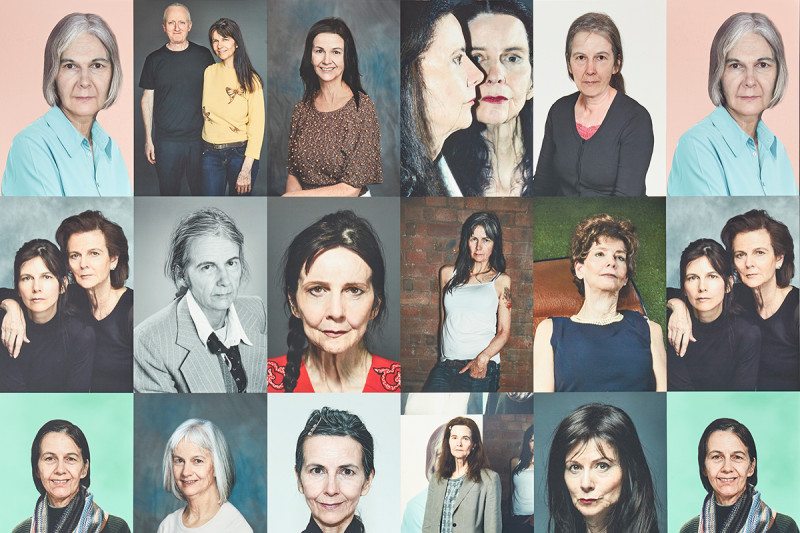
On a nearby wall hang Gillian Wearing’s photographic self-portraits, manipulated using the sort of age-progression technology employed by forensic artists. In this way, Wearing has captured her appearance 10, 20, 30 years into her future. It’s an undeniably moving display, and undeniably off the point: life drawing is about capturing the present moment, which leaves Wearing’s contribution resembling those terms and conditions that appear at the bottom of TV advertisements – Other Moments Are Available.

Yinka Shonibare (best known for his ship-in-a-bottle sculpture on the fourth plinth of Trafalgar Square) comments on the show, rather than contributes to it, with a 3D VR conceptualisation of a painting by the 18th-century Scots artist and dealer Gavin Hamilton.

Hamilton once sold a Roman sculpture to a collector. Shonibare has scanned a plaster cast of this Townley Venus, then placed it on a plinth in a largely imaginary VR garden (you catch only a glimpse of this space in Hamilton’s painting). He has covered its plaster-white surface with batik designs (referring to common sub-Saharan African fabric, though it was originally a Dutch export) and as a coup de grâce, he has stuck a globe on Venus’s torso in place of her head. The point is that we can never copy something without to some degree appropriating it. Whether you like what he’s done will depend on whether you like art that makes a primarily intellectual point.

In a gallery environment increasingly besotted by (and bested by) technology, such acts of cultural orienteering may be necessary; they’re certainly inevitable. The new work gracing From Life at least attempts to address the theme of the show, and its several failures are honest and interesting.

Still, I keep coming back to the historical half of the exhibition — to the casts, the drawings, the portraits of struggling young artists from 1769 to now. Life drawing is not obligatory for artists? It should be obligatory for everyone. If we never learn to observe honestly, what the devil will we ever have to be expressive about?

It’s coming at you!

Exploring volumetric capture for New Scientist, 13 December 2017

OUTSIDE Dimension Studios in Wimbledon, south London, is one of those tiny wood-framed snack bars that served commercial travellers in the days before motorways. The hut is guarded by old shop dummies dressed in fishnet tights and pirate hats. If the UK made its own dilapidated version of Westworld, the cyborg rebellion would surely begin here.

Steve Jelley orders us breakfast. Years ago he left film production to pursue a career developing new media. He’s of the generation for whom the next big thing is always just around the corner. Most of them perished in the dot-com bust of 2001, but Jelley clung to the dream, and now Microsoft has come calling.

His company, Hammerhead, makes 360-degree videos for commercial clients. Its partner in this current venture, Timeslice Films, is best known for volumetric capture of still images – the business of cinematographically recording forms in three dimensions – a practice that goes back to founder Tim MacMillan’s art-school experiments of the early 1980s.

Steve Sullivan, director of the Holographic Video initiative at Microsoft, is fusing both companies’ technical expertise to create volumetric video: immersive entertainment that’s indistinguishable from reality.

There are only three studios in the world that can do this with any degree of conviction, and Wimbledon is the only one outside the US. Still, I’m sceptical. It has been clear for a while that truly immersive media won’t spring from a single “light-bulb” moment. The technologies involved are, in conceptual terms, surprisingly old. Volumetric capture is a good example.

MacMillan is considered the godfather of this tech, having invented the “bullet time” effect central to The Matrix. But The Matrix is 18 years old, and besides, MacMillan reckons that pioneer photographer Eadweard Muybridge got to the idea years before him – in fact, decades before cinema was invented.

Then there’s motion capture (or mocap): recording the movement of points attached to an actor, and from those points, constructing the performance of a three-dimensional model. The pioneering Soviet physiologist Nikolai Bernstein invented the technique in the early 1920s, while developing training programmes for factory workers.

Truly immersive media will be achieved not through magic bullets, but through thugging – the application of ever more computer power, and the ever-faster processing of more and more data points. Impressive, but where’s the breakthrough?

“Well,” Jelley begins, handing me what may be the largest bacon sandwich in London, “you know this business of the ‘uncanny valley’…?” My heart sinks slightly.

Most New Scientist readers will be familiar with Masahiro Mori’s concept of the uncanny valley. It’s a curiously anglophone obsession. In the 30 years since the Japanese engineer published his paper in 1970, it has been referred to in Japanese academic literature only once. Mori himself says the idea was never meant to be taken scientifically. He was merely warning robot designers at a time when humanoid robots didn’t exist that the closer their works came to resemble people, the creepier we would find them.

In the West, discussions of the uncanny valley have grown to a sizeable cottage industry. There have been expensive studies done with PET scans to prove the existence of the effect. But as Mori commented in an interview in 2012: “I think that the brainwaves act that way because we feel eerie. It still doesn’t explain why we feel eerie to begin with.”

Our discomfort extends beyond encounters with physical robots to include some cinematic experiences. Many are the animated movies that have employed mocap to achieve something like cinematic realism, only to plummet without trace into the valley.

Elsewhere, actor Andy Serkis famously uses mocap to transform himself into characters like Gollum in The Lord of the Rings, or the chimpanzee Caesar in Rise of the Planet of the Apes, and we are carried along well enough by these films. The one creature this technology can’t emulate, however, is Serkis himself. Though mocap now renders human body movement with impressive realism, the human face remains a machine far too complex to be seamlessly emulated even by the best system.

Jelley reckons he and his partners have “solved the problem” of the uncanny valley. He leads me into the studio. There’s a small, circular, curtained-off area – a sort of human-scale birdcage. Rings of lights and cameras are mounted on scaffolds and hang from a moveable and very heavy-looking ceiling rig.

There are 106 cameras: half of them recording in the infrared spectrum to capture depth information, half of them recording visible light. Plus, a number of ultraviolet cameras. “We use ultraviolet paint to mask areas for effects work,” Jelley explains, “so we record the UV spectrum, too. Basically we use every glimmer of light we can get short of asking you to swallow radium.”

The cameras shoot between 30 and 60 times a second. “We have a directional map of the configuration of those cameras, and we overlay that with a depth map that we’ve captured from the IR cameras. Then we can do all the pixel interpolation.”

This is a big step up from mocap. Volumetric video captures real-time depth information from surfaces themselves: there are no fluorescent sticky dots or sliced-through ping-pong balls attached to actors here. As far as the audience is concerned, volumetric video is essentially just that, video, and as close to a true record as anything piped through a basement full of computers is ever going to get.

So what kind of films are made in such studios? Right now, the education company Pearson is creating virtual consultations for trainee nurses. Fashion brands and car companies have shot adverts here. TV companies want to use them for fully immersive and interactive dramas.

On a table nearby, a demo is ready to watch on a Vive VR headset. There are three sets of performances for me to observe, all looping in a grey, gridded, unadorned virtual space: the digital future as a filing cabinet. There are two experiments from Sullivan’s early days at Microsoft. Thomas Jefferson is pure animatronic; the two Maori haka dancers are engaging, if unhuman. The circus gymnast swinging on her hoop is different. I recognise her, or think I do. My body-language must be giving the game away, because Jelley laughs.

“Go up to her,” he says. I can’t place where I’ve seen her before. I try and catch her eye. “Closer.”

I’m invading her space, and I’m not comfortable with this. I can see the individual threads, securing the sequins to her costume. More than that: I can smell her. I can feel the heat coming from her skin.

I know she’s not real, but my body doesn’t. Every bit of me that might have rejected a digitised face as uncanny has fallen hook, line and sinker for this super-real gymnast. And this, presumably, is why the bit of my mind that enables me to communicate freely and easily with my fellow humans is in overdrive, trying to plug the gaps in my experience, as if to say, “Of course her skin is hot. Of course she has a scent.”

Mori’s uncanny valley effect is not quantifiable, and I don’t suppose my experience is any more measurable than the one Mori identified. But I’d bet the farm that, had you scanned me, you would have seen all manner of pretty lights. This hasn’t been an eerie experience. Quite the reverse. It’s terrifyingly ordinary. Almost, I might say, human.

Jelley walks me back to the main road. Neither of us says a word. He knows what he has. He knows what he has done.

Outside the snack shack, three shop dummies in pirate gear wobble in the wind.

Future by design

The Second Digital Turn: Design beyond intelligence
Mario Carpo
MIT Press

THE Polish futurist Stanislaw Lem once wrote: “A scientist wants an algorithm, whereas the technologist is more like a gardener who plants a tree, picks apples, and is not bothered about ‘how the tree did it’.”

For Lem, the future belongs to technologists, not scientists. If Mario Carpo is right and the “second digital turn” described in his extraordinary new book comes to term, then Lem’s playful, “imitological” future where analysis must be abandoned in favour of creative activity, will be upon us in a decade or two. Never mind our human practice of science, science itself will no longer exist, and our cultural life will consist of storytelling, gesture and species of magical thinking.

Carpo studies architecture. Five years ago, he edited The Digital Turn in Architecture 1992-2012, a book capturing the curvilinear, parametric spirit of digital architecture. Think Frank Gehry’s Guggenheim Museum in Bilbao – a sort of deconstructed metal fish head – and you are halfway there.

Such is the rate of change that five years later, Carpo has had to write another book (the urgency of his prose is palpable and thrilling) about an entirely different kind of design. This is a generative design powered by artificial intelligence, with its ability to thug through digital simulations (effectively, breaking things on screen until something turns up that can’t be broken) and arriving at solutions that humans and their science cannot better.

This kind of design has no need of casts, stamps, moulds or dies. No costs need be amortised. Everything can be a one-off at the same unit cost.

Beyond the built environment, it is the spiritual consequences of this shift that matter, for by its light Carpo shows all cultural history to be a gargantuan exercise in information compression.

Unlike their AIs, human beings cannot hold much information at any one time. Hence, for example, the Roman alphabet: a marvel of compression, approximating all possible vocalisations with just 26 characters. Now that we can type and distribute any glyph at the touch of a button, is it any wonder emojis are supplementing our tidy 26-letter communications?

Science itself is simply a series of computational strategies to draw the maximum inference from the smallest number of precedents. Reduce the world to rules and there is no need for those precedents. We have done this for so long and so well some of us have forgotten that “rules” aren’t “real” rules, they are just generalisations.

AIs simply gather or model as many precedents as they wish. Left to collect data according to their own strengths, they are, Carpo says, “postscientific”. They aren’t doing science we recognise: they are just thugging.

“Carpo shows all cultural history to be a gargantuan exercise in information compression”

Carpo foresees the “separation of the minds of the thinkers from the tools of computation”. But in that alienation, I think, lies our reason to go on. Because humans cannot handle very much data at any one time, sorting is vital, which means we have to assign meaning. Sorting is therefore the process whereby we turn data into knowledge. Our inability to do what computers can do has a name already: consciousness.

Carpo’s succinctly argued future has us return to a tradition of orality and gesture, where these forms of communication need no reduction or compression since our tech will be able to record, notate, transmit, process and search them, making all cultural technologies developed to handle these tasks “equally unnecessary”. This will be neither advance nor regression. Evolution, remember, is maddeningly valueless.

Could we ever have evolved into Spock-like hyper-rationality? I doubt it. Carpo’s sincerity, wit and mischief show that Prospero is more the human style. Or Peter Pan, who observed: “You can have anything in life, if you will sacrifice everything else for it.”


The sooner we pave over this lot, the better

Venom: Killer and cure ran at London’s Natural History Museum to 13 May 2018…

Londoners! This holiday season, why not take the children along to the Natural History Museum? Its new exhibition Venom: Killer and cure brims over with fascinating and entertaining stories.

Have you heard about the emerald cockroach wasp (Ampulex compressa), which zombifies its cockroach prey with its sting before laying an egg on it that hatches into a larva that eats the cockroach alive while knowing, somehow, to leave its vital organs till last?

Too strong? Then how about the paralysis-inducing bites of the marine bloodworm (Glycera dibranchiata), whose copper-reinforced teeth are one of the toughest known structures in the natural world?

Oh, dear. There must be something child-friendly round here… How about the deer fly (Chrysops sp.)? The males feed exclusively on nectar! Unfortunately, the females feed exclusively on blood and have evolved an anticoagulant venom to keep their meals flowing.

Nods to some ingenious medicine aside, Venom seems hell-bent on convincing visitors that “nature” is a state of perpetual, terrible and gruesome conflict, and that – if your environmental competitors have their way – your whole lived experience is going to be filled with excruciating pain.

Those with strong enough stomachs will marvel at the ingenuity of nature’s torturers. Even the Iberian ribbed newt (Pleurodeles waltl), which hardly sounds the fiercest animal in the pantheon, has ribs which burst out through its poisonous skin to deter predators.

Those of a philosophic bent will appreciate the show’s underlying narrative, explaining how human cunning makes us the most efficient, though by no means the only, harvester of venom. There’s a sea swallow (Glaucus atlanticus) here, in the form of an extraordinarily delicate and beautiful glass model made by Leopold and Rudolf Blaschka. This pretty sea slug, about 2.5-centimetres long, eats Portuguese man-of-war (Physalia physalis) and collects their venom in its own tentacles, which it fires at predators to defend itself.

The fine-art crowd will thrill to artist Steve Ludwin’s 30-year project of no certain purpose: injecting himself with snake venom. Those of a literary bent, meanwhile, will savour the elegant phrasing of Justin Schmidt’s sting pain scale. Of the Western yellow jacket wasp (Vespula pensylvanica) he writes: “Hot and smoky, almost irreverent. Imagine W. C. Fields extinguishing a cigar on your tongue.”

Venom shows London’s Natural History Museum at its best: the exhibition is intimate, but not claustrophobic; unafraid of detail, but eminently accessible; visually arresting, but not exhausting.

I left trembling, angry and depressed. Had the show let me down? Quite the contrary: if anything, it had over-delivered.

How long, I wondered, must we put up with this ghastly horror-show world of ours? Why should we have to tolerate the way competing slow lorises (Nycticebus sp.) inflict festering wounds on each other, and male emperor scorpions (Pandinus imperator) feel the need to sting their females before they dare broach the subject of sex?

Venom has convinced me that nature is vile. It is pitiless and disgusting, and the sooner we pave over it the better.

The boring beasts that changed the world

Visiting the Museum of Ordinary Animals exhibition for New Scientist, 4 November 2017

SOME animals are so familiar, we barely see them. If we think of them at all, we categorise them according to their role in our lives: as pests or food; as unthinking labourers or toy versions of ourselves. If we looked at them as animals – non-human companions riding with us on our single Earth – what would we make of them? Have we raised loyal subjects, or hapless victims, or monsters?

This is the problem that The Museum of Ordinary Animals sets out to address. This show has been artfully, but still none-too-easily, stuffed into the already famously crammed setting of the Grant Museum, a 19th-century teaching collection packed full of skeletons, mounted animals and specimens preserved in fluid.

The exhibition, a sign announces, “begins in front of you, behind the dugong”. The corridor between cases is narrow. Easing past visitors distracted by a glass case of dolphin heads, I shave past the enormous, grinning skull of a saltwater crocodile. Here, as in our imagination, the ordinary animals tend to get squeezed out by the extraordinary ones.

The exhibition is small, so go around twice. Spend the first time reading. There is an art to visitor information and the show’s curators have nailed it here, citing just the right oddities and asking just the right questions to tip the viewer into a state of uncertain wonder.

This show, about animals that are useful to humanity, also turns out to be a show about how dangerously peculiar humanity is. The world has been shaped by our numbers, our intelligence and our activity. For example, all pet golden hamsters descend from a single female fetched from Syria in 1930. It was in a group meant for the lab until it was won in a bet.

And the settling of Europeans in Australia from 1788 triggered the fastest catastrophic species loss we know of. Our cats did most of the work, invading more than 99.8 per cent of the Australian land mass. Today, feral cats kill tens of millions of native animals in Australia every night.

The world has been shaped by our beliefs, too. In Europe, it was once common to bury people with their companion animals. Christianity saw off that practice in the late 7th century, because the faith denies that animals have souls. Then, around a thousand years ago, Benedictine dietary rules were formulated. At that time, chickens were feral, quarrelsome and didn’t lay anything like as many eggs as they do now. Today, the chicken is a more or less mindless and sedentary protein factory.

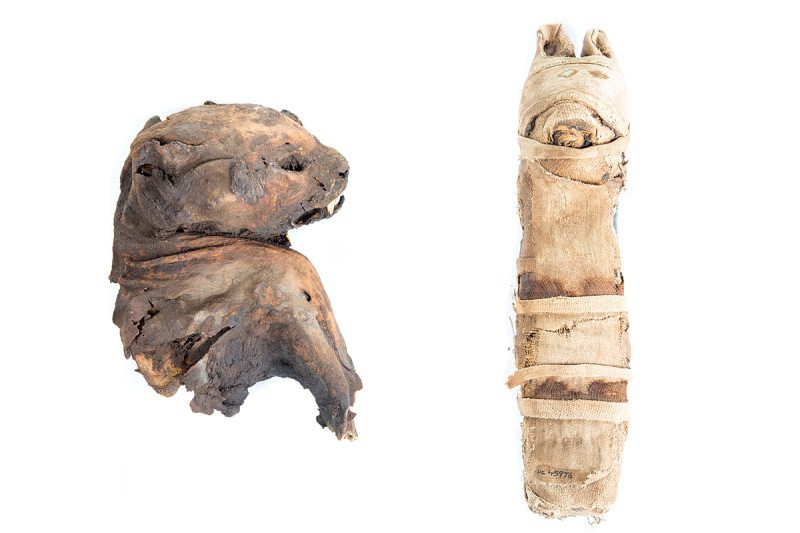
Having learned that humanity isn’t so much a species, more a narrow and superbly weaponised ecosystem, the visitor is ready for a second go. Now the exhibits resonate wonderfully: the bones, the pictures, the jars. Is the subject of Cornelis de Visscher’s mid-17th-century engraving The Rat-Catcher, the catcher himself or the rat in his cage? There are mice used in diabetes research, ironed flat at death and mounted on cards like obscene tombstones. Nearby, a mummified cat head possesses extraordinary innate dignity: no wonder the animal was a focus of worship.

Leaving Ordinary Animals and the museum, I found myself standing under an orange sky, courtesy of Hurricane Ophelia, which had recently brought ash and dust from runaway forest fires to smother Europe’s Atlantic seaboard. Under that dead light, humans gawped at a red sun while, across the road from me, a pet dog, brought to heel, yawned, as though to say: who cares about the sky? Master will feed us. Mistress knows best.

But the exhibition had thrown me out of my complacency, and rarely have I felt less easy with the human project.

Bloody marvellous

Visiting the exhibition Blood: Life Uncut at Copeland Gallery, London, for New Scientist, 20 October 2017

It caused a storm on social media when it was first shown in 2013, but Dan Glaser, director of Science Gallery London, has a deep and obvious affection for Casting Off My Womb, a scarf knitted over the course of a month by Australian artist Casey Jenkins using spools of yarn stored daily in her vagina. The scarf hangs across the gallery hosting Blood: Life uncut as a visceral and compellingly complex record of one woman’s menstrual cycle. “How else could you ever present that much data?” Glaser enthuses.

“Data” is one of Glaser’s watchwords. So is “visualisation”. He claims not to know much about art. It’s a pose, of course, but a useful one. After 15 years as a research neurologist, Glaser has reinvented himself as an impresario of science communication. His approach is bold: to wrest the gallery space off the art world and apply it to his own, very different ends.

This is the latest in a series of small, off-site exhibitions, and it’s in an out-of-the-way former industrial space in Peckham, south London, because the actual Science Gallery London building won’t be ready until next year.

Everything on show is meant to illustrate medical and scientific ideas. This is why they are here: they are only coincidentally works of performance art, or conceptual art, or what have you.

Normally, this approach encourages dull, derivative work. And if Glaser and his colleagues were as naive as they like to make out, that’s no doubt what we would have got. But the works here, including many new commissions, are often beautiful, and always visually arresting.

Inspired by research into sickle cell anaemia conducted at King’s College London (the gallery’s owner), Glaser and the show’s curator, Andy Franzkowiak, have assembled an exhibition that can be read both for its beauty and for its scientific pertinence.

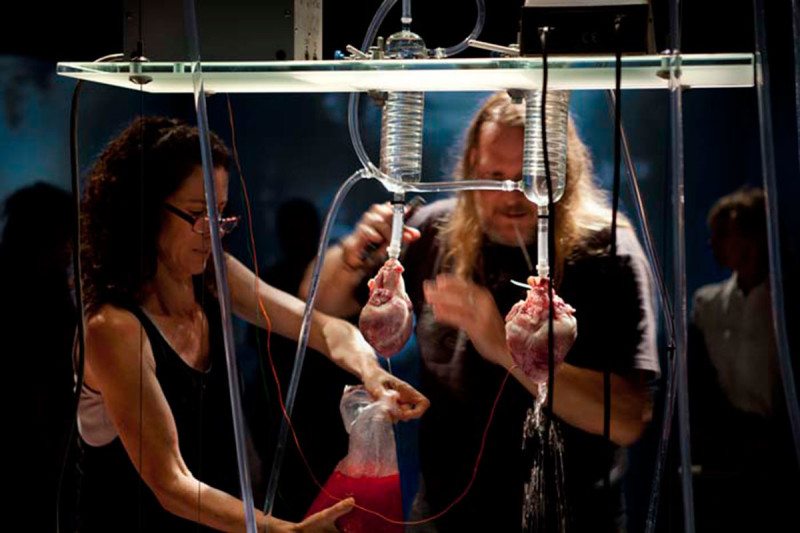
Given the show quite literally drips with the red stuff, it is still capable of surprising subtlety. Turn from the mechanical behemoth perfusing a bucket’s worth of pigs’ blood in Peta Clancy and Helen Pynor’s installation The Body is a Big Place, and you confront a video filmed in the waters of a municipal swimming pool.

Those people clinging to the sides are organ donors, potential recipients and their families. They are each of them out of their depth in an alien environment, seen through a medium and at an angle that makes identities impossible to establish. If you want an image of what it is like to be caught at the end of your tether in the toils of a necessarily complex and bureaucratic system – well, this video is surely it.

Some of the best pieces here are the most direct. In a riposte to the usual cock-and-balls graffiti found in public toilets, the Hotham Street Ladies have decorated the walls of the gallery’s gents with menstruating uteruses made of icing sugar and sweets.

And then there’s Tough Blood by film-maker Stephen Rudder and choreographer Skylitz, a dance conveying, with brutal beauty, the excruciatingly painful episodes suffered by people with sickle cell anaemia.

The show ends with Jordan Eagles’ installation Blood Equality: a room full of overhead projectors displaying acetates smothered in the dried blood of sexually active gay, bisexual and transgender people.

It’s a campaigning piece, made to highlight the UK and US blood services’ refusal to accept donations from this cohort on the same basis as other groups. The eye is drawn first to the acetate sheets themselves, and naturally enough – given the associations between spilt blood and violence and pain – it’s not a pretty sight. It might not be until you turn to leave the room that it dawns on you that this blood is being projected. The walls and ceiling and floor are covered with it: rich, crackled, stained and impossibly beautiful.

In a strong show, it’s hard to think of a work that better expresses the intent of this queasy, seductive exploration of “the essential, expressive and visceral nature of blood”.

The genius of making a little go a long way

Visiting Illuminating India at London’s Science Museum for New Scientist, 10 October 2017

One can taste the boosterism in the air at London’s Science Museum as it introduces its two-gallery exhibition, Illuminating India.

There is a cafe serving excellent Indian street food. Someone next to me used the word “Commonwealth” without irony. Would there have been such a spirit without Brexit? Probably not: this is a show about the genius of another country that very much wants to project Britain’s own global aspirations. Any historian of Anglo-British relations will give a sardonic smile at this.

When you visit (and you should), try to look around the smaller, artefacts-driven gallery first.

This room tells the stories of Indian science – stories plural because there can never be one, linear account of how such dissimilar and contesting cultures struggled and more or less succeeded in understanding and exploiting a space of such extraordinary complexity.

Naturally, since India has a past to boast of, pride of place goes to its indigenous cultures. It was the Indus valley civilisation, after all, whose peoples fashioned standardised weights around 4000 years ago: items that indicate high levels of arithmetical literacy, communication and trade.

And there are reconstructions of Ayurvedic surgical instruments described in records dating back to around 500 BC. Also on show is a 1800-year-old document containing the first example of the use of zero. Wonderfully, radiocarbon dating pushed the document’s age back by 500 years just before the exhibition opened.

It is a measure of the wisdom of the curators that such an illustrious past isn’t allowed to overshadow India’s more recent achievements. For example, Jagadish Chandra Bose’s early-20th-century crescograph, designed to observe plant growth at a magnification of 10,000 times, reminds us why he is often called the father of modern Indian science.

Another winning object is Chandrasekhara Raman’s spectrometer. Raman was the first Indian to win a Nobel prize, for physics, in 1930.

And what of that other great empire far to the north? Well, there is a map of George Everest’s career-defining Great Trigonometrical Survey of India – the teamwork of 70 years distilled on a single, meticulously drawn map. And nearby are details of a recent collaboration between Surrey Satellite Technology in the UK and the Indian Space Research Organisation on the Earth-surveying NovaSAR satellite.

Some of the deeper, darker questions about Anglo-Indian relations are posed in the second, photographic half of the exhibition.

There, the anthropometric photographs of Maurice Portman make a depressingly silly impression next to the respectful, revealing and entirely unlicentious photographs Ram Singh took of the women of his own harem: powerful political players all, who shaped the country through marriage and allied treaties.

It is hard to say why the split nature of Illuminating India works as well as it does. It has something to do with the way the rooms handle political power.

India’s science, from its ancient stepwells that gathered monsoon waters to the bureaucratic and algorithmic marvel that is today’s tiffin tin-based lunch delivery system, has been driven by the complex needs of a massive population making a living.

Similarly, its doing-more-with-less style of innovation is reflected in everything from the world’s cheapest artificial leg (the Jaipur leg, made of rubber, plastic and wood) to the world’s cheapest Mars-orbiting camera.

Visitors to Illuminating India will leave thinking that technology may, after all, be making the world a better place, and that what people do is ultimately more influential than who they are.

Stalin’s meteorologist

I reviewed Olivier Rolin’s new book for The Daily Telegraph

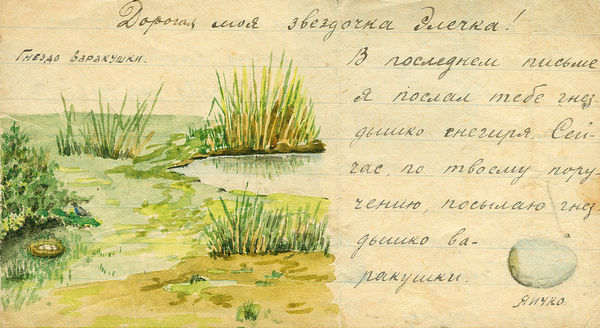
750,000 shot. This figure is exact; the Soviet secret police, the NKVD, kept meticulous records relating to their activities during Stalin’s Great Purge. How is anyone to encompass in words this horror, barely 80 years old? Some writers find the one to stand for the all: an Everyman to focus the reader’s horror and pity. Olivier Rolin found his when he was shown drawings and watercolours made by Alexey Wangenheim, an inmate of the Solovki prison camp in Russia’s Arctic north. He made them for his daughter, and they are reproduced as touching miniatures in this slim, devastating book, part travelogue, part transliteration of Wangenheim’s few letters home.

While many undesirables were labelled by national or racial identity, a huge number were betrayed by their accomplishments. Before he was denounced by a jealous colleague, Wangenheim ran a pan-Soviet weather service. He was not an exceptional scientist: more an efficient bureaucrat. He cannot even be relied on “to give colourful descriptions of the glories of nature” before setting sail, with over a thousand others, for a secret destination, not far outside the town of Medvezhegorsk. There, some time around October 1937, a single NKVD officer dispatched the lot of them, though he had help with the cudgelling, the transport, the grave-digging. While he went to work with his Nagant pistol, others were washing blood and brains off the trucks and tarpaulins.

Right to the bitter end, Wangenheim is a boring correspondent, always banging on about the Party. “My faith in the Soviet authorities has in no way been shaken” he says. “Has Comrade Stalin received my letter?” And again: “I have battled in my heart not to allow myself to think ill of the Soviet authorities or of the leaders”. Rolin makes gold of such monotony, exploiting the degree to which French lends itself to lists and repeated figures, and his translator Ros Schwartz has rendered these into English that is not just palatable, but often thrilling and always freighted with dread.

When Wangenheim is not reassuring his wife about the Bolshevik project, he is making mosaics out of stone chippings and brick dust: meticulous little portraits of — of all people — Stalin. Rolin openly struggles to understand his subject’s motivation: “In any case, blinkeredness or pathetic cunning, there is something sinister about seeing this man, this scholar, making of his own volition the portrait of the man in whose name he is being crucified.”

That Rolin finds a mystery here is of a piece with his awkward nostalgia for the promise of the Bolshevik revolution. Hovering like a miasma over some pages (though Rolin is too smart to succumb utterly) is that hoary old meme, “the revolution betrayed”. So let us be clear: the revolution was not betrayed. The revolution panned out exactly the way it was always going to pan out, whether Stalin was at the helm or not. It is also exactly the way the French revolution panned out, and for exactly the same reason.

Both French and Socialist revolutions sought to reinvent politics to reflect the imminent unification of all branches of human knowledge, and consequently, their radical simplification. By Marx’s day this idea, under the label “scientism”, had become yawningly conventional: also wrong.

Certainly by the time of the Bolshevik revolution, scientists better than Wangenheim — physicists, most famously — knew that the universe would not brook such simplification, neither under Marx nor under any other totalising system. Rationality remains a superb tool with which to investigate the world. But as a working model of the world, guiding political action, it leads only to terror.

To understand Wangenheim’s mosaic-making, we have to look past his work, diligently centralising and simplifying his own meteorological science to the point where a jealous colleague, deprived of his sinecure, denounced him. We need to look at the human consequences of this attempt at scientific government, and particularly at what radical simplification does to the human psyche. To order and simplify life is to bureaucratise it, and to bureaucratise human beings is make them behave like machines. Rolin says Wangenheim clung to the party for the sake of his own sanity. I don’t doubt it. But to cling to any human institution, or to any such removed and fortressed individual, is the act, not of a suffering human being but of a malfunctioning machine.

At the end of his 1940 film The Great Dictator Charles Chaplin, dressed in Adolf Hitler’s motley, broke the fourth wall to declare war on the “machine men with machine minds” that were then marching roughshod across his world. Regardless of Hitler’s defeat, this was a war we assuredly lost. To be sure the bureaucratic infection, like all infections, has adapted to ensure its own survival, and it is not so virulent as it was. The pleasures of bureaucracy are more evident now; its damages, though still very real, are less evident. “Disruption” has replaced the Purge. The Twitter user has replaced the police informant.

But let us be explicit here, where Rolin has been admirably artful and quietly insidious: the pleasures of bureaucracy in both eras are exactly the same. Wangenheim’s murderers lived in a world that had been made radically simple for them. In Utopia, all you have to do is your job (though if you don’t, Utopia falls apart). These men weren’t deprived of humanity: they were relieved of it. They experienced exactly what you or I feel when the burden of life’s ambiguities is lifted of a sudden from our shoulders: contentment, bordering on joy.

A kind of “symbol knitting”

Reviewing new books by Paul Lockhart and Ian Stewart for The Spectator 

It’s odd, when you think about it, that mathematics ever got going. We have no innate genius for numbers. Drop five stones on the ground, and most of us will see five stones without counting. Six stones are a challenge. Presented with seven stones, we will have to start grouping, tallying and making patterns.

This is arithmetic, ‘a kind of “symbol knitting”’ according to the maths researcher and sometime teacher Paul Lockhart, whose Arithmetic explains how counting systems evolved to facilitate communication and trade, and ended up watering (by no very obvious route) the metaphysical gardens of mathematics.

Lockhart shamelessly (and successfully) supplements the archeological record with invented number systems of his own. His three fictitious early peoples have decided to group numbers differently: in fours, in fives, and in sevens. Now watch as they try to communicate. It’s a charming conceit.

Arithmetic is supposed to be easy, acquired through play and practice rather than through the kind of pseudo-theoretical ponderings that blighted my 1970s-era state education. Lockhart has a lot of time for Roman numerals, an effortlessly simple base-ten system which features subgroup symbols like V (5), L (50) and D (500) to smooth things along. From glorified tallying systems like this, it’s but a short leap to the abacus.

It took an eye-watering six centuries for Hindu-Arabic numbers to catch on in Europe (via Fibonacci’s Liber Abaci of 1202). For most of us, abandoning intuitive tally marks and bead positions for a set of nine exotic squiggles and a dot (the forerunner of zero) is a lot of cost for an impossibly distant benefit. ‘You can get good at it if you want to,’ says Lockhart, in a fit of under-selling, ‘but it is no big deal either way.’

It took another four centuries for calculation to become a career, as sea-going powers of the late 18th century wrestled with the problems of navigation. In an effort to improve the accuracy of their logarithmic tables, French mathematicians broke the necessary calculations down into simple steps involving only addition and subtraction, assigning each step to human ‘computers’.

What was there about navigation that involved such effortful calculation? Blame a round earth: the moment we pass from figures bounded by straight lines or flat surfaces we run slap into all the problems of continuity and the mazes of irrational numbers. Pi, the ratio of a circle’s circumference to its diameter, is ugly enough in base 10 (3.1419…). But calculate pi in any base, and it churns out numbers forever. It cannot be expressed as a fraction of any whole number. Mathematics began when practical thinkers like Archimedes decided to ignore naysayers like Zeno (whose paradoxes were meant to bury mathematics, not to praise it) and deal with nonsenses like pi and the square root of 1.

How do such monstrosities yield such sensible results? Because mathematics is magical. Deal with it.

Ian Stewart deals with it rather well in Significant Figures, his hagiographical compendium of 25 great mathematicians’ lives. It’s easy to quibble. One of the criteria for Stewart’s selection was, he tells us, diversity. Like everybody else, he wants to have written Tom Stoppard’s Arcadia, championing (if necessary, inventing) some unsung heroine to enliven a male-dominated field. So he relegates Charles Babbage to Ada King’s little helper, then repents by quoting the opinion of Babbage’s biographer Anthony Hyman (perfectly justified, so far as I know) that ‘there is not a scrap of evidence that Ada ever attempted original mathematical work’. Well, that’s fashion for you.

In general, Stewart is the least modish of writers, delivering new scholarship on ancient Chinese and Indian mathematics to supplement a well-rehearsed body of knowledge about the western tradition. A prolific writer himself, Stewart is good at identifying the audiences for mathematics at different periods. The first recognisable algebra book, by Al-Khwarizmi, written in the first half of the 9th century, was commissioned for a popular audience. Western examples of popular form include Cardano’s Book on Games of Chance, published 1663. It was the discipline’s first foray into probability.

As a subject for writers, mathematics sits somewhere between physics and classical music. Like physics, it requires that readers acquire a theoretical minimum, without which nothing will make much sense. (Unmathematical readers should not start withSignificant Figures; it is far too compressed.) At the same time, like classical music, mathematics will not stand too much radical reinterpretation, so that biography ends up playing a disconcertingly large role in the scholarship.

In his potted biographies Stewart supplements but makes no attempt to supersede Eric Temple Bell, whose history Men of Mathematics of 1937 remains canonical. This is wise: you wouldn’t remake Civilisation by ignoring Kenneth Clark. At the same time, one can’t help regretting the degree to which a Scottish-born mathematician and science fiction writer born in 1945 has had his limits set by the work of a Scottish-born mathematician and science fiction writer born in 1883. It can’t be helped. Mathematical results are not superseded. When the ancient Babylonians worked out how to solve quadratic equations, their result never became obsolete.

This is, I suspect, why both Lockhart and Stewart have each ended up writing good books about territories adjacent to the meat of mathematics. The difference is that Lockhart did this deliberately. Stewart simply ran out of room.

This way lies madness

Playing Hellblade for New Scientist, 29 August 2017

You are Senua, a Pictish outcast whose lover has been sacrificed to the gods by homicidal Norse invaders. To release his spirit, you must enter Hel, their underworld.

But is this all real?

Three years ago, Paul Fletcher, a psychiatrist at the Behavioural and Clinical Neuroscience Institute in Cambridge, UK, took a call from games company Ninja Theory. The firm wanted help creating a character who suffered from severe psychosis.

“My defences were up,” Fletcher admits, “but quickly I realised I was in serious company. We started by discussing the kinds of hallucinations people experience, and within two or three sessions we were into the neuroscience.”

Senua’s world blurs as she moves. The walls crawl as she passes. When she looks in her mirror, the wrong voice comes screaming out of her reflected mouth. “But more interesting,” recalls Ninja Theory’s co-founder Tameem Antoniades, “was the way someone in psychosis will make sense of their world by making associations: ones that outsiders might find very strange.”

Players will enjoy the way that runic images and the features of Senua’s landscape conjoin in perspectival games that further or frustrate her progress. And there are incidental delights: at one point, the embers of a distant fire pulse to the rhythm of Senua’s breathing.

Hellblade is more than a journey through a hallucinatory landscape (and hallucinatory it is, passing from flaming killing fields through sun-kissed meadows to a corridor of withered arms). It’s about a rational hero desperately trying to make sense of her world. “Most of us are pretty bad at that,” Fletcher points out.

He’s referring to a paper he co-wrote a couple of years ago, showing that people in the very early stages of psychosis are actually better at interpreting ambiguous visual information (think spotting the Dalmatian illusion, in which you see a dog image from the dots) than the rest of us. “Someone — I’ve never been able to find out who — said that perception is controlled hallucination. This is true. You bring what you know to bear on what you sense. That is how we recognise things.”

Not all people who experience hallucinations consider them a problem. Some who hear voices, for example, have joined networks dedicated to removing the social stigma attached to the phenomenon. “A lot of people suffer not because of the content of their hallucination, but because of being ostracised,” Fletcher says.

At the same time, games are becoming increasingly immersive. Hellblade’s binaural soundtrack, placing Senua’s intrusive voices in distinct locales for the player, is a case in point. Fletcher’s hope is that psychiatrists and designers can work together to create immersive environments tailored to the needs of specific individuals.

Avatar therapy“, which uses a screen-based, computer-generated figure to represent, normalise and quell an aggressive intrusive voice, is already proving its clinical worth.

For Antoniades, meanwhile, “video games are becoming alternate digital realities”. Hellblade’s 8 hours of gameplay are a gruelling experience, made compelling by a staggering motion-capture performance by Melina Juergens, a freelance video editor who was initially just filling in for a “real” actress.

Certain players will find the game rather restrictive, and some of those limits are imposed by the psychological realism. Senua’s demons are consistent, staying more or less the same. Psychosis is not a variety show

It’s worth noting, though, that the game’s most traditional element is also its most radical: while Senua may be in the throes of psychosis, she is also a hero.