
Art that hides in plain sight

Visiting Takis’s survey show at Tate Modern for the Spectator, 13 July 2019

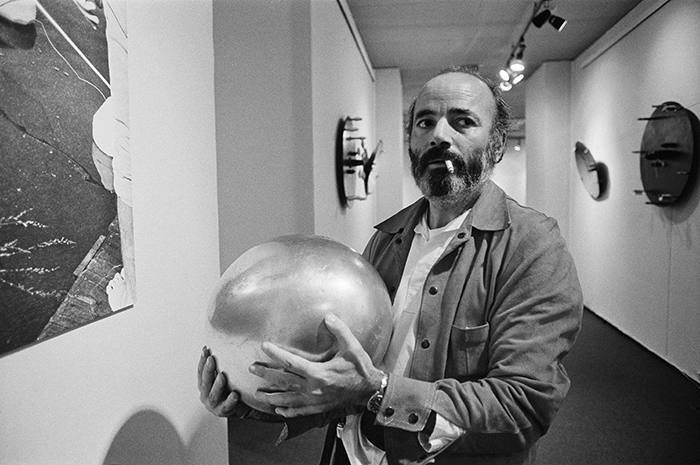
Steel flowers bend in a ‘breeze’ generated by magnetic pendulums. This is the first thing you see as you enter Tate Modern’s survey show. And ‘Magnetic Fields’ (1969) is pretty enough: the work of this self-taught artist, now in his nineties, has rarely been so gentle, or so intuitive.

But there’s a problem. ‘I would like to render [electromagnetism] visible so as to communicate its existence and make its importance known,’ Takis has written. But magnetism hides in plain sight. A certain amount of interference is necessary before it will reveal itself.

Does the interference matter? Does the fact that gallery assistants have to activate this work every ten minutes spoil the ‘cosmicness’ of Takis’s art? The sculptor Alberto Giacometti thought so: ‘One day, during one of my exhibitions, he told me that he didn’t agree with my use of electricity for some of my works,’ Takis recalled in an interview in 1990. ‘He disliked the fact that if you switched off the power, the work would cease to function.’

Why Takis’s pieces should prompt such a finicky response isn’t immediately obvious. What do we expect of this stuff? Perpetual motion? One moment we wonder at the invisible force that can suspend delicate metal cones fractions of an inch above the surface of a canvas. The next moment, we’re peering where we shouldn’t, trying to figure out the circuitry that keeps a sphere swinging over a steel wire.

We’re presented with many wonders — objects rendered weightless, or put into permanent vibration. And as the show progresses (it’s surprisingly large, designed to unfold around corners and spring surprises at your back) the work gets less intuitive, and a lot louder. A pendulum, orbiting a strong, floor-mounted magnet, whips eccentrically and not at all gently about its centre of attraction. It’s like nothing in visible nature. There’s no ‘magnetic breeze’ here, no ‘force like gravity’, just the thing, the weirdness itself. Now we’re getting somewhere.

Born Panayiotis Vassilakis in 1925, Takis discovered his alchemical calling early. One memoir recalls how ‘as a small boy, he would bury pieces of broken glass and other such oddments in the ground to see what happened to them when he impatiently dug them out a couple of days later’. In 1954 he moved to Paris, where he fell in with Marcel Duchamp and Yves Tanguy. In London he inspired a group of young artists who went on to create the politically radical Signals London gallery. In America the beats admired him, the Massachusetts Institute of Technology gave him a fellowship, and the composer John Cage encouraged his shamanism. (‘I cannot think of my work as entirely my work,’ Takis writes. ‘In a sense, I’m only a transmitter.’)

Takis treads the same awkward line in visual art that Cage did in music. Cage promised us that behind the music of signs lay some sort of sonic essence. But his snark hunt proved rather dull. Takis’s own search ends more happily, if only because the eye, in its search for signs, doesn’t admit defeat nearly as quickly as the ear. Takis’s traffic signals, stripped of context and perched on tall poles, become eyes full of sadness and yearning. They still mean something. They’re still signs of something.

Made from oddments plucked from boxes of army and air-force surplus on Tottenham Court Road, some of Takis’s more engineered work has dated. We look at it as a sort of industrial archaeology. Its radicalism, its status as ‘anti-technology’, is hard to fathom.

But the simpler pieces need no translation. They are (suitably enough, for an artist whose works often screech and rattle) a sort of visual equivalent of music. They do not mean anything. They are meaning. They reflect harmonious relationships between energy and space and mass. Takis’s work is like his subject: it hides in plain sight.

The end of the line

Watching The Hummingbird Project, written and directed by Kim Nguyen, for New Scientist, 10 July 2019

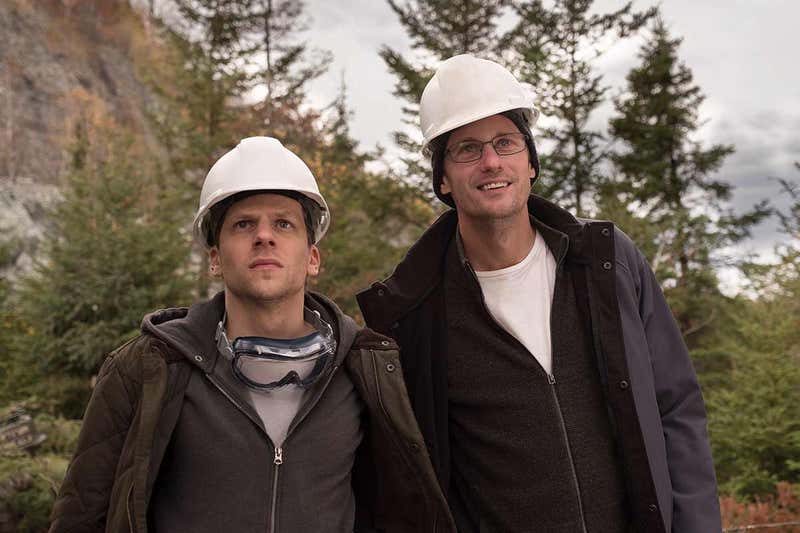
IT IS 2011, a couple of years after the Great Recession. Quantitative analyst Vincent (Jesse Eisenberg) and his programmer cousin Anton (Alexander Skarsgård) have found a way to steal a march on Wall Street: trading a millisecond ahead of the competition.

Where will they find this tiny, telling pinch of extra time? They plan to make it themselves, by stretching an optical fibre from Kansas City Internet Exchange to New York in as straight a line as possible. While everyone else waits 17 milliseconds for their information (the beat of a hummingbird’s wing is the film’s poetic, and accurate enough, conceit), Vincent, Anton and their backers will only have to wait 16 milliseconds. That’s time enough to squeeze in a few thousand algorithmically generated trades.

The trick will be to lay the cable as straight as the law allows. Never mind Amish farms, Appalachian mountain ranges, loneliness, obsession or physical frailty. They will build this thousand-mile long, 4-inch wide fibre tunnel if it kills them.

Scripted and filmed like a true-life story (after all, who in their right mind would make up a thriller about high-frequency trading infrastructures?) The Hummingbird Project, incredibly, springs entirely from the head of writer-director Kim Nguyen. It can’t quite decide whether to be a think piece or a buddy movie, but it can be staggeringly funny. Salma Hayek has indecent amounts of fun as Eva, the cousins’ abandoned boss.“I think we can break the walls of perception together!” she screams at one point, in a frantic attempt to keep them on her payroll.

It is one of those stories that, in being made up, encapsulates a lot of historical and technical insight. Hayek’s Eva can talk “nanosecond financial engineering” all she wants. As a sceptical investor notes, her style of trading is really just scalping: profiting off small, short-lived price anomalies between financial exchanges.

Scalping is hard because one hefty loss wipes out millions of tiny profitable trades. And it is also impossible to do without computers because markets adjust quicker than the eye can follow.

When world markets crashed in 2008, this strategy took a lot of the heat. It was easier for politicians to point the finger at runaway tech and artificially accelerated trading than to challenge and dismantle key institutions. But while trading algorithms have caused the odd “flash crash”, they do far more to sustain a market economy than to threaten it. This is why so-called mechanical arbitrage runs over half the trades in many markets.

Vincent and Anton’s project is entirely reasonable in a world that puts commercial operations as close to market exchanges as possible to steal millisecond advantages over competitors. Hanging over the cousins’ project is a rival bid to leave fibre behind and send financial information by microwave (and the discussion of “pulse-shaping algorithms” will warm the heart of any telecoms engineer). Today, the industry is even more complex, with atomic clocks to arbitrate the timing of financial information. Financial instruments that scalp multiple markets are driving the creation of strategic data centres in unlikely places, as banks head for space via Elon Musk’s Starlink servers.

All of which gives the film a curiously nostalgic feel. Do you recall when it took a thousandth of a second to win or lose a fortune? What slowcoaches we were, eight years ago.

A clown, a fool, a “klimatosser”

I went round to Olafur’s house for New Scientist, 13 July 2019

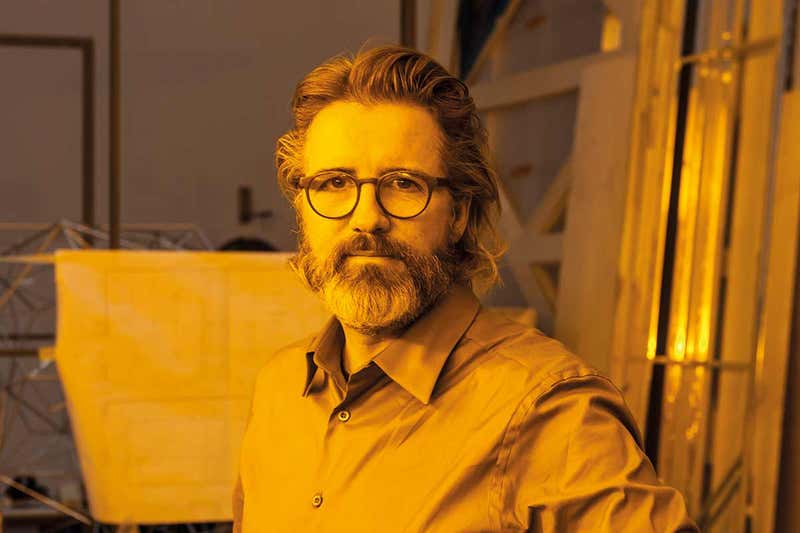
SIXTEEN years ago, Danish-Icelandic artist Olafur Eliasson caught London off guard with a massive indoor artwork. Some 2 million people visited The Weather Project at the Tate Modern gallery to bask in the glow of a giant, artificial sun. It was a rare moment of collective awe – created using the simplest of materials. This week, Eliasson is back with a major retrospective exhibition and most of the pieces are new to the UK. But a lot has changed since 2003. Days before his new show opens, we asked the artist about selfie culture, what accessible art looks like in the teched-up Anthropocene, and the hefty carbon footprint that pictures and installations leave behind.

Do big art and big science have to justify themselves to people who don’t get the point?

Sadly, yes, and it’s an argument we’re losing because great science and great art are very much long-term projects, views given to politicians with short-term goals. Making a work might take 10 years. Getting it shown might take another 10. For people to finally settle down with the experience might take 10 years, too. It’s a very slow piece of communication.

You command big budgets. Is the relationship with money tricky for artists?

To make big projects is expensive. But think about how much money an alcohol company throws into the promotion of some new drink! I believe there are studies showing that if you throw a euro or a pound into the culture sector, it generates two to three times as much income. There are more people working in the culture sector than there are in the car industry. It’s also a part of our democratic stability. It’s a space where we feel we can have difficult conversations. Is that expensive? No. It’s actually very cheap.

What can we expect from the show at Tate Modern?

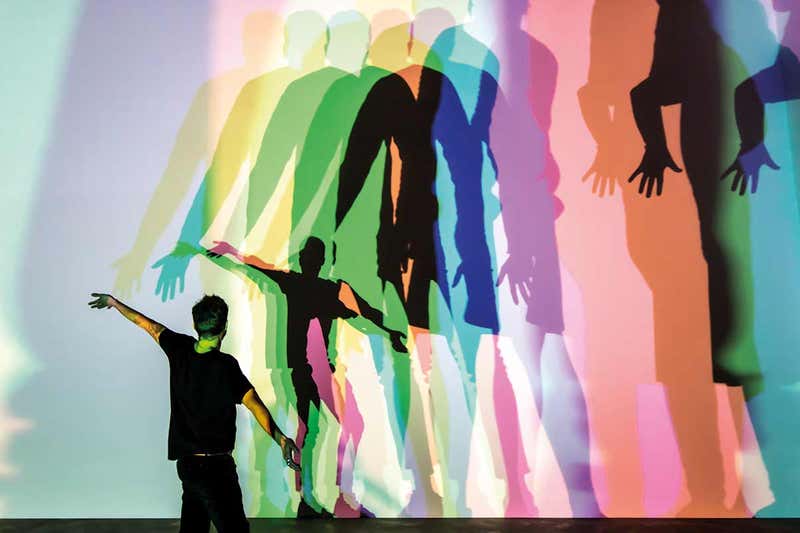
We have about 42 works, big and small. Some are entertaining, like Your Uncertain Shadow and Your Blind Passenger, where a tunnel full of smoke gives you the experience of being blind. Of course, instantly your ears get more active, you touch the wall and stretch out your hand so as not to bump into somebody. Other works are more contemplative.

Wasn’t there a plan to stage something outside the gallery?

Yes. We’re installing three waterfalls. We know today there are no real waterfalls left because they’re all human-influenced, if not human-made. So our waterfalls are as real as anything in nature – or as unreal.

Do you consider yourself an environmental artist?

In the show, there is a series of 40 photos of glacial tongues from Iceland, taken in 1998. I believed then that culture and nature were two distinct spaces. I didn’t fully understand that the Anthropocene age had started. When people look at the photos now, they say “this is about climate”. When I took them, it was about their beauty. Soon, I’ll be retaking those photos from the same angles, in the same places. Maybe in October, if I’ve finished, we will sneak in the new pictures so we have the two series hanging next to each other, 20 years apart.

In December, you brought 30 polar ice blocks from Greenland to London and let them melt. Why?

Some 235,000 people were estimated to have been not just walking by, but at the ice – sometimes physically hugging it – and this, I think, made Ice Watch a clear and robust statement. This is what the data from the scientists looks like. This is what a block of ice 15,000 years old looks like. And it’s going to be gone in a week.

How big is the carbon footprint of your work?

We worked with a consultancy called Julie’s Bicycle, which helps people in the culture sector calculate their climate footprint. The London project came to the equivalent of 52 return flights from London to Ilulissat in Greenland. For almost two years, we’ve been trying to come up with a step-by-step solution for my Berlin studio. And whenever I work with museums and logistics teams, I ask them to come up with a response to the climate.

Our readers care about green footprints, but does everyone?

I was with teenage children in Ethiopia in January. They knew all about global warming, they understood about greenhouse gases and how it wasn’t really them, their parents or their ecology that created this problem. There is no place left where people don’t know this. There are deniers in places like the White House who deny things because they’re following other economic or power priorities.

What can artists bring to the climate debate?

Recently, a far right Danish politician lost a huge number of voters and one of the most prominent members of that party said, well, it’s all these climate fools. And immediately, across the political spectrum, people picked up on it, saying “I’m a clown, a fool, a klimatosser“. If we’re going to re-engineer the systems of tomorrow, we need to risk being foolish. Previous models of success can’t be applied. The planet simply can’t host them any longer. We need to take risks.

How has social media affected your work?

It’s kind of the stone age, the way people walk through exhibitions. People walk up to a piece of art that’s very tangible, highly emotional, with sounds and smells and all sorts of things – and they just bloody look at their phone! The problem isn’t necessarily the audience, but the way institutions over-explain everything, as though without a long text people just won’t get it. And once we are used to that, that’s how we react: “My God, there was no text! I had to find out everything myself!” I say, yes, art and culture are hard work, not consumerism. You have to give something to get something.

Does activism consume much of your working life?

I’m lucky that art can be seen to be flirting with activism, and maybe there is a fertilising relationship there. But that’s one of the good things about getting older: you know there are things that you aren’t good at. I’m very content just being an artist.

But you run a business to drive social change.

I have a social entrepreneurship project called Little Sun, which makes a small, handheld, portable solar lantern. On one side, it has a photovoltaic panel, on the other an LED. It replaces the kerosene or petroleum lantern that you would have used previously. Obviously, sitting with an open-wick petroleum lantern is both very unhealthy and very bad for the climate. It’s also expensive.

Is the Little Sun a success?

We’ve done studies on the impact of the lamp. Say a family eats dinner, then the girl does the dishes while the boy does his homework. Once the girl is done, she sits down only to find there’s not enough petroleum left for her homework. One study showed that the Little Sun increased the boy’s homework efficiency by 20 per cent, but increased the girl’s efficiency by 80 per cent. So the Little Sun project is incredibly inspiring.


The weather forecast: a triumph hiding in plain sight

Reading The Weather Machine by Andrew Blum (Bodley Head) for the Telegraph, 6 July 2019

Reading New York journalist Andrew Blum’s new book has cured me of a foppish and annoying habit. I no longer dangle an umbrella off my arm on sunny days, tripping up my fellow commuters before (inevitably) mislaying the bloody thing on the train to Coulsdon Town. Very late, and to my considerable embarrassment, I have discovered just how reliable the weather forecast is.

My thoroughly English prejudice against the dark art of weather prediction was already set by the time the European Centre for Medium-Range Weather Forecasts opened in Reading in 1979. Then the ECMWF claimed to be able to see three days into the future. Six years later, it could see five days ahead. It knew about Sandy, the deadliest hurricane of 2012, eight days ahead, and it expects to predict high-impact events a fortnight before they happen by the year 2025.

The ECMWF is a world leader, but it’s not an outlier. Look at the figures: weather forecasts have been getting consistently better for 40 straight years. Blum reckons this makes the current global complex of machines, systems, networks and acronyms (and there are lots of acronyms) “a high point of science and technology’s aspirations for society”.

He knows this is a minority view: “The weather machine is a wonder we treat as a banality,” he writes: “a tool that we haven’t yet learned to trust.” The Weather Machine is his attempt to convey the technical brilliance and political significance of an achievement that hides in plain sight.

The machine’s complexity alone is off all familiar charts, and sets Blum significant challenge. “As a rocket scientist at the Jet Propulsion Laboratory put it to me… landing a spacecraft on Mars requires dealing with hundreds of variables,” he writes; “making a global atmospheric model requires hundreds of thousands.” Blum does an excellent job of describing how meteorological theory and observation were first stitched together, and why even today their relationship is a stormy one.

His story opens in heroic times, with Robert FitzRoy one of his more engaging heroes. Fitzroy is best remembered for captaining the HMS Beagle and weathering the puppyish enthusiasm of a young Charles Darwin. But his real claim to fame is as a meteorologist. He dreamt up the term “forecast”, turned observations into predictions that saved sailors’ lives, and foresaw with clarity what a new generation of naval observers would look like. Distributed in space and capable of communicating instantaneously with each other, they would be “as if an eye in space looked down on the whole North Atlantic”.

You can’t produce an accurate forecast from observation alone, however. You also need a theory of how the weather works. The Norwegian physicist Vilhelm Bjerknes came up with the first mathematical model of the weather: a set of seven interlinked partial differential equations that handled the fact that the atmosphere is a far from ideal fluid. Sadly, Bjerknes’ model couldn’t yet predict anything — as he himself said, solutions to his equations “far exceed the means of today’s mathematical analysis”. As we see our models of the weather evolve, so we see works of individual genius replaced by systems of machine computation. In the observational realm, something similar happens: the heroic efforts of individual observers throw up trickles of insight that are soon subsumed in the torrent of data streaming from the orbiting artefacts of corporate and state engineering.

The American philosopher Timothy Morton dreamt up the term “hyperobject” to describe things that are too complex and numinous to describe in the plain terms. Blum, whose earlier book was Tubes: Behind the Scenes at the Internet (2012), fancies his chances at explaining human-built hyperobjects in solid, clear terms, without recourse to metaphor and poesy. In this book, for example, he recognises the close affinity of military and meteorological infrastructures (the staple of many a modish book on the surveillance state), but resists any suggestion that they are the same system.

His sobriety is impressive, given how easy it is to get drunk on this stuff. In October 1946, technicians at the White Sands Proving Ground in Nevada installed a camera in the nose cone of a captured V2, and by launching it, yielded photographs of a quarter of the US — nearly a million square miles banded by clouds “stretching hundreds of miles in rows like streets”. This wasn’t the first time a bit of weather kit acted as an expendable test in a programme of weapons development, and it certainly wasn’t the last. Today’s global weather system has not only benefited from military advancements in satellite positioning and remote sensing; it has made those systems possible. Blum allows that “we learned to see the whole earth thanks to the technology built to destroy the whole earth”. But he avoids paranoia.

Indeed, he is much more impressed by the way countries at hammer and tongs with each other on the political stage nevertheless collaborated closely and well on a global weather infrastructure. Point four of John F Kennedy’s famous 1961 speech on “Urgent National Needs” called for “a satellite system for worldwide weather observation”, and it wasn’t just militarily useful American satellites he had in mind for the task: in 1962 Harry Wexler of the U.S. Weather Bureau worked with his Soviet counterpart Viktor Bugaev on a report proposing a “World Weather Watch”, and by 1963 there was, Blum finds, “a conscious effort by scientists — on both sides of the Iron Curtain, in all corners of the earth — to design an integrated and coordinated apparatus” — this at a time when weather satellites were so expensive they could be justified only on national security grounds.

Blum’s book comes a little bit unstuck at the end. A final chapter that could easily have filled a third of the book is compressed into just a few pages’ handwaving and special pleading, as he conjures up a vision of a future in which the free and global nature of weather information has ceased to be a given and the weather machine, that “last bastion of international cooperation”, has become just one more atomised ghost of a future the colonial era once promised us.

Why end on such a minatory note? The answer, which is by no means obvious, is to be found in Reading. Today 22 nations pay for the ECMWF’s maintenance of a pair of Cray supercomputers. The fastest in the world, these machines must be upgraded every two years. In the US, meanwhile, weather observations rely primarily on the health of four geostationary satellites, at a cost of 11 billion dollars. (America’s whole National Weather Service budget costs only around $1billion.)

Blum leaves open the question, How is an organisation built by nation-states, committed to open data and borne of a global view, supposed to work in a world where information lives on private platforms and travels across private networks — a world in which billions of tiny temperature and barometric sensors, “in smartphones, home devices, attached to buildings, buses or airliners,” are aggregated by the likes of Google, IBM or Amazon?

One thing is disconcertingly clear: Blum’s weather machine, which in one sense is a marvel of continuing modernity, is also, truth be told, a dinosaur. It is ripe for disruption, of a sort that the world, grown so reliant on forecasting, could well do without.

All the ghosts in the machine

Reading All the Ghosts in the Machine: Illusions of immortality in the digital age by Elaine Kasket for New Scientist, 22 June 2019

Moving first-hand interviews and unnervingly honest recollections weave through psychologist Elaine Kasket’s first mainstream book, All the Ghosts in the Machine, an anatomy of mourning in the digital age. Unravelling that architecture turns up two distinct but complementary projects.

The first offers some support and practical guidance for people (and especially family members) who are blindsided by the practical and legal absurdities generated when people die in the flesh, while leaving their digital selves very much alive.

For some, the persistence of posthumous data, on Facebook, Instagram or some other corner of the social media landscape, is a source of “inestimable comfort”. For others, it brings “wracking emotional pain”. In neither case is it clear what actions are required, either to preserve, remove or manage that data. As a result, survivors usually oversee the profiles of the dead themselves – always assuming, of course, that they know their passwords. “In an effort to keep the profile ‘alive’ and to stay connected to their dead loved one,” Kasket writes, “a bereaved individual may essentially end up impersonating them.”

It used to be the family who had privileged access to the dead, to their personal effects, writings and photographs. Families are, as a consequence, disproportionately affected by the persistent failure of digital companies to distinguish between the dead and the living.

Who has control over a dead person’s legacy? What unspoken needs are being trammelled when their treasured photographs evaporate or, conversely, when their salacious post-divorce Tinder messages are disgorged? Can an individual’s digital legacy even be recognised for what it is in a medium that can’t distinguish between life and death?

Kasket’s other project is to explore this digital uncanny from a psychoanalytical perspective. Otherwise admirable 19th-century ideals of progress, hygiene and personal improvement have conned us into imagining that mourning is a more or less understood process of “letting go”. Kasket’s account of how this idea gained currency is a finely crafted comedy of intellectual errors.

In fact, grief doesn’t come in stages, and our relationships with the dead last far longer than we like to imagine. All the Ghosts in the Machine opens with an account of the author’s attempt to rehabilitate her grandmother’s bitchy reputation by posting her love letters on Instagram.

“I took a private correspondence that was not intended for me and transformed it from its original functions. I wanted it to challenge others’ ideas, and to affect their emotions… Ladies and gentlemen of today, I present to you the deep love my grandparents held for one another in 1945, ‘True romance’, heart emoticon.”

Eventually, Kasket realised that the version of her grandmother her post had created was no more truthful than the version that had existed before. And by then, of course, it was far too late.

The digital persistence of the dead is probably a good thing in these dissociated times. A culture of continuing bonds with the dead is much to be preferred over one in which we are all expected to “get over it”. But, as Kasket observes, there is much work to do, for “the digital age has made continuing bonds easier and harder all at the same time.”

Just a nuclear-powered dinosaur

Pondering the science of Godzilla for New Scientist, 12 June 2019

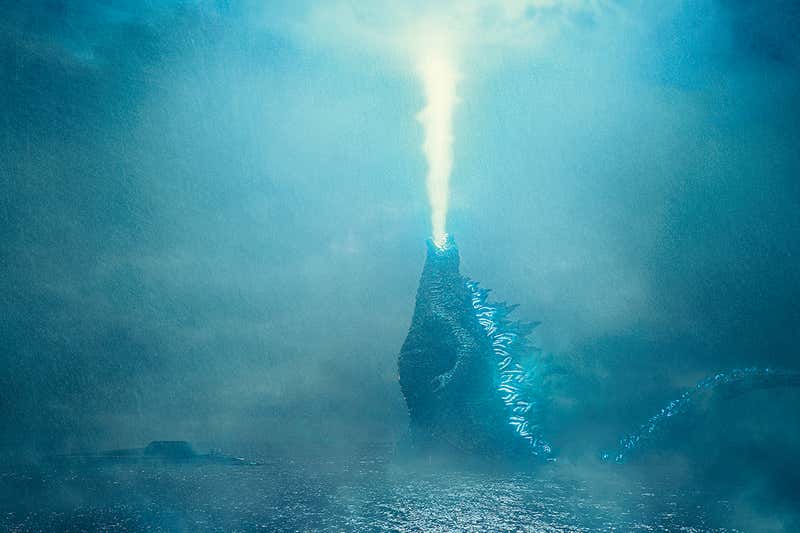
FOR Japanese children, Godzilla is the ultimate scary adult: fierce, honourable, clumsy and a bit out of control. For their grandparents, he’s the irradiated embodiment of wartime tragedy, a bad memory come to life. For the rest of us, I suppose, he’s “just” a nuclear-powered dinosaur.

Godzilla is also a pay cheque. Films featuring the epic creature, almost all by the Japanese studio Toho, have been produced since 1954, a cinematic franchise record. The current release, Godzilla: King of the monsters, is the 35th, and the third to be produced entirely within the Hollywood system.

Its human stars play the shattered Russell family. Millie Bobby Brown from TV hit Stranger Things is Madison, whose brother Andrew was killed during a 2014 kaiju (monster) attack on San Francisco. Her dad Mark is literally living with wolves; her mum Emma prefers kaiju to people.

Terroristic eco-warriors are out to awaken Godzilla’s subterranean cousins in an effort to bring the planet “back into balance” – and Emma is inclined to help them. Newsreel images of ruined San Francisco make her point: in five short years it has turned to jungle, accelerated by ionising radiation spilling from Godzilla’s insides.

Why do movies, stretching back to the giant ants of Them!, assume that excess radiation promotes growth? The evidence has always pointed the other way. Ionising radiation weakens and breaks up DNA, damaging cells enough to kill them, or cause them to mutate in ways that, somehow or other, lead to the grave. In humans, epidemiological studies show that even low doses of radiation increase the risk of cancer.

Still, human nature being what it is, whenever a new kind of ray is detected, we speculate about its magical properties. Radium, a radioactive metal, was discovered by Marie and Pierre Curie in 1898, and though it eventually killed her, it still found its way into the food chain thanks to products like Hippman-Blach bakery’s Radium Bread (made with radium-laced water, which was supposed to cure everything from arthritis to impotence to wrinkles).

Is there more to this accelerated-growth idea than magical thinking? “Hormesis” is the controversial notion that things that are dangerous in high doses might be beneficial to human health at lower levels. Some lab studies have shown the effect in action. Whether there is radiation hormesis, however, is a big question – and a timely one.

China’s space programme has studied the ability of plants to develop and thrive in conditions of microgravity and exposure to cosmic radiation in space. Since 1987, 66 mutant varieties have been cultivated through its space-breeding efforts.

So far, so workaday: “atomic gardening” has been around since the 1950s, exposing plants to radioactive sources (typically cobalt-60) to generate mutations, and over 2000 new varieties of agriculturally useful plants have been created this way.

The Chinese results, however, are a bit weird. Plants positively mutated during space flight have grown faster than their irradiated Earth-grown counterparts. Space-bred mutations do better than their “atomically gardened” controls, and no one is sure why.

Is there something magical about cosmic rays? Probably not, though if I were Godzilla (traditionally Earth’s first line of defence against alien attack) I would watch my back.

“And it will no longer be necessary to ransack the earth…”

Visiting Raw Materials: Plastics at the Nunnery Gallery, Bow Arts, for the Spectator, 1 June 2019

Plastics — even venerable, historically eloquent plastics — hardly draw the eye. As this show’s insightful accompanying publication (a snip at £3) would have it, ‘Plastics have no intrinsic form or texture, thus they are not materials that can be true to themselves.’ They exist within inverted commas. They can be shell-like, horn-like, stony, metallic — they do not really exist on their own behalf.

Mind you, the first vitrine in Raw Materials: Plastics at the Nunnery Gallery in east London contains an object of rare beauty: a small, mottled, crazed, discoloured sphere that looks for all the world like the planet Venus, reduced to handy scale.

It’s a billiard ball, made of the first plastic: cellulose nitrate. Its manufacture had been keenly anticipated. In the US, a $10,000 prize had been offered for anything that could replace ivory in the manufacture of billiard balls (and no wonder: a single tusk yields only three balls).

Under various brand names (Celluloid, Parkesine, Xylonite), and in spite of its tendency to catch fire (colliding snooker balls would occasionally explode), cellulose nitrate saved the elephant. And not just the elephant: plastics pioneer John Wesley Hyatt reckoned that ‘Celluloid [has] given the elephant, the tortoise, and the coral insect a respite in their native haunts; and it will no longer be necessary to ransack the earth in pursuit of substances which are constantly growing scarcer.’

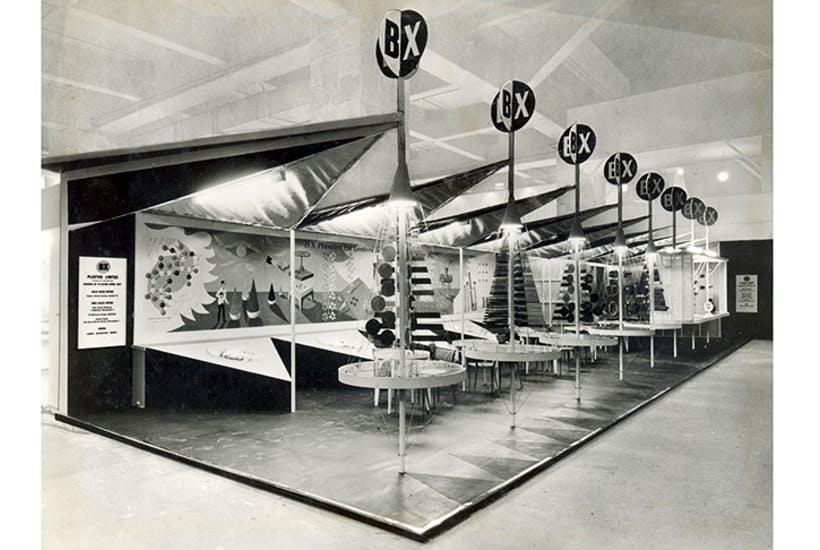
The whole point of plastic is that it has no characteristics of its own, only properties engineered for specific uses. Cheaper than jade. Less brittle than bone. It’s the natural material of the future, always more becoming than being. Hence the names: Xylonite. Bexoid. Halex. Lactoid.

Unable to nail the material in words, one writes instead about its history, sociology, industrial archaeology or ecological impact. On remote islands in the Pacific, thousands of albatross chicks are starving because the parents mistake floating plastic debris for food. Stories like this conjure up a vision of vast islands of discarded plastic coagulating in the Pacific Ocean, but there aren’t any. Instead, plastics eventually fragment into ever smaller pieces that are ingested by marine animals and carried to the sea bottom. In the Mariana Trench, all crustaceans tested had plastics in their guts. So plastics rise and fall through the food chain, creating havoc as they go — a bitter irony for a material that saved the elephant and the turtle, made fresh food conveyable and modern medicine possible, and all for less than 15 per cent of global oil consumption.

What can be gained from looking at the stuff itself? Raw Materials: Plastics transcends the limitations of its material by means of a good story. The first plastics were made in the Lea Valley, not from crude oil, but from plant materials, in a risky, artisanal fashion that bore, for a while, the hallmarks of older crafts including baking, woodcutting and metalwork. Fast-forward 140 years or so and, under the umbrella term ‘bioplastics’, plant-based and biodegradable synthetic products promise to turn the wheel of development full circle, returning plastics to their organic roots. (Designer Peter Marigold’s FORMCard plastic, used here in an excellent school art project, is a starch-based bioplastic made from potato skins.) Then, perhaps, we can break the bind in which we currently find ourselves: the one in which we’re poisoning the planet with plastic in our efforts not to further despoil it.

This is the third and for my money the most ambitious of the gallery’s ongoing series of small, thoughtful exhibitions about the materials, processes and industries that have shaped London’s Lea Valley. (Raw Materials: Wood ran in 2017; Raw Materials: Textiles last year.) The show is more chronicle than catalogue, but the art, scant as it is, punches above its weight.

I was struck, in particular, by France Scott’s ‘PHX [X is for Xylonite]’, a 13-minute collage of photogrammetry, laser scanning and 16mm film. It ought, by all logic, to be a complete mess and I still haven’t been able to work out why it’s so compelling. Is it because digital artefacts, like their plastic forebears, are themselves prisoners of contingency, aping the forms of others while stubbornly refusing to acquire forms of their own?

Bringing London’s buried rivers to light

Exploring London’s hidden rivers for the Financial Times, 8 June 2019

Early in the eleventh century, King Cnut sailed his troops from the Thames all the way up the river Effra to Brixton. But by the time Victoria took the throne, a millennium later, the Effra had vanished: polluted; canalised; in the end, buried.

The story goes that once during Victoria’s reign, a coffin from West Norwood Cemetery was found bobbing out to sea along the Thames. The Effra had undermined the burial plot from below, then carried the coffin four miles to its outflow, under what is now the MI6 building in Vauxhall.

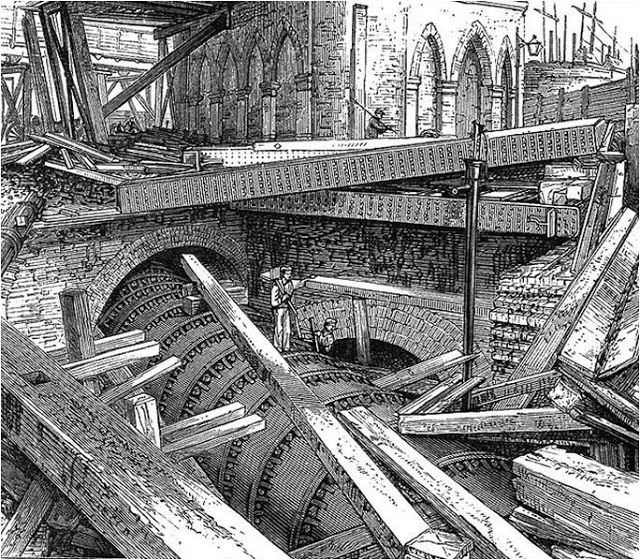
It’s stories of this sort which make Londoners grateful for Joseph Bazalgette, the civil engineer who got London’s rivers working again. Following the Great Stink of 1858, he was given the job of turning them into closed sewers. By integrating the Thames’s tributaries into his underground system, Bazalgette sealed the capital’s noisome waterways from view, and used them to move London’s effluent ever eastwards and away.

The problem Bazalgette solved was an old one. London’s Roman founders also had trouble with its rivers. They’d first camped along the banks of the Walbrook, between the two low lying hills of Ludgate and Cornhill. “At first the river was full and reasonably fast-flowing,” explains Kate Sumnall, archaeologist and co-curator of the Secret Rivers exhibition at the Museum of London Docklands. “Twenty years later, the character of the river had completely changed.” River levels dropped dramatically while, at the same time, floods became more frequent. The Romans tried to manage the river by raising ground levels, building revetments, and straightening its course, all with the idea of getting flood waters away as fast as possible. It’s an approach urban planners copied, with refinements, well into the 1960s, and all over London the consequences run, unseen, below people’s feet

I’ve met Sumnall and her co-curator Thomas Ardill at a cafe in Smithfield Market, not far from the banks of the noisome Fleet river — a stretch of waterway no one in their right mind would ever want to uncover; a ditch that inspired Ben Jonson’s coprophilic masterwork “On the Famous Voyage”, once dubbed the filthiest and most deliberately and insistently disgusting poem in the English language.

After the Great Fire, Christopher Wren wanted to turn the Fleet into a sort of Venetian canal: the sheer number of dead dogs floating in the ooze defeated his plans. It’s has since been given a decent burial under Farringdon Road.

In the company of Sumnall and Ardill, the vanished Fleet Ditch comes to life beneath our feet. Every side street was once a wharf. Coal was piled up in Newcastle Close. Dig under Stonecutter Street and you come up with whetstones and knives. Every hump in Farringdon Road marks an old bridge.

Could things have turned out differently for London’s lost rivers? Probably not, but it’s fun to tinker. Ardill tells me about a group of artist-activists called Platform. In 1992 they set up a mock Effra Redevelopment Agency to consult the residents of Brixton about their plans to open up the local river. A sylvan wonderland awaited those who didn’t mind losing their houses.

Compare this mischievous exercise in grass-roots democracy with the paralegal shenanigans of the Tyburn Angling Society, which explores the legal aspects of restoring the river so that it flows freely through the more exclusive enclaves of west London. Levies charged on newly river-fronted properties will pay for the compulsory purchase orders. Buckingham Palace is one of the buildings the Society has earmarked for demolition.

Real-world efforts to restore stretches of London’s rivers began in 2009. Of London’s nearly 400 miles of river network, just twenty have been restored, but developers and councils are beginning to appreciate the cachet a river can add to an area, plus the improvements it can bring by way of social cohesion and well-being. Sixty more miles of waterway run through the city’s public parks and existing urban regeneration schemes, and can be restored at relatively low cost.

Dave Webb, the ecologist who chairs the London River Restoration Group, began his working life trying to ameliorate the effects of engineering projects that canalised and culverted “unsightly” and “dangerous” watercourses. Now he’s bringing these formerly dead rivers back to light and life.

One difficulty for advocates like Webb is in conveying what restoration actually entails. “Architects have a habit of dreaming up a lovely wildlife space, only to insist that it mustn’t then change. Restoring a river is not like restoring a table. You’re reawakening a natural process. You’re enabling the river to adjust and move around.”

Webb has been energetically promoting London Rivers Week, a festival to promote London’s stretches of restored river. The point is not just to prettify the city. It’s to make London sustainable as the climate changes. If the capital leaves its waterways running underground in concrete channels much longer, flash flooding will start to erode its infrastructure. Toxins concentrated on road surfaces during droughts will enter the water system after a single downpour, poisoning everything downstream. Not that much would survive a drought anyway, since smooth concrete surfaces do not provide plants and animals with sanctuary in dry weather, the way a river’s pools and puddles will.

Webb shows me an alternative to London’s existing bleak, brutalist riverine architecture: the restoration of the Quaggy River in Sutcliffe Park, in the Royal Borough of Greenwich. The park works as a giant sponge, against the day a flood-swollen Quaggy threatens to inundate the neighbouring borough of Lewisham. In normal weather the Quaggy also overflows, less spectacularly, to feed a small wetland which you can enter along a boardwalk. There are dragonflies and mayflies. There are fish, and kingfishers to eat the fish. Above all there are people — twice as many as there used to be when the park was flat and dry. Plus they spend double of the amount of time here that they used to.

“I remember walking along one London river when it was still a concrete channel,” Webb recalls. “I asked what all the iron railings were for and I was told it was to stop kids falling into the water, which was about five inches deep. ‘Well,’ I was told, ‘there’s also the business of them throwing shopping trolleys in it.’ I’ve found that if you give people a river, they won’t spoil it.”

And sure enough, in this not very affluent and fairly unprepossessing stretch of south London, the river shimmers under the dappled shade of self-seeded willow trees. Webb reckons there was nothing particularly heroic about the engineering involved: “In a lot of cases, there’s not even any need for planting. The ecologies of the river’s headwaters will work their way downstream in the course of a few seasons, and birds and insects follow very quickly.”

Webb also recommends a walk along the Wandle, which passes through Croydon, Sutton, Merton, and Wandsworth to join the River Thames. This chalk stream was once the heaviest-worked river in the capital, driving mills to produce everything from paper to gunpowder, snuff to textiles. Declared dead in the 1960s, now it’s a breeding spot for chub and dace and brown trout. From certain angles, it will fool you into thinking you’ve hit a particularly idyllic nook of the South Downs. Turning a corner will quickly remind you of the city’s presence, but that’s the peculiar, liminal charm of an urban river.

While Thames 21, the charity behind London Rivers Week, organises citizen science projects, clean-ups and campaigns, the Museum of London Docklands’ Secret Rivers exhibition has scheduled a series of guided walks to enjoy over the summer. On 8 June you can follow the track of the the Walbrook, the river that made Londinium possible. In July you can sneak off from the line of the Tyburn to go shopping in Bond Street, or follow the gruesome Neckinger, the foul, lead-poisoned stream in which Bill Sykes got his just desserts in Dickens’s Oliver Twist. And I’m particularly looking forward to mid-August, when stretches of the Wandle will dazzle in the sun.

100 minutes of immersive terror

I interviewed Carl Guyenette, the creative intelligence behind The War Of The Worlds: The Immersive Experience, for New Scientist, 23 May 2019.

It’s six years since the Martian invaders succumbed to a microbial infection, leaving us once again in possession of our planet. Carl Guyenette has repaired to The Spirit of Man to raise a glass to Earth’s victory, and to take stock of his new production, a 100 minute-long immersion in Jeff Wayne’s The War of the Worlds.

The pub, which is part of the set and an integral part of the show, comes with its own meticulous backstory. On its walls, animated paintings record famous scenes from humanity’s first interstellar conflict. Remnants of Martian technology loom over the patrons. The effect is amusing for the first few minutes, but the aura of threat is unmistakable: pleasingly, the guts from one of the invaders’ war machines turn out to have been re-engineered to dispense gin.

Wayne’s musical retelling of H G Wells’s sci-fi shocker was released as a double album in 1978, and remains a hit, having sold over 2.5 million copies in the UK alone. There have been spin-offs a-plenty: video games, DVDs, stage shows, live tours. Nothing quite like this, though: “When I’ve been trying to explain this show to people,” says Guyenette, “I say it’s like walking into a cinema, except that once you’re there, you just keep on walking, into the screen. Into the movie itself.”

The full effect of Guyenette’s experiment in “layered reality” can only really be experienced at first hand. Nothing stays still, and neither does the audience, as it moves in groups of a dozen through over 2000 square metres of unlikely theatrical space – two floors of the old Metal Exchange in the City of London.

Visiting this venue mid-development, it had looked like somebody’s open-plan office: bad fluorescent lighting, grey carpet tiles; bins full of sandwich-shop litter; plastic water bottles in cardboard trays; laptops everywhere. Now, as the cast and crew set about unkinking the show’s phenomenally complicated logistics, the space is coming alive, fully dressed in both real and virtual light. Everything trembles. Everything moves, especially the air. Everything has a temperature. Everything has a smell.

Some of the experiences on offer in this show use VR headsets. Others use projection mapping. Some involve puppetry. Almost all manage to work in one of eight different holographic effects. Reality intrudes on the virtual world in unsettling and shocking ways. Things grab you – things you had thought were only in the headset. In VR, meanwhile, figures that seem to be fellow theatre-goers are plucked into the sky by Martian harvesting machines, their eyes meeting those of the participants (thanks to a neat eye-tracking algorithm) as they rise and perish.

Carl Guyenette talks about how he created the show.

New Scientist: What do they call you here?

Carl Guyenette: My job description’s a nuisance. When I called myself the CTO, the technologists on the show insisted I was actually the creative director. Then the creative people told me I’m a technologist. What I actually do is bring things together and makes new things out of them. So I suppose I’m an inventor.

NS: How did you come to work in theatre?

CG: I studied computer science, then joined the film visual effects industry, compositing for big Hollywood films. From there I moved on to making creative technological applications for the British Museum and other venues and festivals. I worked on Viens!, a virtual-reality piece by Michel Reilhac, which then went to Sundance and Cannes. This shot me into the centre of things. And now with the production company dotdotdot I’m trying to bring new media technologies and general audiences together through immersive theatrical experiences like this one. Not that we’ve worked at quite this scale before.

NS: Which of these new media are making the biggest impact on live performance at the moment? 

CG: Projection mapping is really interesting. There are systems now that will project images and textures over objects even as you move them. This is edging us towards VR experiences that won’t require us to wear headsets. And there are domes which you can projection-map from the inside which give you immersive video experiences. There’s a massive one that is going up in Madison Square Garden in 2020 which has a capacity of around 20,000 people: that’s going to be fun!

NS: How did you select the technologies for War of the Worlds?

Stability was essential. Because we’re splitting the audience up into groups of a dozen, and leading them from set to set, and from experience to experience, we’re effectively putting on 70 shows a day. The bottom line is, you want to be using kit that doesn’t break or fall over, so we’re using the HTC Vive Pro. We try out more exotic machinery in our prototyping and experimental work — everything from Hololens to Magic Leap, which I’d dearly like to use in a theatrical setting. But augmented reality systems are still a generation behind VR in terms of stability.

NS: Even with a workhorse VR platform, you’ve been able to mix the real and the virtual in clever ways. Was achieving that mix always an important aspect of the production?

CG: More important for us was to make sure that the technologies worked well with the storytelling. At one point we place our audience in a small boat and set them afloat on a computer-generated sea. The graphics are just one element to the experience. The mechanisms that move the boat, the breeze, the drop in temperature: these elements are just as important. And timing’s the most vital element of all, not just to provide seamless experiences, but also to give the audience breathing space between experiences.

NS: A lot of the technology you’re using is old…

CG: I wanted this show to be an homage to old media: Pepper’s Ghost illusions, and zoopraxiscopes, pyrotechnics and animatronics. It’s a show set over a hundred years ago, after all, at the birth of photography and cinema. In The War of the Worlds, all these technologies feel new.

NS: VR was said to be a medium that would isolate us from each other but you’ve used it to create a social experience. Is this the future of VR?

CG: I think there’s still money to be made from the home VR market. But building something big, in a spacious venue, layering technologies together so you can let audiences do things they couldn’t do anywhere else, means that you can also add a social dimension to the experience. There are not many places where you can be with 12 people in the same room in VR, firing cannon at Martian invaders, fighting off tentacles, befriending and losing people as you struggle through a besieged city.

“A wonderful moral substitute for war”

Reading Oliver Morton’s The Moon and Robert Stone and Alan Adres’s Chasing the Moon for The Telegraph, 18 May 2019

I have Arthur to thank for my earliest memory: being woken and carried into the living room on 20 July 1969 to see Neil Armstrong set foot on the moon.

Arthur is a satellite dish, part of the Goonhilly Earth Satellite Station in Cornwall. It carried the first ever transatlantic TV pictures from the USA to Europe. And now, in a fit of nostalgia, I am trying to build a cardboard model of the thing. The anniversary kit I bought comes with a credit-card sized Raspberry Pi computer that will cause a little red light to blink at the centre of the dish, every time the International Space Station flies overhead.

The geosychronous-satellite network that Arthur Clarke envisioned in 1945 came into being at the same time as men landed on the Moon. Intelsat III F-3 was moved into position over the Indian Ocean a few days before Apollo 11’s launch, completing the the world’s first geostationary-satellite network. The Space Race has bequeathed us a world steeped in fractured televisual reflections of itself.

Of Apollo itself, though, what actually remains? The Columbia capsule is touring the United States: it’s at Seattle’s Museum of Flight for this year’s fiftieth anniversary. And Apollo’s Mission Control Center in Houston is getting a makeover, its flight control consoles refurbished, its trash cans, book cases, ashtrays and orange polyester seat cushions all restored.

On the Moon there are some flags; some experiments, mostly expired; an abandoned car.

In space, where it matters, there’s nothing. The intention had been to build moon-going craft in orbit. This would have involved building a space station first. In the end, spooked by a spate of Soviet launches, NASA decided to cut to the chase, sending two small spacecraft up on a single rocket. One got three astronauts to the moon. The other, a tiny landing bug (standing room only) dropped two of them onto the lunar surface and puffed them back up into lunar orbit, where they rejoined the command module and headed home. It was an audacious, dangerous and triumphant mission — but it left nothing useful or reuseable behind.

In The Moon: A history for the future, science writer Oliver Morton observes that without that peculiar lunar orbital rendezvous plan, Apollo would at least have left some lasting infrastructure in orbit to pique someone’s ambition. As it was, “Every Apollo mission would be a single shot. Once they were over, it would be in terms of hardware — even, to a degree, in terms of expertise — as if they had never happened.”

Morton and I belong to the generation sometimes dubbed Apollo’s orphans. We grew up (rightly) dazzled by Apollo’s achievement. It left us, however, with the unshakable (and wrong) belief that our enthusiasm was common, something to do with what we were taught to call humanity’s “outward urge”. The refrain was constant: how in people there was this inborn desire to leave their familiar surroundings and explore strange new worlds.

Nonsense. Over a century elapsed between Columbus’s initial voyage and the first permanent English settlements. One of the more surprising findings of recent researches into the human genome is that, left to their own devices, people hardly move more than a few weeks’ walking distance from where they were born.

This urge, that felt so visceral, so essential to one’s idea of oneself: how could it possibly turn out to be the psychic artefact of a passing political moment?

Documentary makers Robert Stone and Alan Andres answer that particular question in Chasing the Moon, a tie in to their forthcoming series on PBS. It’s a comprehensive account of the Apollo project, and sends down deep roots: to the cosmist speculations of fin de siecle Russia, the individualist eccentricities of Germanys’ Verein fur Raumschiffart (Space Travel Society), and the deceptively chummy brilliance of the British Interplanetary Society, who used to meet in the pub.

The strength of Chasing the Moon lies not in any startling new information it divulges (that boat sailed long ago) but in the connections it makes, and the perspectives it brings to bear. It is surprising to find the New York Times declaring, shortly after the Bay of Pigs fiasco, that Kennedy isn’t nearly as interested in building a space programme as he should be. (“So far, apparently, no one has been able to persuade President Kennedy of the tremendous political, psychological, and prestige importance, entirely apart from the scientific and military results, of an impressive space achievement.”) And it is worthwhile to be reminded that, less than a month after his big announcement, Kennedy was trying to persuade Khrushchev to collaborate on the Apollo project, and that he approached the Soviets with the idea a second time, just days before his assassination in Dallas.

For Kennedy, Apollo was a strategic project, “a wonderful moral substitute for war ” (to slightly misapply Ray Bradbury’s phrase), and all to do with manned missions. NASA administrator James Webb, on the other hand, was a true believer. He could see no end to the good big organised government projects could achieve by way of education and science and civil development. In his modesty and dedication, Webb resembled no-one so much as the first tranche of bureaucrat-scientists in the Soviet Union. He never featured on a single magazine cover, and during his entire tenure he attended only one piloted launch from Cape Kennedy. (“I had a job to do in Washington,” he explained.)

The two men worked well enough together, their priorities dovetailing neatly in the role NASA took in promoting the Civil Rights Act and the Voting Rights Act and the government’s equal opportunities program. (NASA’s Saturn V designer, the former Nazi rocket scientist Wernher Von Braun, became an unlikely and very active campaigner, the New York Times naming him “one of the most outspoken spokesmen for racial moderation in the South.”) But progress was achingly slow.

At its height, the Apollo programme employed around two per cent of the US workforce and swallowed four per cent of its GDP. It was never going to be agile enough, or quotidian enough, to achieve much in the area of effecting political change. There were genuine attempts to recruit and train a black pilot for the astronaut programme. But comedian Dick Gregory had the measure of this effort: “A lot of people was happy that they had the first Negro astronaut, Well, I’ll be honest with you, not myself. I was kind of hoping we’d get a Negro airline pilot first.”

The big social change the Apollo program did usher in was television. (Did you know that failing to broadcast the colour transmissions from Apollo 11 proved so embarrassing to the apartheid government in South Africa that they afterwards created a national television service?)

But the moon has always been a darling of the film business. Never mind George Melie’s Trip to the Moon. How about Fritz Lang ordering a real rocket launch for the premiere of Frau im Mond? This was the film that followed Metropolis, and Lang roped in no less a physicist than Hermann Oberth to build it for him. When his 1.8-metre tall liquid-propellant rocket came to nought, Oberth set about building one eleven metres tall powered by liquid oxygen. They were going to launch it from the roof of the cinema. Luckily they ran out of money.

The Verein für Raumschiffahrt was founded by men who had acted as scientific consultants on Frau im Mond. Von Braun became one of their number, before he was whisked away by the Nazis to build rockets for the war effort. Without Braun, the VfR grew nuttier by the year. Oberth, who worked for a time in the US after the war, went the same way, his whole conversation swallowed by UFOs and extraterrestrials and glimpses of Atlantis. When he went back to Germany, no-one was very sorry to see him go.

What is it about dreaming of new worlds that encourages the loner in us, the mooncalf, the cave-dweller, wedded to ascetism, always shying from the light?

After the first Moon landing, the philosopher (and sometime Nazi supporter) Martin Heidegger said in interview, “I at any rate was frightened when I saw pictures coming from the moon to the earth… The uprooting of man has already taken place. The only thing we have left is purely technological relationships. This is no longer the earth on which man lives.”

Heidegger’s worries need a little unpacking, and for that we turn to Morton’s cool, melancholy The Moon: A History for the Future. Where Stone and Anders collate and interpret, Morton contemplates and introspects. Stone and Anders are no stylists. Morton’s flights of informed fancy include a geological formation story for the moon that Von Trier’s film Melancholy cannot rival for spectacle and sentiment.

Stone and Anders stand with Walter Cronkite whose puzzled response to young people’s opposition to Apollo — “How can anybody turn off from a world like this?” — stands as an epitaph for Apollo’s orphans everywhere. Morton, by contrast, does understand why it’s proved so easy for us to switch off from the Moon. At any rate he has some good ideas.

Gertrude Stein, never a fan of Oakland, once wrote of the place, “There is no there there.” If Morton’s right she should have tried the Moon, a place whose details “mostly make no sense.”

“The landscape,” Morton explains, “may have features that move one into another, slopes that become plains, ridges that roll back, but they do not have stories in the way a river’s valley does. It is, after all, just the work of impacts. The Moon’s timescape has no flow; just punctuation.”

The Moon is Heidegger’s nightmare realised. It can never be a world of experience. It can only be a physical environment to be coped with technologically. It’s dumb, without a story of its own to tell, so much “in need of something but incapable of anything”, in Morton’s telling phrase, that you can’t even really say that it’s dead.

So why did we go there, when we already knew that it was, in the words of US columnist Milton Mayer, a “pulverised rubble… like Dresden in May or Hiroshima in August”?

Apollo was the US’s biggest, brashest entry in its heart-stoppingly exciting – and terrifying – political and technological competition with the Soviet Union. This is the matter of Stone and Anders’s Chasing the Moon, as a full a history as one could wish for, clear-headed about the era and respectful of the extraordinary efforts and qualities of the people involved.

But while Morton is no less moved by Apollo’s human adventure, we turn to his book for a cooler and more distant view. Through Morton’s eyes we begin to see, not only what the moon actually looks like (meaningless, flat, gentle, a South Downs gone horribly wrong) but why it conjures so much disbelief in those who haven’t been there.

A year after the first landing the novelist Norman Mailer joked: “In another couple of years there will be people arguing in bars about whether anyone even went to the Moon.” He was right. Claims that the moon landing were fake arose the moment the Saturn Vs stopped flying in 1972, and no wonder. In a deep and tragic sense Apollo was fake, in the sense that it didn’t deliver the world it had promised.

And let’s be clear here: the world it promised would have been wonderful. Never mind the technology: that was never the core point. What really mattered was that at the height of the Vietnam war, we seemed at last to have found that wonderful moral substitute for war. “All of the universe doesn’t care if we exist or not,” Ray Bradbury wrote, “but we care if we exist… This is the proper war to fight.”

Why has space exploration not united the world around itself? It’s easy to blame ourselves and our lack of vision. “It’s unfortunate,” Lyndon Johnson once remarked to the astronaut Wally Schirra, “but the way the American people are, now that they have developed all of this capability, instead of taking advantage of it, they’ll probably just piss it all away…” This is the mordant lesson of Stone and Andres’s otherwise uplifting Chasing the Moon.

Oliver Morton’s The Moon suggests a darker possibility: that the fault lies with the Moon itself, and, by implication, with everything that lies beyond our little home.

Morton’s Moon is a place defined by absences, gaps, and silence. He makes a poetry of it, for a while, he toys with thoughts of future settlement, he explores the commercial possibilities. In the end, though, what can this uneventful satellite of ours ever possibly be, but what it is: “just dry rocks jumbled”?