The dreams our stuff is made of


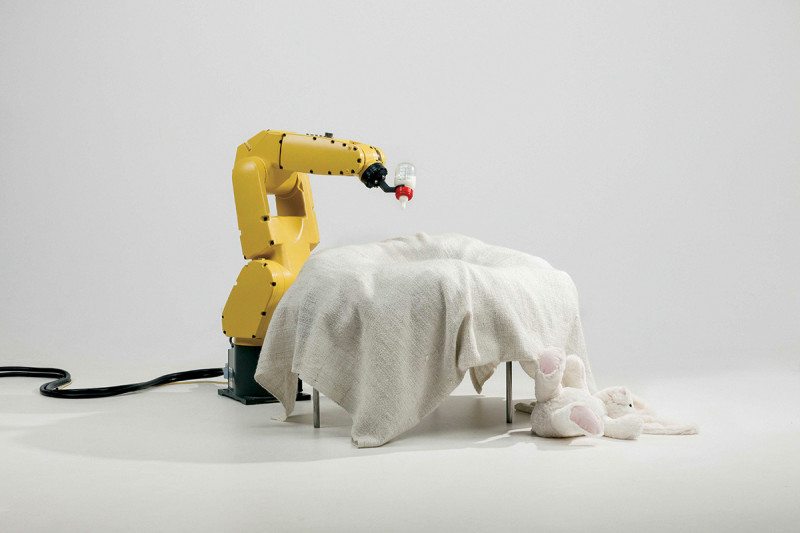
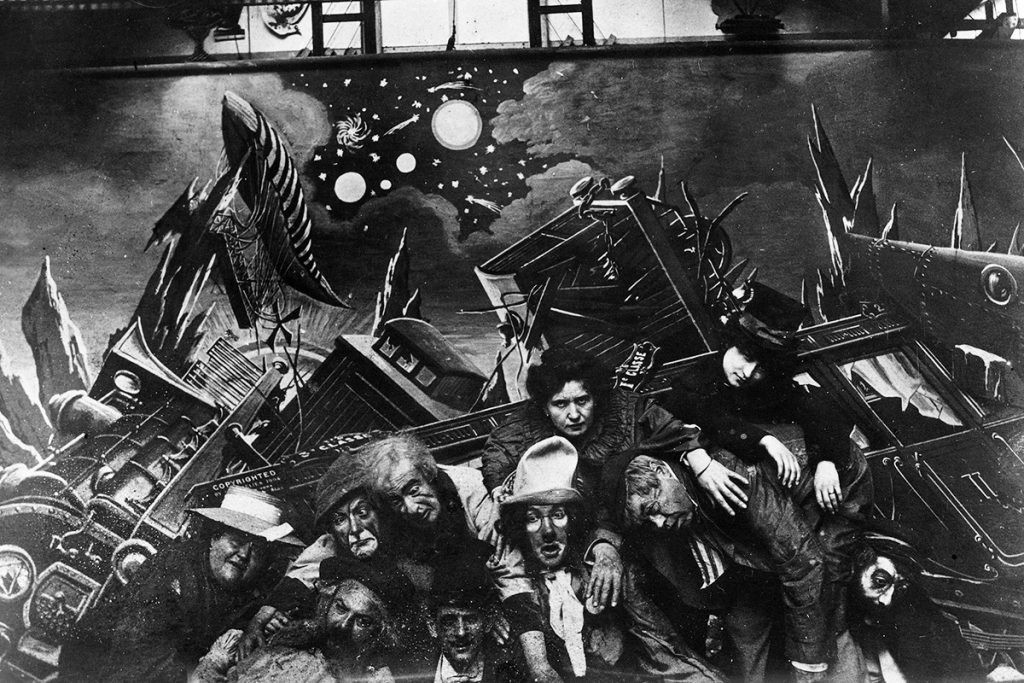
We imagine things before we make them, from spacecraft to smartphones – and designers often turn artists’ imaginings of the future into our everyday reality. So who’s in charge?

I am.

At least, I will be on 29 June when I herd Matt Smith (editor of 2000 AD) spaceflight expert Piers Bizony and architect Liam Young into London’s Barbican Centre for a session called The Dreamer’s Club. Fun and games begin at 7.30pm. Details and tickets here.

The Usefulness of Useless Knowledge

Reading The Usefulness of Useless Knowledge by Abraham Flexner, and Knowledge for Sale: The neoliberal takeover of higher education by Lawrence Busch for New Scientist, 17 March 2017


IN 1930, the US educator Abraham Flexner set up the Institute for Advanced Study, an independent research centre in Princeton, New Jersey, where leading lights as diverse as Albert Einstein and T. S. Eliot could pursue their studies, free from everyday pressures.

For Flexner, the world was richer than the imagination could conceive and wider than ambition could encompass. The universe was full of gifts and this was why pure, “blue sky” research could not help but turn up practical results now and again, of a sort quite impossible to plan for.

So, in his 1939 essay “The usefulness of useless knowledge”, Flexner listed a few of the practical gains that have sprung from what we might, with care, term scholastic noodling. Electromagnetism was his favourite. We might add quantum physics.

Even as his institute opened its doors, the world’s biggest planned economy, the Soviet Union, was conducting a grand and opposite experiment, harnessing all the sciences for their immediate utility and problem-solving ability.

During the cold war, the vast majority of Soviet scientists were reduced to mediocrity, given only sharply defined engineering problems to solve. Flexner’s better-known affiliates, meanwhile, garnered reputations akin to those enjoyed by other mascots of Western intellectual liberty: abstract-expressionist artists and jazz musicians.

At a time when academia is once again under pressure to account for itself, the Princeton University Press reprint of Flexner’s essay is timely. Its preface, however, is another matter. Written by current institute director Robbert Dijkgraaf, it exposes our utterly instrumental times. For example, he employs junk metrics such as “more than half of all economic growth comes from innovation”. What for Flexner was a rather sardonic nod to the bottom line, has become for Dijkgraaf the entire argument – as though “pure research” simply meant “long-term investment”, and civic support came not from existential confidence and intellectual curiosity, but from scientists “sharing the latest discoveries and personal stories”. So much for escaping quotidian demands.

We do not know what the tightening of funding for scientific research that has taken place over the past 40 years would have done for Flexner’s own sense of noblesse oblige. But this we can be sure of: utilitarian approaches to higher education are dominant now, to the point of monopoly. The administrative burdens and stultifying oversight structures throttling today’s scholars come not from Soviet-style central planning, but from the application of market principles – an irony that the sociologist Lawrence Busch explores exhaustively in his monograph Knowledge for Sale.

Busch explains how the first neo-liberal thinkers sought to prevent the rise of totalitarian regimes by replacing governance with markets. Those thinkers believed that markets were safer than governments because they were cybernetic and so corrected themselves. Right?

Wrong: Busch provides ghastly disproofs of this neo-liberal vision from within the hall of academe, from bad habits such as a focus on counting citations and publication output, through fraud, to existential crises such as the shift in the ideal of education from a public to a private good. But if our ingenious, post-war market solution to the totalitarian nightmare of the 1940s has itself turned out to be a great vampire squid wrapped around the face of humanity (as journalist Matt Taibbi once described investment bank Goldman Sachs), where have we left to go?

Flexner’s solution requires from us a confidence that is hard to muster right now. We have to remember that the point of study is not to power, enable, de-glitch or otherwise save civilisation. The point of study is to create a civilisation worth saving.

Art, Science and the Truth

Here’s something for the evening of Thursday 27 April 7-10 pm.

Designer and trouble-maker Leila Johnston has invited me to join Katharine Vega (chroma.space) and Dr Sean Power (Trinity College, Dublin) at the Site Gallery in Sheffield to ask whether art, science and belief are “branches of the same tree” as Albert Einstein once said, and what happens when some of those branches begin to crack?

Full details here.


Like it or not, these are the people we need to save America

As I write, President Donald Trump has just accused former incumbent Barack Obama of having tapped his campaign phones during the 2016 election season. I doubt very much whether this will be a major issue by the time these words are read. Most likely it’ll have been overtaken by “FAKED” nuclear exchanges over the South China Sea.

Kleptocracy moves faster than ordinary politics. Across the media, opinion writers are having to learn how to think like crime reporters. It’s frightening, but undeniably exhilarating.

Old forms of civic engagement seem hardly relevant now. On April 22, scientists will gather across the world to protest the Trump administration’s de facto dismantling of the EPA, veiled threats directed at programs of vaccination, cuts in NASA’s climate-studies funding, and any number of other depredations. All very noble, to protest this outrage, and necessary in its way.  But the rest of us might just as easily marvel at the alacrity and efficiency with which groups of suddenly vulnerable people round themselves up. The spectacle of well-educated people congratulating themselves on their effortless (because sacrifice-free) “intersectionality”, while at the same time complaining about their job security, is unlikely to prove particularly edifying, least of all since the “cosmopolitanism” so necessary to science (I mean devotion to an idea or ideas bigger than the nation state) is rapidly becoming synonymous with disloyalty.     

The March for Science was conceived on a Reddit forum as recently as 20 January, yet  we already find ourselves operating at an entirely different level of discourse. Science illumines small, detailed corners of the world, but it’s the entire reality of that world that’s under threat now. We are dealing with an administration that, when not lost in the toils of its own mythomania, will quibble over what is even in plain sight.

Studying an existential crisis of this magnitude requires no scientific apparatus. Consider this classic bullet-through-the-foot statement from Trump aide Myron Ebell: “We will be ceding global leadership of climate policy to China,” Ebell said on 1 February. “I want to get rid of global climate policy, so why do I care who is in charge of it? I don’t care. They can take it as far as I’m concerned, and good luck to them.” [1]   

Well, really, who needs luck? Knowing what climate change is, what causes it, and what needs to be done about it is — among many other things — a recipe for printing money, which is why China, the world’s fastest-growing green economy, just invested $360 billion into renewable energy production. US industries either innovate to address the carbon problem, or they join the tobacco companies in the shadowlands of lobbying, litigation, and spin: not quite dead, but no longer really alive.

The default Trump position on America’s scientific institutions is that they have become blunt weapons in the service of an over-centralised state. We know what this would look like were it true (and how far it actually is from American reality) when we look at Stalin’s Russia. Genetics was banned in Russia in 1948 — its institutions destroyed, careers truncated, individuals sacked and internally exiled — because the findings of genetics flatly contradicted promising but badly flawed state-sponsored agricultural trials of new crop varieties. If new varieties could be generated at will (and genetics said they couldn’t), then the countryside could be industrialised overnight, speeding the development of the Soviet Union towards communism within a single generation. The state had ambitions for science and, centralising its efforts around a handful of top-heavy institutions, ensured that those ambitions drowned out the very findings it had paid to obtain.

When climate change-denying Republicans invoke the bogeyman of overpaid lackey climatologists working to a misguided, politically motivated programme, they’re not pointing at nothing. Indeed, they’re pointing at what happened to the largest and best-funded science base in history. The problem is that theirs is an argument from analogy. Which is to say, no argument at all. Flim-flam, if you prefer.

It hardly matters now. If exploited to the hilt by US industry (and let’s be honest, we all want to go out with a bang) Trump’s climate policies — his devotion to fossil fuels and rejection of the Paris protocols — are more than sufficient over four short years to set global temperatures on a course topping 2.5 degrees, at which point our much-maligned globalised civilisation will collapse from the sheer cost of its own insurance premiums.

Some more flim-flam while we await the End Times. So Obama was Stalin, was he? Knowledgeable in both science and in politics but unable to separate the one from the other? Then Donald Trump is Nicholas II, the last Tsar of Russia: reactionary, vain, deaf to the entreaties of his ever more carefully hand-picked advisors, until, at the last, only the Rasputin-like whispers of Steve Bannon catch his ear.

Let’s indulge this bad habit of arguing from analogy a little further, and ask this interesting question: how did Russia’s academics react against Nicholas II’s lame-duck regime? They held marches. They published pamphlets. They organised strikes. They pinned their liberal and cosmopolitan colours to their sleeves, and wrote angry letters to the papers. They achieved virtually nothing until, in 1905, they got canny. They became political. They stood up for an idea of civics rooted in the European enlightenment. They fomented a revolution. They even got the Tsar to convene a parliament, in which they were the ministers.

Ultimately, this “constitutional-democratic”  movement failed. It refused to cohere, it sought compromise where it should have fomented discord, collaborated where it should have opposed. It died from politeness. A dozen years later, its failure made Bolshevik extremism possible and the rest, as they say, is history.

History, yes. But not destiny. The people who march in the name of science on Saturday 22 are taking but the first step on what promises to be a long and frightening journey. We should not expect too much from them yet. But neither should we pull our punches. Like it or not, and certainly if Trump lasts into a second term, these people, thanks to their educations and well-thumbed passports, their urbane reflexes and all the advantages that leisure has bestowed on them, are best placed to be the champions of our by then virtually extinguished civic life.

We are going to have to teach these snowflakes how to fight.

Stalin in Bristol

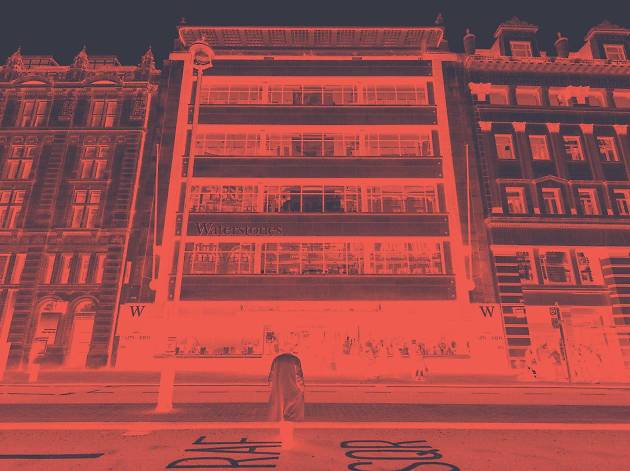
The Bristol Festival of Ideas have invited me along to Waterstones, The Galleries, Bristol, to talk about Stalin’s scientists on 24 April at 7pm. “The Soviet Union’s sciences were the largest and best funded in history,” it says in this here programme, “and were at once the glory and laughing stock of the intellectual world” — a description that might well apply to me. Anyway, I’m going to be speaking. Come listen. Tickets are £6.

Hot photography

Previewing an exhibition of photographs by Richard Mosse for New Scientist, 11 February 2017

Irish photographer Richard Mosse has come up with a novel way to inspire compassion for refugees. He presents them as drones might see them – as detailed heat maps, often shorn of expression, skin tone, and even clues to age and sex. Mosse’s subjects, captured in the Middle East, North Africa and Europe, don’t look back at us: the infrared camera renders their eyes as uniform black spaces.

Mosse has made a career out of repurposing photographic kit meant for military use. The images here show his subjects as seen, mostly at night, by a super-telephoto device designed for border and battlefield surveillance. Able to zoom in from 6 kilometres away, the camera anonymises them, making them strangely faceless even while their sweat, breath and sometimes blood circulation patterns are visible.

The results are almost closer to the nightmarish paintings of Hieronymus Bosch than the work of a documentary photographer. Making sense of them requires imagination and empathy: after all, this is how a smart weapon might see us.

Mosse came across his heat-mapping camera via a friend who worked on the BBC series Planet Earth. Legally classified as an advanced weapons system, the device is unwieldy and – with no user interface or handbook – difficult to use. But, working with cinematographer Trevor Tweeten, Mosse has managed to use it to make a 52-minute video. Incoming will wrap itself around visitors to the Curve Gallery at the Barbican arts centre in London from 15 February until 23 April.

D’Arcy Wentworth Thompson, the man who shaped biology and art

Biomorphic portrait of D'Arcy Thompson

For New Scientist, 1 February 2017

In a small, windowless corner of the University of Dundee, UK, Caroline Erolin of the Centre for Anatomy & Human Identification is ironing a fossilised pterodactyl.

At least, that’s what she appears to be doing. In fact, Erolin’s “iron” is a handheld 3D scanner, and her digitised animals are now being used as teaching aids worldwide. Her enthusiasm for the work (which she has to squeeze between research into medical visualisation and haptics) is palpable. She is not just bringing animals back from the dead, but helping to bring a great collection back to life.

In 1884, the biologist and classicist D’Arcy Wentworth Thompson began assembling a teaching and research museum in Dundee. An energetic philanthropist and a natural diplomat, Thompson had a broad network of friends and contacts – among them members of Dundee’s own whaling community, who provided him with extraordinary, then-unique specimens of Arctic fauna.

In 1956, the building that housed the University of Dundee’s natural history department was scheduled for demolition and Thompson’s collection, created as part of his work there, was dispersed. Scholars have been scrambling to recover its treasures ever since. Asked whether it can in fact be reassembled, Erolin laughs and gestures at the confines in which the surviving items are (rather artfully) squeezed. “It’s a question of space. We’re already sitting on an entire elephant skeleton. Where on earth would we put that?”

ADVERTISING

inRead invented by Teads
It’s largely not a genuine problem though, in part because advances in digitisation are changing the priorities of collections worldwide. Even more importantly, it is generally acknowledged that Thompson has outgrown Dundee: he belongs to the world. Together with Charles Darwin, Thompson, who died in 1948, is the most culturally influential English-speaking biologist in history.

We have one book to thank for that: On Growth and Form, first published in 1917 – an event commemorated by an exhibition, A Sketch of the Universe: Art, science and the influence of D’Arcy Thompson, at the Edinburgh City Art Centre.

“Thompson described his landmark book as all preface”

In neither the first edition nor the revised and expanded 1942 version does Thompson talk much about Darwin, and even in the 1940s he considered genetics hardly more than a distraction. Thompson was pursuing an entirely different line: the way in which physical constraints and the initial conditions of life shape the development of plants and animals.

Thompson was fascinated by tiny, single-celled shelled organisms such as foraminifera and radiolaria. He was convinced (rightly) that their wildly diverse shell shapes play no evolutionary role: they arise at random, their beauty emerging from the self-organising properties of matter, not from any biological code.

Even as geneticists like Ernst Mayr and Theodosius Dobzhansky were revealing the genetic mechanisms that constrain how living things evolve, Thompson was revealing the constraints and opportunities afforded to living things by physics and chemistry. Crudely put, genetics explains why dogs, say, look like other dogs. Thompson did something different: he glimpsed why dogs look the way they do.

Most of Thompson’s contemporaries were caught up in a genetic revolution, synthesising the seemingly incompatible demands of chromosomal genetics and Darwinian selection theory. No one ever seriously doubted Thompson’s importance – his book has always been a classic text – but at the same time, few have ever quite known what to do with him.

Portrait of D'Arcy Thompson by Darren McFarlane
Darren McFarlane, Scarus, Pomacanthus, 2012, oil on canvas. (University of Dundee Museum Services © the artist)

Thompson himself (pictured above as morphed by artist Darren McFarlane) understood the problem; he described his landmark book as “all preface”: the sketch of a territory he lacked the mathematical skill to penetrate. What the arguments in On Growth and Form really needed is a computer, and a big one at that (which makes Thompson a character who might have dropped straight out of the pages of Tom Stoppard’s play Arcadia).

Artists, on the other hand, from Henry Moore to Richard Hamilton to Eduardo Paolozzi, knew exactly what to do – and the Edinburgh exhibition combines the University of Dundee’s own collection of biomorphic, Thompsonesque art with new commissions. Several stand-out pieces are by artists who were students at Dundee’s own Duncan of Jordanstone College of Art and Design.

To its credit, Thompson’s alma mater has not been slow to exploit the way his meticulous and beautiful work straddles art and science: it supports a dedicated art-science crossover gallery called LifeSpace, as well as offering degrees in animation, medical art and medical imaging, connecting digital processes with traditional illustration. They are making the most of On Growth and Form‘s centenary, but the influence of Thompson on the university is deep and abiding.

That is as well. For all our anxious predictions about genetic engineering, for all the hype surrounding synthetic biology, and all the many hundreds of graduate design shows stuffed with “imaginary animals”, we have barely begun to explore let alone exploit the spaces Thompson’s vision revealed to us.

Read more: https://www.newscientist.com/article/2120057-darcy-wentworth-thompson-the-man-who-shaped-biology-and-art/#ixzz63gNDj1gc