The physics of dance

Visiting a rehearsal of 8 Minutes, Alexander Whitley’s Sadler’s Wells main-stage debut, for New Scientist, 17 June 2017

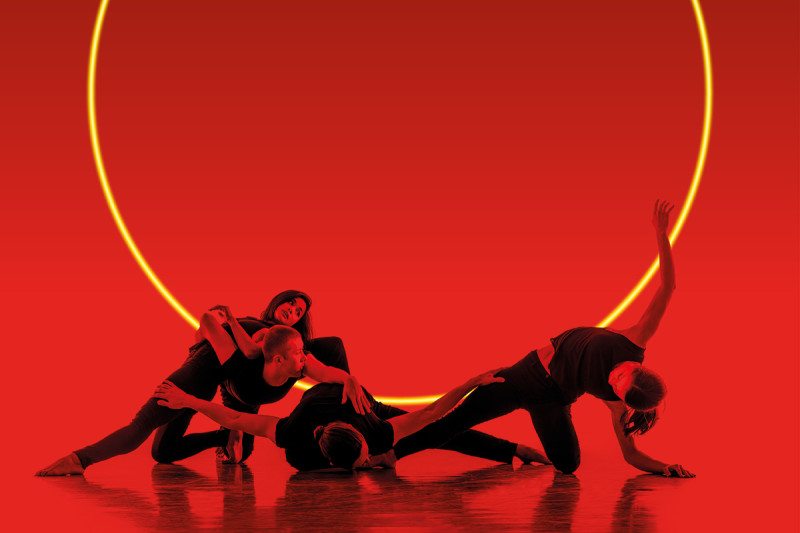
IN A basement studio in south London, seven dancers are interpreting some recent solar research from the Rutherford Appleton Laboratory in Oxfordshire. They are tackling the electromagnetic properties of the sun’s surface, and have got themselves, literally, into a knot. “Something about your grip here is stopping her moving,” frets choreographer Alexander Whitley. “Can we get his hips to go the other way?”

Bit by bit, a roiling form emerges. Imagine a chain, folded in on itself, stretching and reforming. Its movements are coherent and precise, but wildly asymmetrical. This is no tidy, courtly dance. At one point the chain abruptly unwinds. The relief is palpable as the dancers exploit their few seconds of freedom. Very quickly, the chain kinks and folds in on itself again: a folding problem intensely claustrophobic to watch, never mind perform.

Whitley formed his dance company in 2014, and 8 Minutes will be its debut on London’s Sadler’s Wells main stage at the end of June. It is named after the time it takes for light from the sun to reach Earth. “If you imagine travelling this distance at the speed of light, and you subtract all the relativistic effects, it’s quite bizarre,” muses Hugh Mortimer, Whitley’s collaborator and a researcher at Rutherford.

Mortimer designed climate change-detecting spectrometers for the Sentinel-3 satellite, and a sea-surface temperature monitor currently operating from the Queen Mary 2 liner. He hopes to build space-based instruments that analyse the atmospheres of exoplanets. But quite another fascination drew him into collaboration with Whitley’s dance company: the way the most abstruse science can be explained through ordinary experience.

He continues his thought experiment: “For 6 minutes, you’d be sitting in darkness. By the 7th minute you would notice a point of light looming larger: that’s the Earth. You’d arrive at the moon, pass by Earth, and a few seconds later you’d pass the orbit of the moon again. And the point is, passing the moon and the Earth and the moon again a few seconds later would feel intuitively right. It would feel ordinary.”

However difficult an idea, someone, somewhere must be able to grasp it, or it’s not an “idea” in any real sense. How, then, are we to grasp concepts as alien to our day-to-day experience as electromagnetism and the speed of light? It’s a question that has cropped up before in these pages, although seldom through the medium of dance. In 1988, for example, computer scientist Tony Hey wrote about his lunch with US physicist Richard Feynman, who explained particle spin “using the belt from his trousers” (New Scientist, 30 June 1988, p 75).

As for Whitley, he says: “We grasp quite advanced concepts first and foremost through movement. That forms a semantic template for the complex thinking we develop when we acquire language. Right, left, up, down, front, back – also the idea of containment, the concept of an inside and an outside – these ideas come through our bodies.”

This is especially true in children, he argues, because they don’t yet have fully developed rational capabilities. “I think there’s strong potential for using movement to give them a different understanding of and engagement with scientific ideas,” Whitley says.

Mortimer discovered the truth of this idea for himself quite recently: “Alexander runs a creative learning project for 9 and 10-year-olds based on our collaboration. Sitting in on some sessions, I found myself thinking about solar-dynamic processes in a new and clearer way.”

Will the audience at the work’s premiere leave understanding more about the sun? From what I saw, I’m optimistic. They won’t have words, or figures, for what they’ll have seen, but they will have been afforded a glimpse into the sheer dynamism and complexity of our nearest star.

Hello, Robot

Visiting Hello, Robot: Design between human and machine at MAK, Vienna for New Scientist, 6 June 2017

Above the exhibits in the first room of Hello, Robot, a large sign asks: “Have you ever met a robot?” Easy enough. But the questions keep on coming, and by the end of the exhibition, we’re definitely not in Kansas any more: “Do you believe in the death and rebirth of things?” is not a question you want to answer in a hurry. Nor is my favourite, the wonderfully loaded “Do you want to become better than nature intended?”

That we get from start to finish of the show in good order, not just informed but positively exhilarated, is a testament to the wiliness of the three curating institutions: the Vitra Design Museum in Germany, the Design Museum Ghent in Belgium, and MAK in Austria.

One of the show’s advisors, architect Carlo Ratti, head of the MIT Senseable City Lab, nails the trouble with such shows: “Any environment, any city, any landscape can become a robot when it is equipped with sensors, actuators and intelligence.” By the time robots do useful work, they have vanished. Once, we called traffic lights “robots”, now, we barely see them.

Robots, an exhibition currently at London’s Science Museum, gets caught in this bind. By following a “science fiction becomes science fact” trajectory, it creates a show that gets more boring as you work your way through it. Hello, Robot is much cannier: it knows that while science fiction may spin off real artefacts now and again, it never becomes science fact. Does writing down a dream stop you dreaming? Of course not.

Hello, Robot is about design. Its curators explore not only what we have made, but also what we have dreamed. Fine art, speculative designs, commercial products, comic books and movie clips are arranged together to create a glimpse of the robot’s place in our lives and imaginations. Far from disappearing, robots seem more likely to be preparing a jail-break.

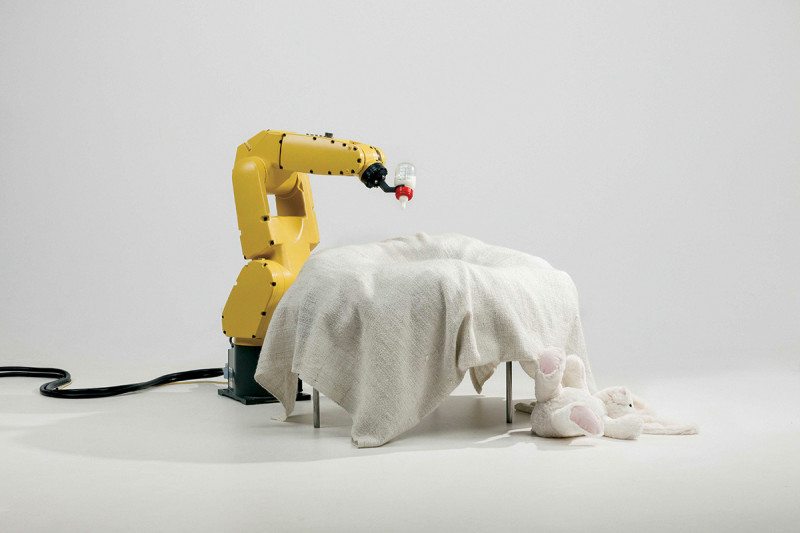
The longings, fantasies and anxieties that robots are meant to address are as ancient as they are unrealisable. The robot exists to do what we can imagine doing, but would rather not do. They were going to mow our lawns, now we’re glad of the exercise and we might prefer to have them feed our babies – or look after much older people, as Dan Chen’s 2012 End of Life Care Machine envisions.

This robot mechanically strokes a dying patient – a rather dystopian provocation, or so Chen thought until some visitors asked to buy one. Exhibited here, Chen’s piece is accompanied by a note he wrote: should he encourage people to leave family members alone in their final hours or deny them the comfort of a machine?

Hello, Robot asks difficult questions in a thrillingly designed setting. It is a show to take the children to (just try not to let them see your face in Room 3 as you check on a computer to see if your job’s about to be automated).

There’s a deep seriousness about this show; if design teaches us anything, it is that no one is ever in charge of the future. “The question of whether we need, or even like [robots] is not really ours to ask,” a wallboard opines. “Do we actually need smartphones? Ten years ago, most people would probably have answered no.” Our roles in this “lifeworld” of the future are still to be defined.

Catching the exhibition in Germany, I go round three times until it’s late. I adore industrial robot YuMi’s efforts to roll a ball up a steep incline, and I grin as I walk past a clip of the automated kitchen in Jacques Tati’s 1958 film Mon Oncle. Still, I can’t quite take my eyes off a 2005 photograph of a Chinese factory by Edward Burtynsky, who visited China’s shipyards and industrial plants. Identical figures performing identical actions remind me of iconic British newspaper sketches of weaving machines from the industrial revolution.

We have not outgrown the need for human regimentation – we simply outsource it to cheaper humans. Whether robots become cheap enough to undercut poor people, and what happens if they do, are big questions. But this show can bear them.

What price original art?

At what point does a practical problem become an existential one? When do we have to admit that not everyone can experience everything – and what do we do about that? Forgery is no solution because good forgeries are, by definition, as exclusive as originals: if the original turns up, the forgery loses all value. But what if we undermined cultural norms to the point where fakery was the norm?

A visit to the Van Gogh Museum, Amsterdam and the Tinguely Museum Basel for New Scientist, 13 May 2017.

IMPRESSIONISM, the movement that shaped a generation of European artists, was concerned above all with light, colour and the mechanics of visual perception. Only one of its leading lights concerned himself, without apology, to the business of fame – Vincent van Gogh. He got what was coming to him: absolutely nothing. Dealers failed to sell a single canvas in his lifetime.

Tastes change. On 2 June 1973, in a park behind the Rijksmuseum in Amsterdam, a museum dedicated to van Gogh’s work opened to an ever-swelling crowd of admirers. In 2014, 1.6 million people visited. Last year it was 2.1 million – 20 times the number the museum was designed to accommodate – all there to see just 250 paintings and 700 drawings and letters.

At what point does a practical problem become an existential one? When do we have to admit that not everyone can experience everything – and what do we do about that? Forgery is no solution because good forgeries are, by definition, as exclusive as originals: if the original turns up, the forgery loses all value.

What if we undermined cultural norms to the point where fakery was the norm? This is the state of affairs dreamed up by Polish writer Stanislaw Lem in his 1976 novel The Futurological Congress, which features this diary entry: “Spent a few free hours… in the city. Could hardly control my horror as I looked at all the displays of wealth… An art gallery in Manhattan practically giving away original Rembrandts and Matisses… The fiendishness is that part of this mass deception is open and voluntary, letting people think they can draw the line between fiction and fact. And since no one any longer responds to things spontaneously – you take drugs to study, drugs to love, drugs to rise up in revolt, drugs to forget – the distinction between manipulated and natural feelings has ceased to exist.”

Doubtless the curators at the Van Gogh Museum have no such nefarious plans. But, faced with those queues, they are resorting to technology, even virtual reality.

Their most innocent-looking intervention is a dedicated location-based app by Marjolein Fennis that will entertain those waiting to enter, turning potentially fractious hordes into ad hoc communities of gamers.

In an effort to avoid delays and bottlenecks, museum designers scrape eye-tracking studies and video footage for insights. Some 85 per cent of the museum’s visitors are tourists, which means they get up late and roll up to the museum at the same time, 11 am.

A computer program developed with Erasmus University in Rotterdam uses algorithms more usually found in stock market trackers to predict visitor behaviour. Thus armed, the museum has come up with incentives to reduce peak time visits by around 60 per cent, even while visitor numbers have increased by nearly half.

“We don’t want as many visitors as possible, we want each visitor to have the best experience as possible,” says Milou Halbesma, the Van Gogh Museum’s director of public affairs.

Amsterdam, also badly bottlenecked, is planning to adopt similar technology later this year to get tourists out of the city and into the rest of the country.

Technology can also satisfy demand, especially in Asia, by bringing van Gogh’s art to the people. To this end, the museum has produced a digitally enhanced immersive experience, Meet Vincent van Gogh. It sounds hokey: visitors can wander with Vincent from rural Netherlands to the streets of Paris, pull up a seat at The Potato Eaters‘ table, and step into a life-sized Yellow House. In reality, the exhibition stimulates genuine interest, without leaving the visitor feeling cheated that they haven’t been in contact with the real work.

The museum’s limited run of Relievo reproductions take the opposite tack. Based on 3D scans of the paintings, including cracks in the paint and traces of paint layers, these surreally accurate reproductions took the museum and Fujifilm Belgium seven years to achieve. If you ever wanted to run your hand down the thick, impasto brushstrokes of van Gogh’s Sunflowers, now is your chance. This approach was also targeted at the overseas market, especially Hong Kong. A Dubai hotel exhibited them in 2015.

The only downside is that these strategies increase the number of people who want to see van Gogh’s real work. An exhibition currently at the Van Gogh Museum, Prints in Paris 1900, explores another very successful way of dealing with the sheer popularity of art and the celebrity of individual artists.

The fad for prints at the end of the 19th century not only decorated the hoardings and walls of Paris with colourful public art in the form of adverts, it also let everyone with a half-decent salary own an “original”. No two prints were identical – the imprimatur of the artist was visible and even, depending on the inks used, tangible. And the private nature of collections meant darker, more intimate themes could be explored by artist and collector.

Producing art ordinary people could own was a cultural as well as a technological breakthrough. But there is a snag, felt more sharply now than at the time these prints were produced. The low lighting at the Prints show reveals the vulnerability of works on paper. Unless these pieces are endlessly reproduced, dissolving their connection with the artist, they will have to spend almost all their life in storage, out of the public gaze.

The original is the gallery-goer’s holy grail. When Mark Rothko’s badly faded murals, painted for a Harvard University dining room, were rehung in 2014, an expensive lighting system was used to restore their colour. Over-painting them would have been an act of sacrilege. No one thinks this way about buildings. St John’s Cathedral, in the Dutch city of ‘s-Hertogenbosch, for example, had whole pinnacles reinstalled and some statues recarved from scratch. This process began in the 19th century, using easily weathered limestone, which means some of the most recently reinstalled figures are actually copies of copies.

Gallery-goers are less forgiving. “I think it should always be very clear for the audience what you are looking at,” says Halbesma. “That is why we shall never show copies in our museum – because this is the moment when you meet Vincent and his work.”

“Unless artworks on paper are endlessly reproduced, they spend their life in storage, out of public gaze”

And the posters and prints upstairs? “They are all originals,” Halbesma says. “But we have big problems because of the light and their vulnerability. A lot of museums are already working with facsimile.” The implication is clear: catch this while you can.

Perhaps we should leave it to artists to determine what role provenance plays in their work. Van Gogh, desperate for that elusive sale, embraced the idea of reproduction. A letter to his brother Theo in December 1882 reads: “What I wrote to you in my last letter about a plan for making prints for the people is something to which I hope you’ll give some thought one day. I don’t have a fixed plan about this myself as yet… But I don’t doubt the possibility of doing something like this, nor its usefulness.”

The nearby Stedelijk Museum’s recent show of kinetic sculpture by 20th-century Swiss artist, showman and mischief-maker Jean Tinguely shows a rather different attitude. Tinguely was no ordinary mechanic, and some of his work, such as Homage to New York, was designed to burst apart in showers of sparks. His less self-destructive work is hardly more stable; the Stedelijk show had 42 moving pieces, rigged to timers to eke out the fun between the inevitable repairs.

It reminded me of a story told by Midas Dekkers in his book The Way of All Flesh – and an important part of the story of provenance. The Stedelijk once had a piece of Tinguely’s called Gismo. Tinguely insisted it should run constantly so the noise would lead people to it from wherever they were. A curator took him at his word, and for a brief, happy while, everyone got to see Gismo.

That’s the trouble with art: if you want it to live, you may have to let it die.
Marine life is rubbish

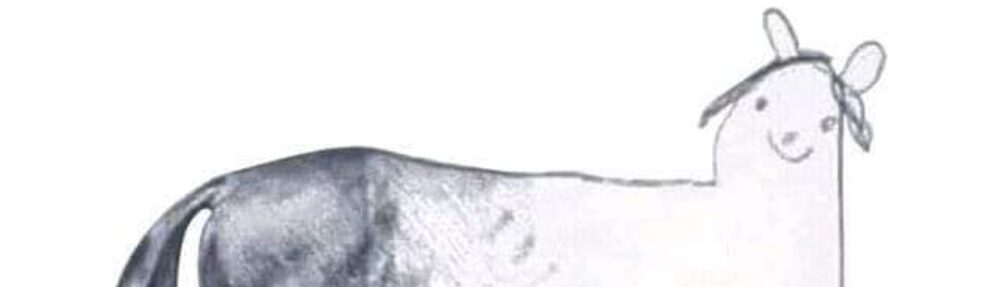
“The aim of my work is to create a visually attractive image that draws the viewer in, then shocks them with what is represented,” artist Mandy Barker explains. “This contradiction between beauty and fact is intended to make people question how their shoe, computer, or ink cartridge ended up in the sea.”

A short feature for New Scientist, 22 April 2017

The dreams our stuff is made of


We imagine things before we make them, from spacecraft to smartphones – and designers often turn artists’ imaginings of the future into our everyday reality. So who’s in charge?

I am.

At least, I will be on 29 June when I herd Matt Smith (editor of 2000 AD) spaceflight expert Piers Bizony and architect Liam Young into London’s Barbican Centre for a session called The Dreamer’s Club. Fun and games begin at 7.30pm. Details and tickets here.

Hot photography

Previewing an exhibition of photographs by Richard Mosse for New Scientist, 11 February 2017

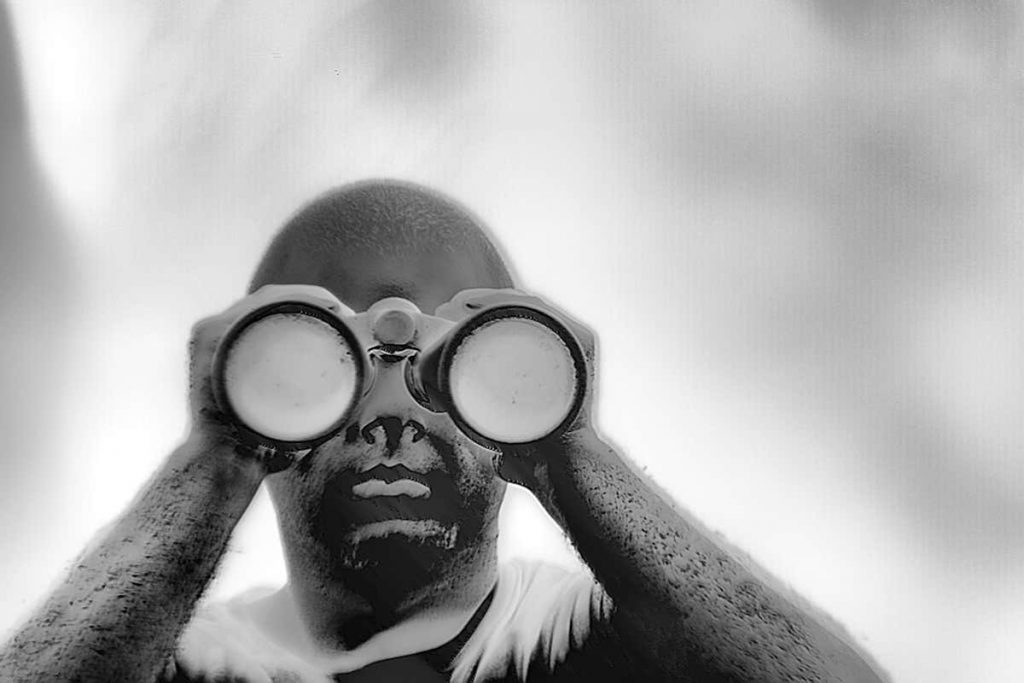
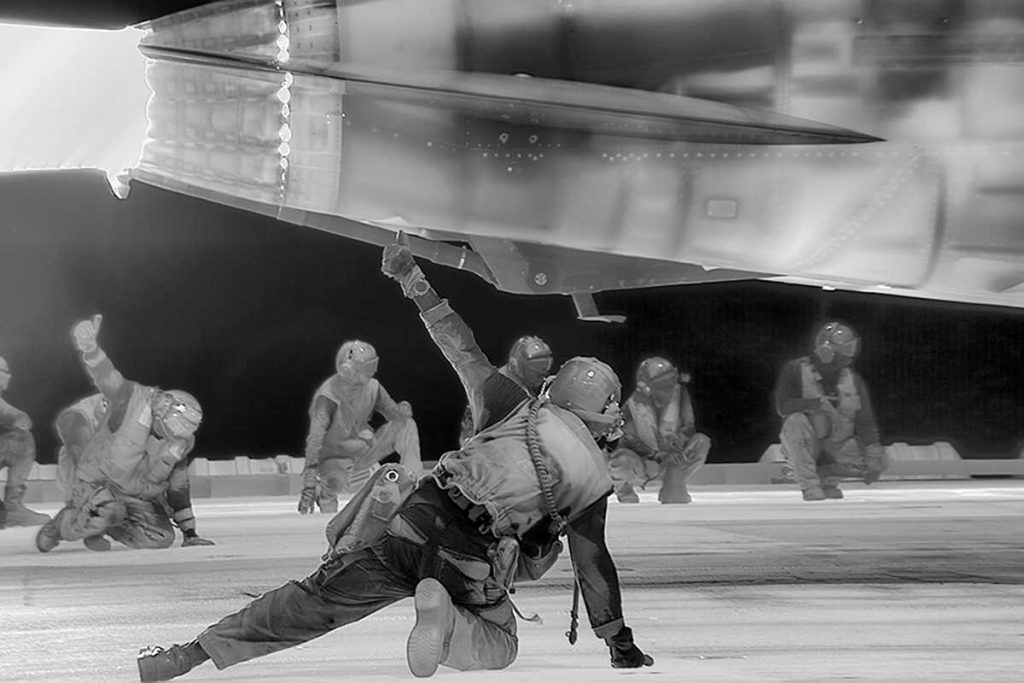
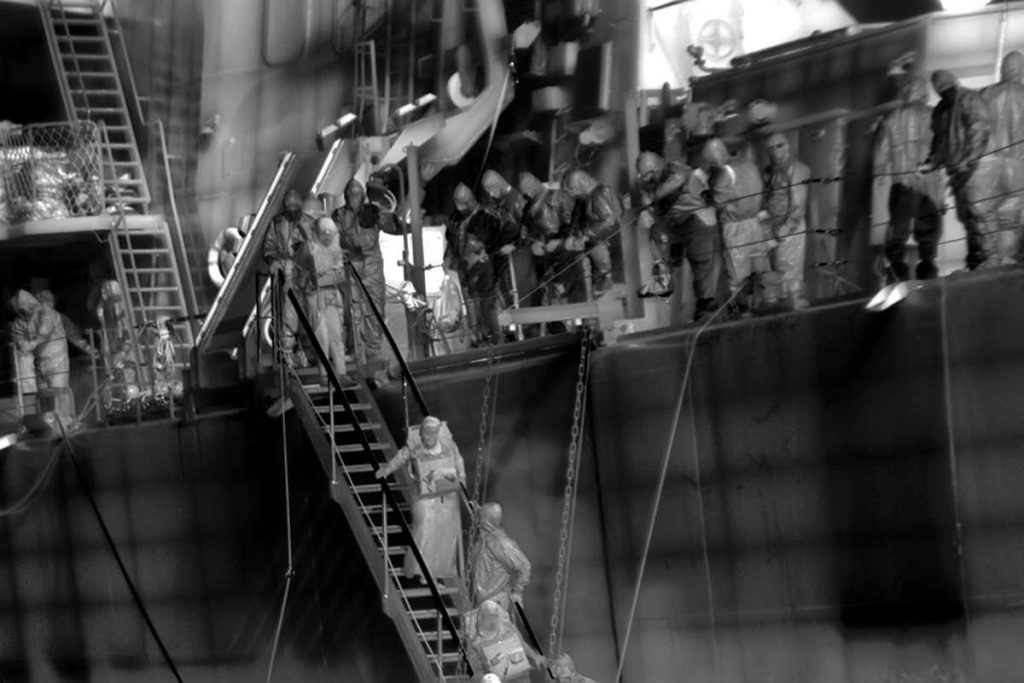
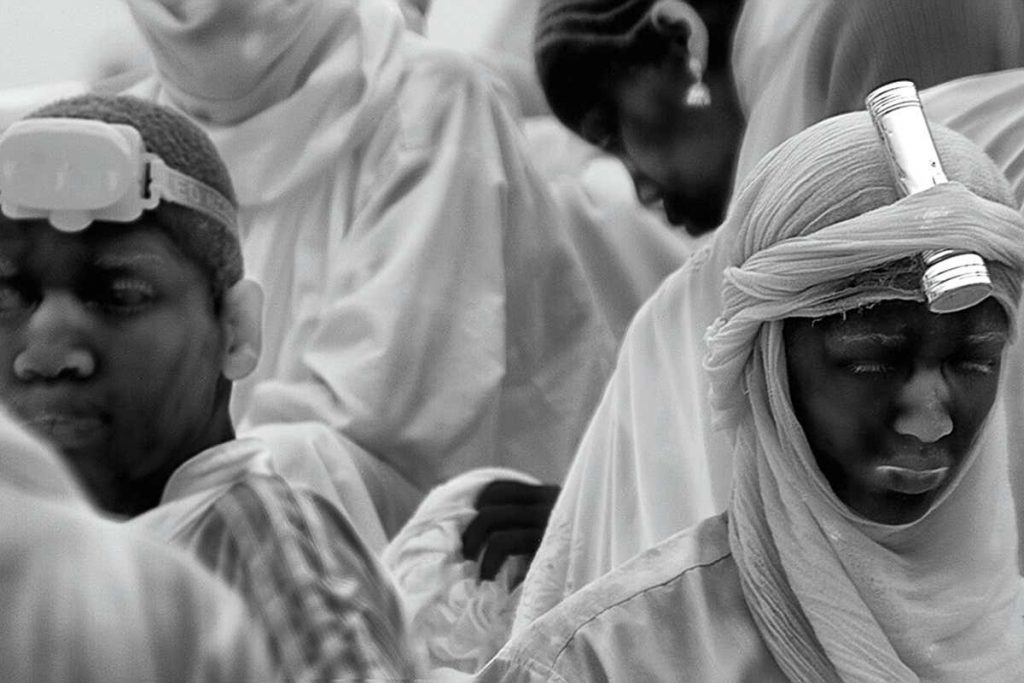
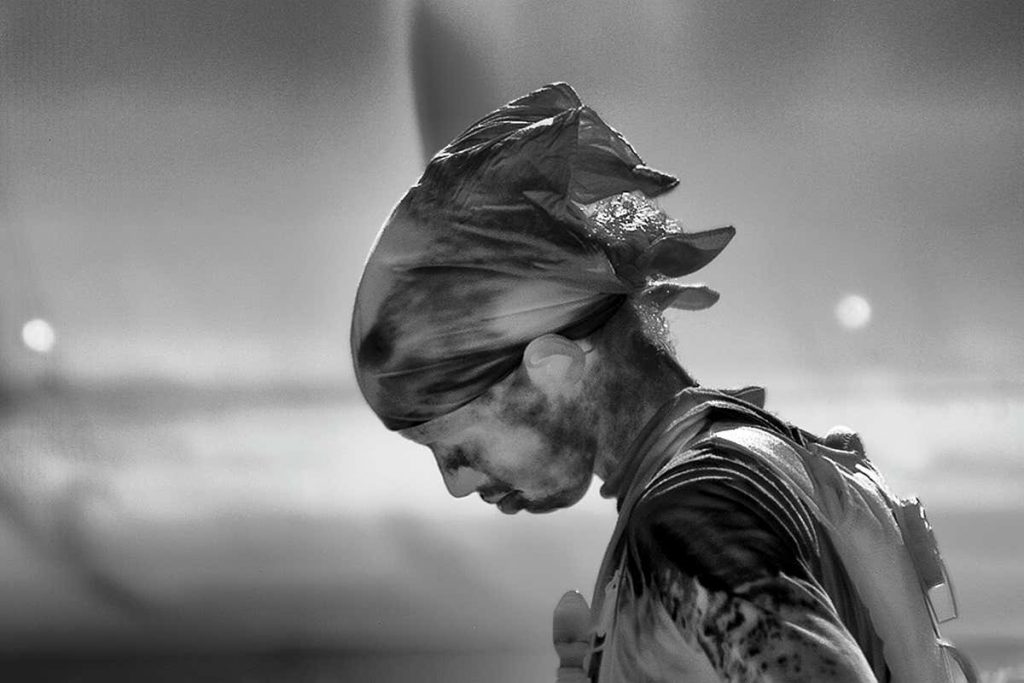
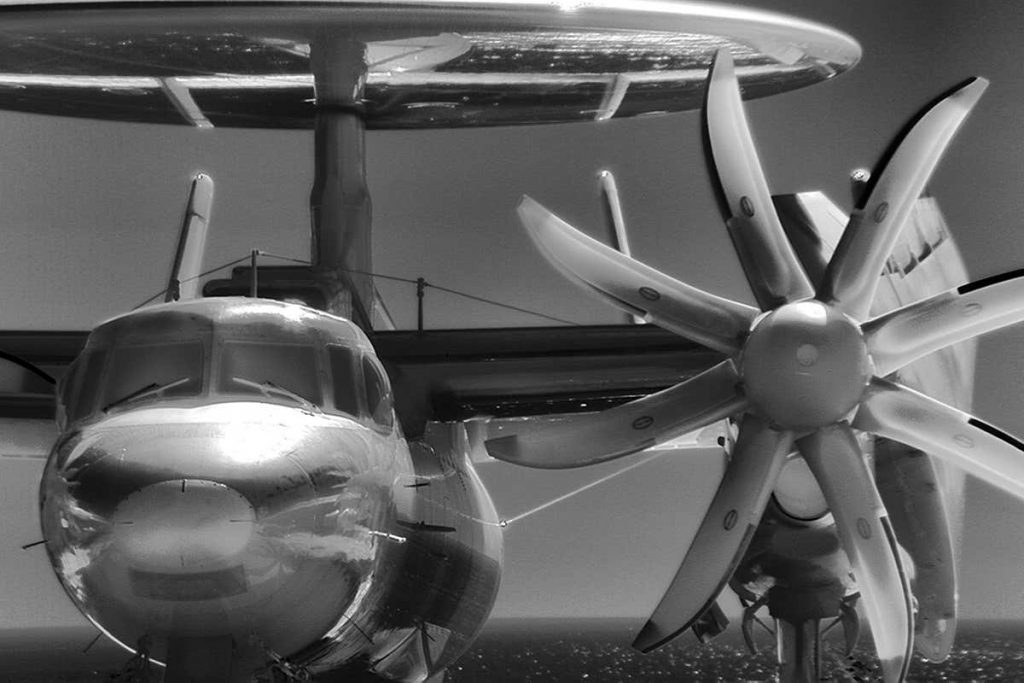
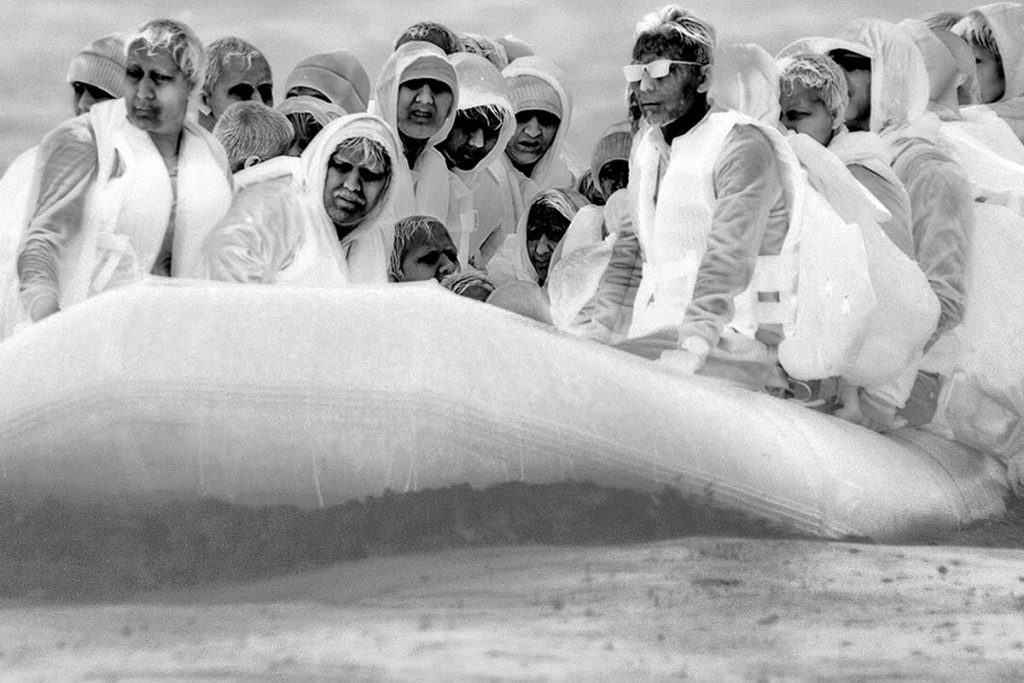
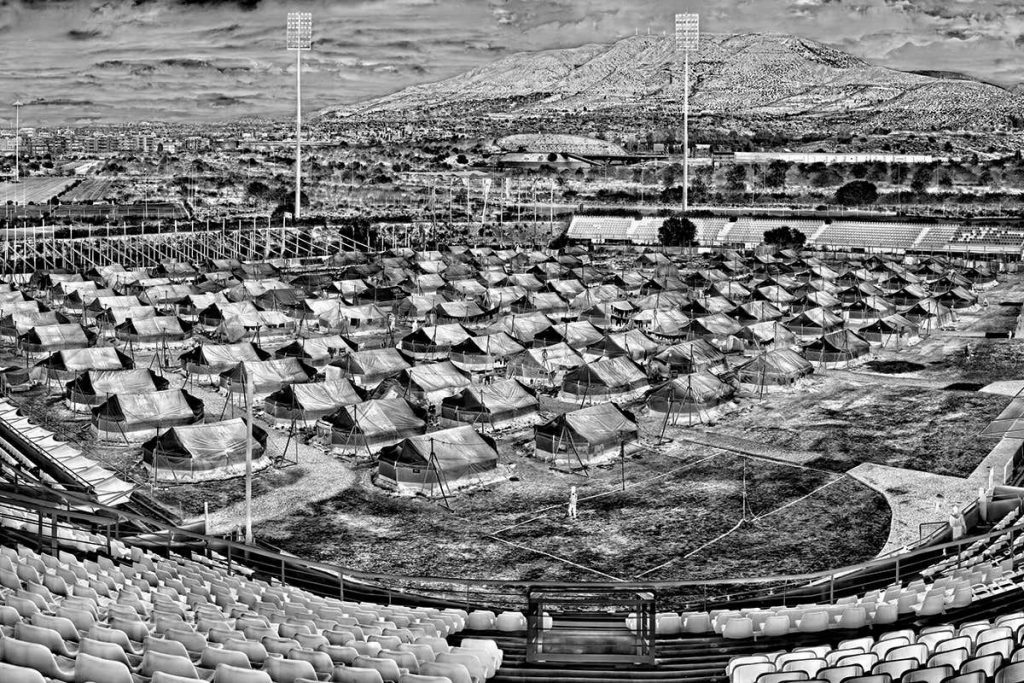
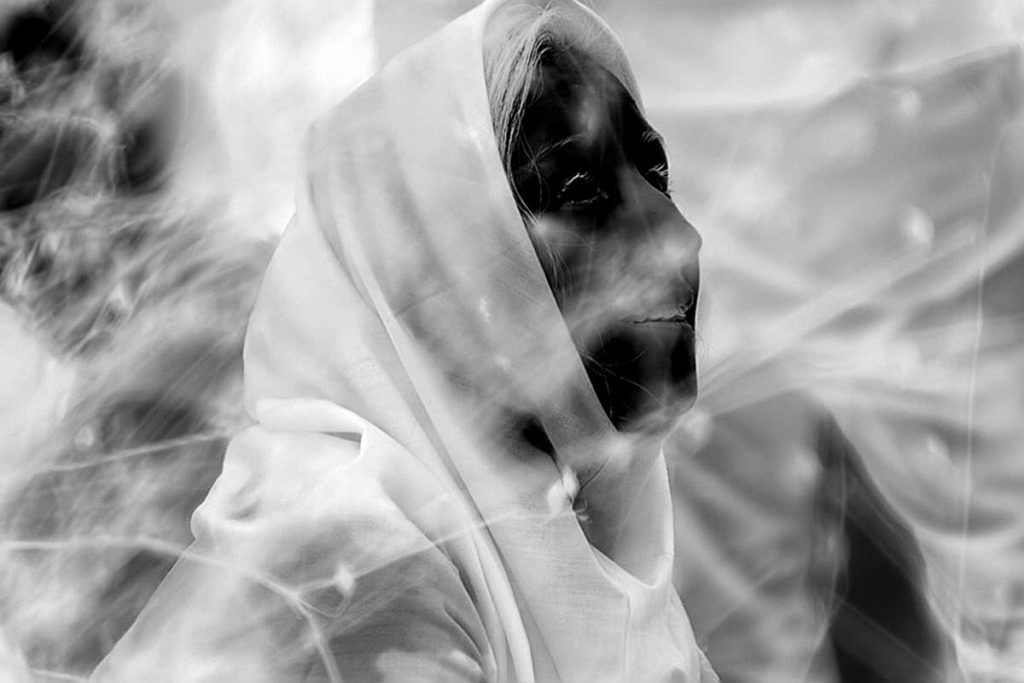
Irish photographer Richard Mosse has come up with a novel way to inspire compassion for refugees. He presents them as drones might see them – as detailed heat maps, often shorn of expression, skin tone, and even clues to age and sex. Mosse’s subjects, captured in the Middle East, North Africa and Europe, don’t look back at us: the infrared camera renders their eyes as uniform black spaces.

Mosse has made a career out of repurposing photographic kit meant for military use. The images here show his subjects as seen, mostly at night, by a super-telephoto device designed for border and battlefield surveillance. Able to zoom in from 6 kilometres away, the camera anonymises them, making them strangely faceless even while their sweat, breath and sometimes blood circulation patterns are visible.

The results are almost closer to the nightmarish paintings of Hieronymus Bosch than the work of a documentary photographer. Making sense of them requires imagination and empathy: after all, this is how a smart weapon might see us.

Mosse came across his heat-mapping camera via a friend who worked on the BBC series Planet Earth. Legally classified as an advanced weapons system, the device is unwieldy and – with no user interface or handbook – difficult to use. But, working with cinematographer Trevor Tweeten, Mosse has managed to use it to make a 52-minute video. Incoming will wrap itself around visitors to the Curve Gallery at the Barbican arts centre in London from 15 February until 23 April.

D’Arcy Wentworth Thompson, the man who shaped biology and art

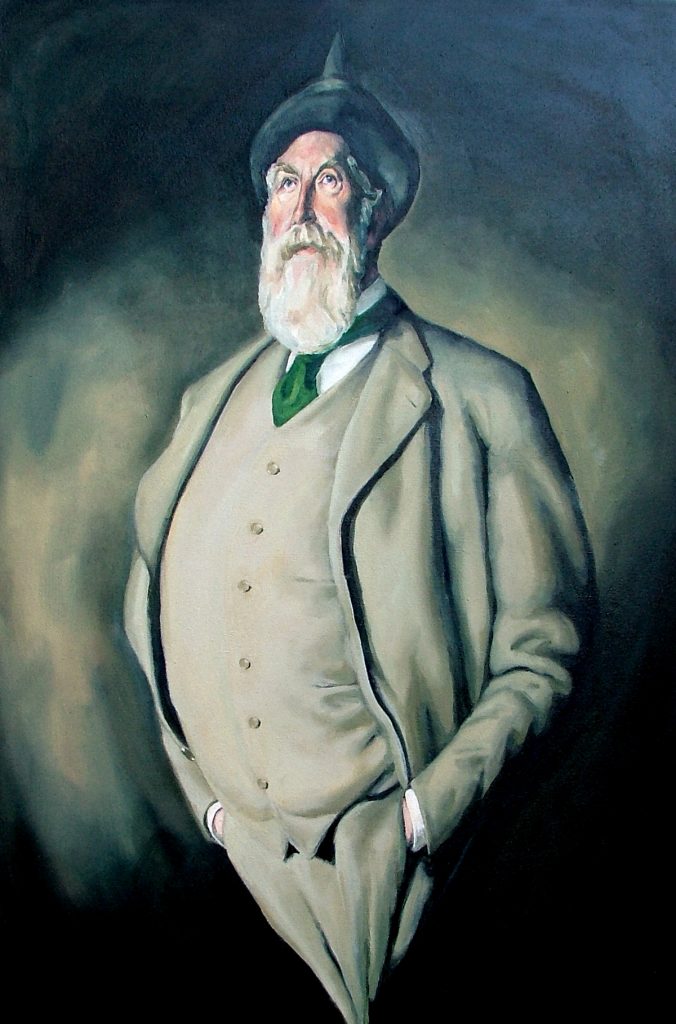
Biomorphic portrait of D'Arcy Thompson

For New Scientist, 1 February 2017

In a small, windowless corner of the University of Dundee, UK, Caroline Erolin of the Centre for Anatomy & Human Identification is ironing a fossilised pterodactyl.

At least, that’s what she appears to be doing. In fact, Erolin’s “iron” is a handheld 3D scanner, and her digitised animals are now being used as teaching aids worldwide. Her enthusiasm for the work (which she has to squeeze between research into medical visualisation and haptics) is palpable. She is not just bringing animals back from the dead, but helping to bring a great collection back to life.

In 1884, the biologist and classicist D’Arcy Wentworth Thompson began assembling a teaching and research museum in Dundee. An energetic philanthropist and a natural diplomat, Thompson had a broad network of friends and contacts – among them members of Dundee’s own whaling community, who provided him with extraordinary, then-unique specimens of Arctic fauna.

In 1956, the building that housed the University of Dundee’s natural history department was scheduled for demolition and Thompson’s collection, created as part of his work there, was dispersed. Scholars have been scrambling to recover its treasures ever since. Asked whether it can in fact be reassembled, Erolin laughs and gestures at the confines in which the surviving items are (rather artfully) squeezed. “It’s a question of space. We’re already sitting on an entire elephant skeleton. Where on earth would we put that?”

ADVERTISING

inRead invented by Teads
It’s largely not a genuine problem though, in part because advances in digitisation are changing the priorities of collections worldwide. Even more importantly, it is generally acknowledged that Thompson has outgrown Dundee: he belongs to the world. Together with Charles Darwin, Thompson, who died in 1948, is the most culturally influential English-speaking biologist in history.

We have one book to thank for that: On Growth and Form, first published in 1917 – an event commemorated by an exhibition, A Sketch of the Universe: Art, science and the influence of D’Arcy Thompson, at the Edinburgh City Art Centre.

“Thompson described his landmark book as all preface”

In neither the first edition nor the revised and expanded 1942 version does Thompson talk much about Darwin, and even in the 1940s he considered genetics hardly more than a distraction. Thompson was pursuing an entirely different line: the way in which physical constraints and the initial conditions of life shape the development of plants and animals.

Thompson was fascinated by tiny, single-celled shelled organisms such as foraminifera and radiolaria. He was convinced (rightly) that their wildly diverse shell shapes play no evolutionary role: they arise at random, their beauty emerging from the self-organising properties of matter, not from any biological code.

Even as geneticists like Ernst Mayr and Theodosius Dobzhansky were revealing the genetic mechanisms that constrain how living things evolve, Thompson was revealing the constraints and opportunities afforded to living things by physics and chemistry. Crudely put, genetics explains why dogs, say, look like other dogs. Thompson did something different: he glimpsed why dogs look the way they do.

Most of Thompson’s contemporaries were caught up in a genetic revolution, synthesising the seemingly incompatible demands of chromosomal genetics and Darwinian selection theory. No one ever seriously doubted Thompson’s importance – his book has always been a classic text – but at the same time, few have ever quite known what to do with him.

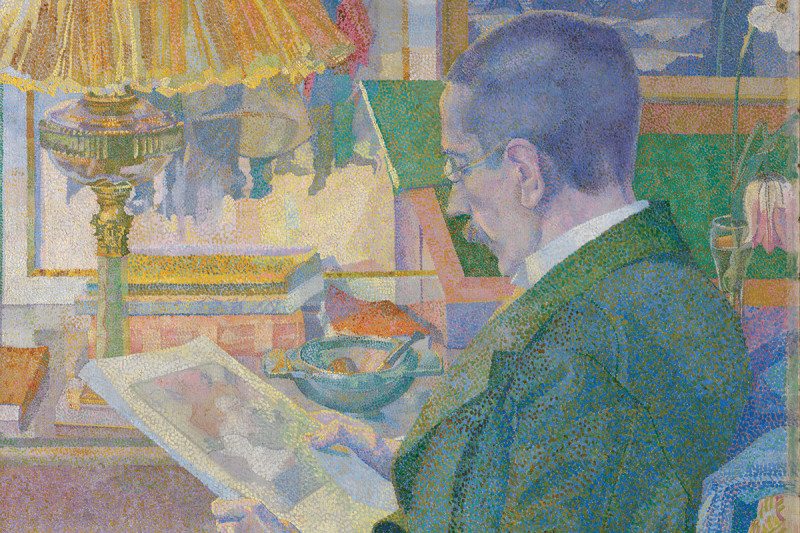
Portrait of D'Arcy Thompson by Darren McFarlane
Darren McFarlane, Scarus, Pomacanthus, 2012, oil on canvas. (University of Dundee Museum Services © the artist)

Thompson himself (pictured above as morphed by artist Darren McFarlane) understood the problem; he described his landmark book as “all preface”: the sketch of a territory he lacked the mathematical skill to penetrate. What the arguments in On Growth and Form really needed is a computer, and a big one at that (which makes Thompson a character who might have dropped straight out of the pages of Tom Stoppard’s play Arcadia).

Artists, on the other hand, from Henry Moore to Richard Hamilton to Eduardo Paolozzi, knew exactly what to do – and the Edinburgh exhibition combines the University of Dundee’s own collection of biomorphic, Thompsonesque art with new commissions. Several stand-out pieces are by artists who were students at Dundee’s own Duncan of Jordanstone College of Art and Design.

To its credit, Thompson’s alma mater has not been slow to exploit the way his meticulous and beautiful work straddles art and science: it supports a dedicated art-science crossover gallery called LifeSpace, as well as offering degrees in animation, medical art and medical imaging, connecting digital processes with traditional illustration. They are making the most of On Growth and Form‘s centenary, but the influence of Thompson on the university is deep and abiding.

That is as well. For all our anxious predictions about genetic engineering, for all the hype surrounding synthetic biology, and all the many hundreds of graduate design shows stuffed with “imaginary animals”, we have barely begun to explore let alone exploit the spaces Thompson’s vision revealed to us.

Read more: https://www.newscientist.com/article/2120057-darcy-wentworth-thompson-the-man-who-shaped-biology-and-art/#ixzz63gNDj1gc

Flying machines and chickens

screen-shot-2016-11-18-at-10-50-20

for New Scientist, 21 November 2016

Artist Nick Laessing has been learning more than is entirely healthy about the internal workings of motor vehicles. He has been spurred on by the myths surrounding water-powered cars, a notion first cooked up in Dallas in 1935 that has powered conspiracy theories and investment frauds ever since.

Laessing insists I climb in among the boxes and dials that half-fill the front passenger seat of his humble VW Golf. We’re in Liverpool, where his Water Gas Car is being exhibited in No Such Thing as Gravity, an art show that curator Rob La Frenais says reveals the shape of science by mapping “where the relation between data and knowledge is uncertain”.

There’s mischief here: Agnes Meyer-Brandis’s 2010 video Studies in Applied Falling makes a seamless and hard-to-spot nonsense of astronaut David Scott’s famous experiment, in which he dropped a hammer and a feather together in the airless environment of the moon.

Nevertheless, La Frenais, who used to curate for the London-based art-science organisation Arts Catalyst, is adamant that his show is not about pseudoscience: “It is about those areas where science is still a developing body of knowledge,” he explains. “It lets people ask naive questions about science and not feel embarrassed.”

Science for the future?
Laessing’s car is a case in point. No one, however well-informed, really knows whether water-gas cars have a future. Laessing’s on-board technology isn’t going to set the markets alight, but it does work, harvesting hydrogen fuel from water through solar-powered electrolysis.

Tania Candiani’s lovingly recreated 17th-century flying machine also works – up to a point. At least, she has ridden it through the hull of a jumbo jet in free fall, and lived to film the tale. What was, centuries ago, a serious technical effort becomes, in light of subsequent knowledge, a touching and amusing entertainment.

Nearby, an installation called Heirloom stands this formula on its head. Artist Gina Czarnecki and John Hunt at the University of Liverpool’s Institute of Ageing and Chronic Disease have produced an extraordinary living artwork that promises one day to become a useful technology.

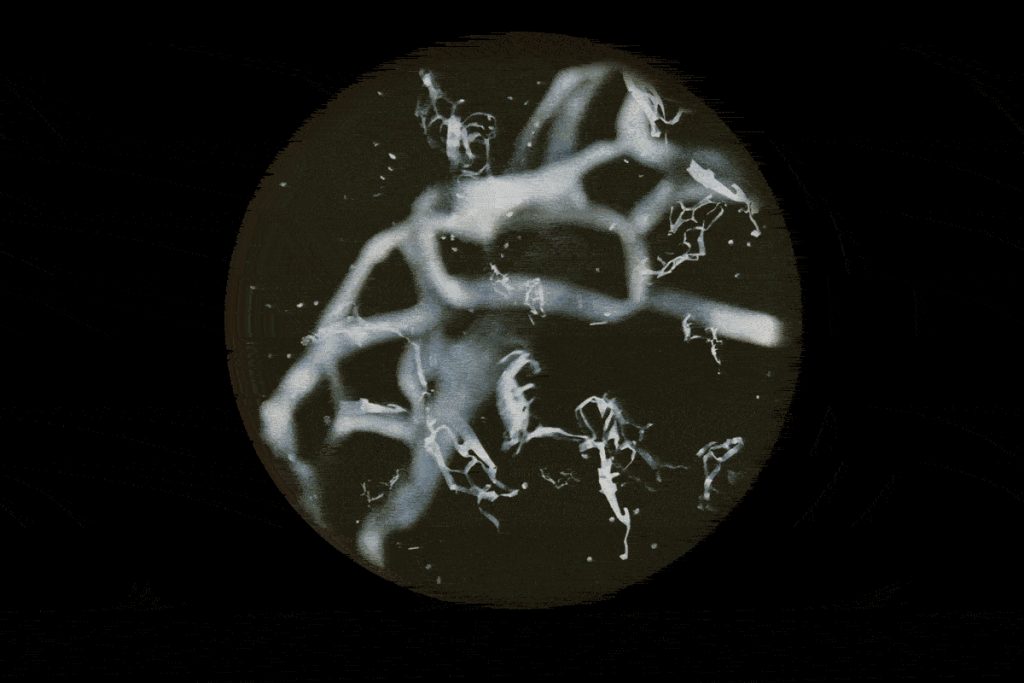
Living portraits of Gina’s two daughters are being grown on glass casts from cells collected from inside their mouths. Over time, the cells will grow to the thickness of tissue paper. The surgical possibilities for custom-shaped grafts are considerable, if still far off. A correctly curved graft means a more natural fit for the client, with less scarring and less disfigurement.

Meanwhile, as we wait for the technology to improve, Czarnecki’s haunting portraits raise natural (though perhaps too obvious) questions about biological ownership and identity.

Artful answers
Sometimes, scientific advances throw up questions that only art can answer. Two artists in the show explore near-death experiences. Sarah Sparkes is interested in the psychology of the phenomenon, recreating a classic experiment in generating uncanny sensations. Push a lever, and a rod pokes you in the back. Fair enough. Now push the lever again, and the rod pokes you in the back a split-second later. An irresistible suspicion arises that you are communicating with a hidden presence.

Helen Pynor, by contrast, explores the way in which advances in resuscitation medicine have increased the frequency of near-death experiences. This has led her to make artworks that challenge the tricky notion of a “moment of death”.

Two pig hearts from an abattoir, kept alive by an artificially maintained flow of oxygenated blood, dominated her 2013 installation The Body is a Big Place. Her work displayed at FACT, The End is a Distant Memory, was inspired by a casual conversation with regeneration biologist Jochen Rink of the Max Planck Institute of Molecular Cell Biology and Genetics. During this exchange, Rink remarked that individual cells long outlive whole bodies — and that supermarket chicken would surely still contain healthy cells.

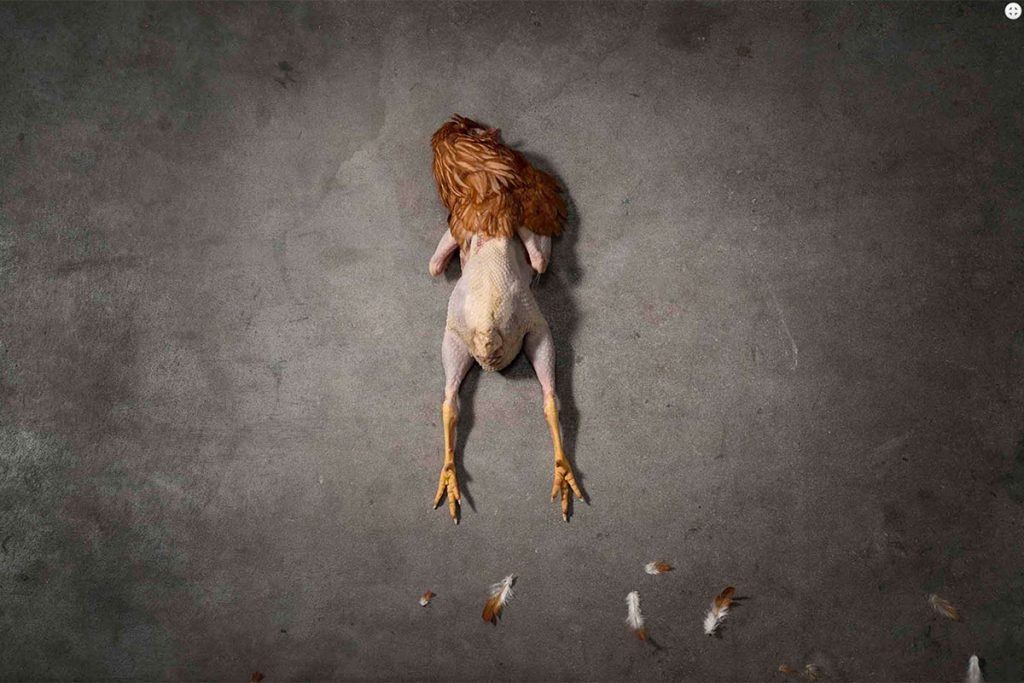
Pynor’s photographic and videographic installation runs with this notion, tracing the processes that turn a live chicken into food. Plucked chickens are dignified through portraiture, while successive images of a chicken being plucked are subtly choreographed to suggest that the animal’s life is being rewound. Once fully plucked, it resembles a fetus in an egg.

Pynor dignifies and personalises the meat on our plate without hysteria, and sends a shiver of memento mori down the back of all but the most insensitive visitor. It is the emotional highlight of a show that, though driven by the high purpose of getting non-scientists thinking scientifically, will probably be more remembered for its cleverness and its wit.

Read more: https://www.newscientist.com/article/2113412-flying-machines-and-chickens-the-art-of-thinking-about-science/#ixzz63gNvkEEM

Shakespeare and the machines

rexfeatures_7440787k

Here’s a review of the RSC’s production of The Tempest with Simon Russell Beale as Prospero. Through a combination of editorial tightening and big claims (I’m saying Shakespeare’s last play was a masque, not a drama) I make it appear here as though two fully grown polar bears once starred in its production. Please no one correct me: with a following wind this nonsense could become canonical.

for New Scientist, 21 November 2016 

It should come as no surprise that the Royal Shakespeare Company’s projector and motion-capture-enhanced new production of Shakespeare’s last play is a triumph. For one thing, The Tempest is actually not a play: it is a masque, an almost-forgotten dramatic form that was contrived to blow millions (literally, if you convert into today’s currency) on effects-heavy entertainment meant for royalty and a few favoured hangers-on.

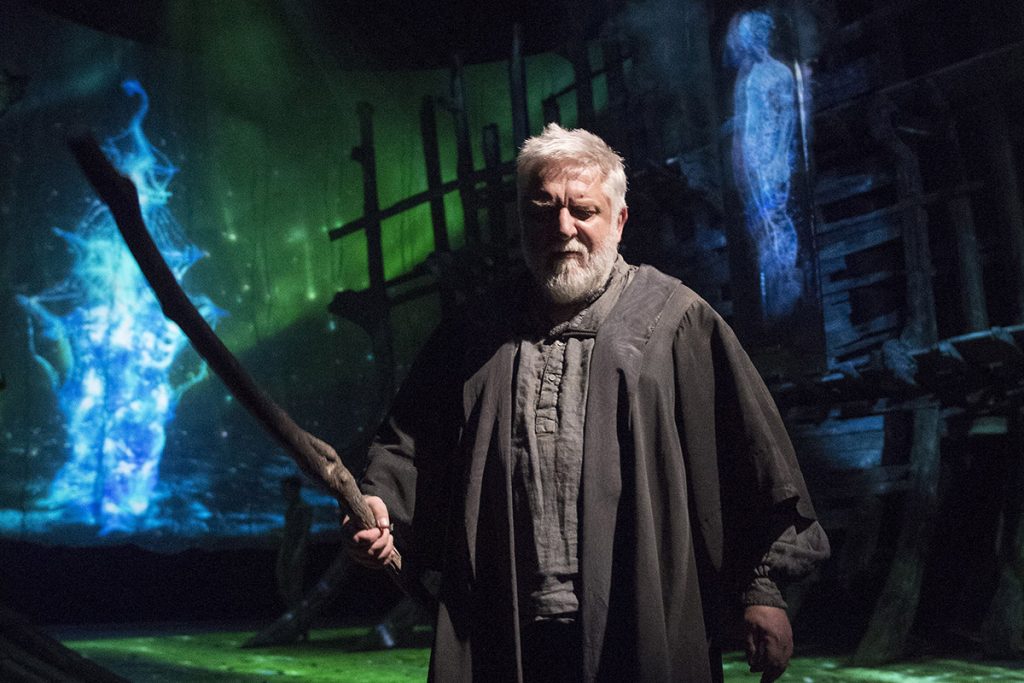
James I got his two fully grown pet polar bears involved in one memorable production; modern audiences get actor Mark Quartley as Ariel in a motion-capture extravaganza. The production uses an impressive array of sculpted net curtains as screens on which the serviceable sprite, though a real-enough presence on stage, also flies, dances, finds himself trapped in a tree, transforms into a harpy, and more or less realises every passing fancy about him that Shakespeare ever thought to put to pen.

There is no attempt to hide Quartley, who is also on stage while rigged up in motion-capture kit, rather like those puppeteers who don’t attempt to hide themselves during their performance.

The show is the fruit of a two-year collaboration between the Royal Shakespeare Company (RSC), IT company Intel and The Imaginarium Studios – a performance-capture house co-founded by actor Andy Serkis, who played Gollum in The Lord of the Rings film series.

The results are impressive but not seamless. When Quartley dances, Ariel flies. When he speaks or sings, Ariel’s bad lip-synching suggests the buggier corners of YouTube. Never mind: there are 200,000 files running at once to bring this illusion to life, and anyone who knows anything about the technology will be rightly astounded that the sprite responds in real time at all. Much of the two-year collaboration was spent turning a post-production technology into something robust enough for stage use. It is a tremendous, if hidden, achievement.

More seriously – though this is hardly a criticism – The Tempest is the first outing for a form of theatre that is still looking for its grammar. The performance’s game-engine-driven Ariel is shown from a floating, swooping viewpoint, sometimes from above, sometimes from below, sometimes crash-zooming towards us and in the next instant hurtling away – to not much emotional effect, it has to be said.

No one’s doing anything wrong here: we simply don’t know how to read mood into these images, any more than we knew how, at the beginning of cinema, to read the cuts between images. Stephen Brimson Lewis is the RSC’s director of design and his throw-everything-at-it approach here is exactly the right one. If The Tempest is a mess at times, it’s a glorious mess, and one from which future productions can learn.

Simon Russell Beale is Prospero, gamely preparing to be upstaged in journalistic copy, but never, ever on stage. Beale’s is a moving, mesmerising performance, full of rage and danger, though his nice line in bathos keeps him anchored in a show that’s played predominantly for comedy, manufactured stage business and some groan-inducing visual puns.

It’s hard to imagine actual plays benefiting from this up-to-the-minute son et lumière. But The Tempest, and the masque form as a whole, is far closer to opera than to drama, and that, I suspect, is where this technology will find a home.

Meanwhile – and I can’t quite believe I’m saying this – budding playwrights might seriously consider writing masques.

An enormous shape-shifting artwork – run by bacteria

anywhen_tate_its_nice_that_4

for New Scientist, 19 October 2016

IN STANISLAW LEM’S bitterly utopian novel Return from the Stars, astronaut Hal Bregg comes back to Earth from a 10-year mission to find that 127 years have passed during his absence. The world that greets him is very different from the one he remembers. For one thing, its architecture absolutely refuses to stay put. Platforms slide past and around each other, walls and columns spring up out of nowhere, or fall precipitately away: the solid environment has liquefied. He worries – and is right to worry – that he will never find his feet in this new place.

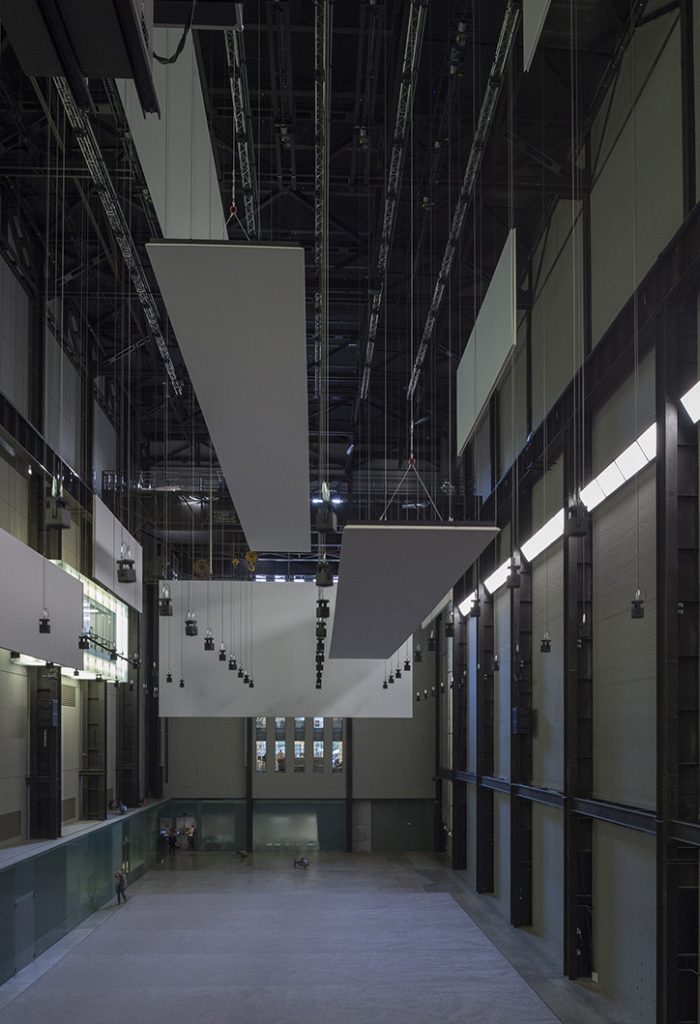
The Paris-based artist Philippe Parreno is kinder than Lem. Visitors to his vast installation at London’s Tate Modern, Anywhen, get a carpet to lie on while the vast Turbine Hall shimmies and pulses around them. Let there be no doubt here: Parreno’s awful grey machine is triumphally futuristic, an interior so smart it has outgrown any need for occupants. Anywhen is thunderous, sulphurous, awful in its full archaic sense.

Visitors find themselves in a sort of aquarium, in which sound and light obey a claustrophobic new physics. Speakers descend from and ascend to the ceiling, relaying captured outside noise from nearby teenagers, a fragment of song, a passing aeroplane. Banks of lights flash. In a sudden hiatus, bits of colour drop down from somewhere on to a giant mobile screen and float off. Some are murky projections, but there are solid objects, too, in the shape inflatable fish. These seem a lot more at home in this shifting space than we do. Huge, white, architectonic panels reconfigure the dimensions of the gallery, moving up and down with more than random malevolence. Is this malevolence an illusion? Of course, but it’s an utterly convincing one – so much so that one wonders what the artist means by it.

Alas, Parreno is not here to answer. He has, it seems, ceded control of his installation to a colony of yeast, fed and watered in a small lab visible in an out-of-the-way corner. Changes in the colony’s temperature, growth and movement are variables in a biocomputed algorithm that will enrich the installation’s behaviour during its six-month run. It still remains to be seen whether those initial conditions are rich and complex enough to generate a significant creative work.

Right now, as you lie there, hands scrabbling for purchase on the thin carpet, it seems as if the Turbine Hall has been invested with a terrible, alien intentionality. Is this another illusion? It must be. And yet, how can we be sure?

The 17th-century German philosopher Gottfried Leibniz once came up with a thrilling but flawed argument for the existence of God. In one of his best-known works, Monadology, Leibniz invites readers to imagine that they are visiting “a machine whose structure makes it think, sense, and have perceptions”. There would be plenty to see: innumerable cogs, wheels, belts and gears.

But that, says Leibniz, is precisely the problem – “we will find only parts that push one another, and we will never find anything to explain a perception”. The same issue arises when we explore the brain: no amount of mapping, no amount of analogy, brings us any closer to the subjective “is-ness” of conscious experience.

Leibniz used his thinking mill to assert that the world is more than material, and that thinking must occur on another (divine) plane of existence. He was a glass-half-full sort of thinker, whose rambunctious belief in the essential goodness of the universe – all is for the best in the “best of all possible worlds” – drove an exasperated Voltaire to pen his savage satire Candide.

Anywhen is Leibniz’s mill made flesh in glass, wire and panelling. Lying on the grey Turbine Hall carpet, I couldn’t help but wonder with Voltaire how on earth Leibniz took comfort from his own story. Something is using the Turbine Hall to think with, but we can bet the farm it is not God. Imagine wandering into the toils of some vast, cool and unsympathetic intellect. Imagine the Martian has landed…