Skin-shuddering intimacy

Visiting Tattoo: British Tattoo Art Revealed, National Maritime Museum, Falmouth for New Scientist, 1 July 2017

TURN left as you enter Tattoo: British Tattoo Art Revealed, and you will be led through the history of a venerable and flourishing folk art. Turn right and you will confront a wall of 100 disembodied forearms. They aren’t real, which is a nuisance for the artists who tattooed them – since silicone is nothing like as easy to work with as human skin – but a comfort for the rest of us.

Alice Snape, editor of Things & Ink magazine, curated this wall to showcase the range of work by today’s tattoo artists in the UK. But you really need to see the rest of the exhibition first. You need time to contemplate the problem Snape’s 100 Hands is there to solve, that this is an exhibition whose subject is entitled to wander off, and cover up.

There’s something frustratingly arch about tattooing. Tattooists jealously guard their stencilled designs (called “flashes”) even as they create pieces that, by their very nature, come with their own sales reps. Clients (perhaps influenced by 2005’s reality show Miami Ink) wax lyrical on the deeply personal stories behind their tats, then plaster photos of them all over Instagram.

Practitioners exploit their liminal status even while they bemoan their lack of recognition. In a show full of repeating figures and useful (though never intrusive) signposting, my favourites were the boards that tell you “what the papers said” at different times in history. Every generation, it seems, has come to the same startling realisation that “tattoos aren’t just for sailors”, yet the information never seems to stick. Tattooing is an art that does not want to be fully known.

The problem facing the show’s curators is: how do you define the limits of your enquiry? If the art has to be invited in, cajoled, reassured, even flattered into taking part, how do you stop shaky inclusion criteria from compromising objectivity?

Natural history solved the problem long ago. The rule used to be that if you wanted to study something you went out and shot it: the rifle was as much part of your kit as your magnifying glass. The Maoris of Polynesia, aware of the value Western visitors put on souvenirs, used to catch people, tattoo their faces, decapitate them and sell their heads to collectors. The draughtsman aboard Charles Darwin’s ship the Beagle had a travel box lined with the tattooed skin of dead Maori warriors.

These days the tattooed collect themselves. Geoff Ostling, for one, has arranged for his heavily (and beautifully) tattooed skin to go to the National Gallery of Australia after he dies. Gemma Angel, an adviser to this exhibition, spent her doctoral study among the 300 or so items in the Wellcome Collection’s archive of human skin, and she reckons there’s a growing interest in post-mortem tattoo preservation.

It is to this exhibition’s great credit that it takes no time at all to find a voice pinpointing exactly what is so discomforting about this idea. In a cabinet of personal testimonies I find this remark by a Catherine Marston: “Tattoo is an art form but I don’t think they should be collected because when a person dies they die too. You hear of some really weird designers that use skin that’s cut afterwards, once they die then that goes on display. I think that diminishes the whole idea of a tattoo. It’s art with a time zone rather than timeless.”

Such voices are valuable here because even this democratic, eclectic exhibition can’t quite capture the shuddering intimacy of the form it celebrates. Tattoos are not just artworks, they are also performances. Getting a tattoo hurts just enough to make you dizzy, and lodges that intimate moment in your memory.

Though the art is the point of the show, it would not work nearly so well without the artefacts it has borrowed from working tattooists and from the Science Museum in London. People make tattoo guns out of virtually anything that vibrates. The first machines were made out of Victorian doorbells. You can salivate at images all you like, but nothing gets under the skin like a doorbell-based tattoo gun once wielded by Johnny Two-Thumbs of Hong Kong.


The physics of dance

Visiting a rehearsal of 8 Minutes, Alexander Whitley’s Sadler’s Wells main-stage debut, for New Scientist, 17 June 2017

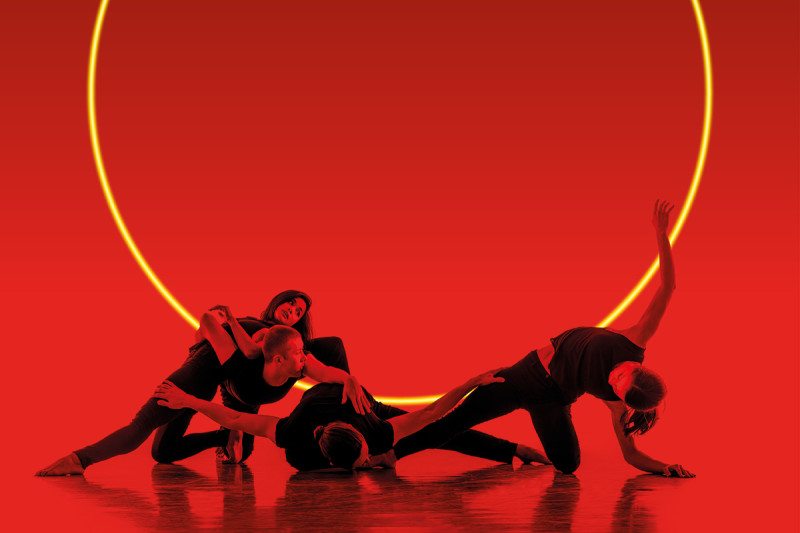
IN A basement studio in south London, seven dancers are interpreting some recent solar research from the Rutherford Appleton Laboratory in Oxfordshire. They are tackling the electromagnetic properties of the sun’s surface, and have got themselves, literally, into a knot. “Something about your grip here is stopping her moving,” frets choreographer Alexander Whitley. “Can we get his hips to go the other way?”

Bit by bit, a roiling form emerges. Imagine a chain, folded in on itself, stretching and reforming. Its movements are coherent and precise, but wildly asymmetrical. This is no tidy, courtly dance. At one point the chain abruptly unwinds. The relief is palpable as the dancers exploit their few seconds of freedom. Very quickly, the chain kinks and folds in on itself again: a folding problem intensely claustrophobic to watch, never mind perform.

Whitley formed his dance company in 2014, and 8 Minutes will be its debut on London’s Sadler’s Wells main stage at the end of June. It is named after the time it takes for light from the sun to reach Earth. “If you imagine travelling this distance at the speed of light, and you subtract all the relativistic effects, it’s quite bizarre,” muses Hugh Mortimer, Whitley’s collaborator and a researcher at Rutherford.

Mortimer designed climate change-detecting spectrometers for the Sentinel-3 satellite, and a sea-surface temperature monitor currently operating from the Queen Mary 2 liner. He hopes to build space-based instruments that analyse the atmospheres of exoplanets. But quite another fascination drew him into collaboration with Whitley’s dance company: the way the most abstruse science can be explained through ordinary experience.

He continues his thought experiment: “For 6 minutes, you’d be sitting in darkness. By the 7th minute you would notice a point of light looming larger: that’s the Earth. You’d arrive at the moon, pass by Earth, and a few seconds later you’d pass the orbit of the moon again. And the point is, passing the moon and the Earth and the moon again a few seconds later would feel intuitively right. It would feel ordinary.”

However difficult an idea, someone, somewhere must be able to grasp it, or it’s not an “idea” in any real sense. How, then, are we to grasp concepts as alien to our day-to-day experience as electromagnetism and the speed of light? It’s a question that has cropped up before in these pages, although seldom through the medium of dance. In 1988, for example, computer scientist Tony Hey wrote about his lunch with US physicist Richard Feynman, who explained particle spin “using the belt from his trousers” (New Scientist, 30 June 1988, p 75).

As for Whitley, he says: “We grasp quite advanced concepts first and foremost through movement. That forms a semantic template for the complex thinking we develop when we acquire language. Right, left, up, down, front, back – also the idea of containment, the concept of an inside and an outside – these ideas come through our bodies.”

This is especially true in children, he argues, because they don’t yet have fully developed rational capabilities. “I think there’s strong potential for using movement to give them a different understanding of and engagement with scientific ideas,” Whitley says.

Mortimer discovered the truth of this idea for himself quite recently: “Alexander runs a creative learning project for 9 and 10-year-olds based on our collaboration. Sitting in on some sessions, I found myself thinking about solar-dynamic processes in a new and clearer way.”

Will the audience at the work’s premiere leave understanding more about the sun? From what I saw, I’m optimistic. They won’t have words, or figures, for what they’ll have seen, but they will have been afforded a glimpse into the sheer dynamism and complexity of our nearest star.

Hello, Robot

Visiting Hello, Robot: Design between human and machine at MAK, Vienna for New Scientist, 6 June 2017

Above the exhibits in the first room of Hello, Robot, a large sign asks: “Have you ever met a robot?” Easy enough. But the questions keep on coming, and by the end of the exhibition, we’re definitely not in Kansas any more: “Do you believe in the death and rebirth of things?” is not a question you want to answer in a hurry. Nor is my favourite, the wonderfully loaded “Do you want to become better than nature intended?”

That we get from start to finish of the show in good order, not just informed but positively exhilarated, is a testament to the wiliness of the three curating institutions: the Vitra Design Museum in Germany, the Design Museum Ghent in Belgium, and MAK in Austria.

One of the show’s advisors, architect Carlo Ratti, head of the MIT Senseable City Lab, nails the trouble with such shows: “Any environment, any city, any landscape can become a robot when it is equipped with sensors, actuators and intelligence.” By the time robots do useful work, they have vanished. Once, we called traffic lights “robots”, now, we barely see them.

Robots, an exhibition currently at London’s Science Museum, gets caught in this bind. By following a “science fiction becomes science fact” trajectory, it creates a show that gets more boring as you work your way through it. Hello, Robot is much cannier: it knows that while science fiction may spin off real artefacts now and again, it never becomes science fact. Does writing down a dream stop you dreaming? Of course not.

Hello, Robot is about design. Its curators explore not only what we have made, but also what we have dreamed. Fine art, speculative designs, commercial products, comic books and movie clips are arranged together to create a glimpse of the robot’s place in our lives and imaginations. Far from disappearing, robots seem more likely to be preparing a jail-break.

The longings, fantasies and anxieties that robots are meant to address are as ancient as they are unrealisable. The robot exists to do what we can imagine doing, but would rather not do. They were going to mow our lawns, now we’re glad of the exercise and we might prefer to have them feed our babies – or look after much older people, as Dan Chen’s 2012 End of Life Care Machine envisions.

This robot mechanically strokes a dying patient – a rather dystopian provocation, or so Chen thought until some visitors asked to buy one. Exhibited here, Chen’s piece is accompanied by a note he wrote: should he encourage people to leave family members alone in their final hours or deny them the comfort of a machine?

Hello, Robot asks difficult questions in a thrillingly designed setting. It is a show to take the children to (just try not to let them see your face in Room 3 as you check on a computer to see if your job’s about to be automated).

There’s a deep seriousness about this show; if design teaches us anything, it is that no one is ever in charge of the future. “The question of whether we need, or even like [robots] is not really ours to ask,” a wallboard opines. “Do we actually need smartphones? Ten years ago, most people would probably have answered no.” Our roles in this “lifeworld” of the future are still to be defined.

Catching the exhibition in Germany, I go round three times until it’s late. I adore industrial robot YuMi’s efforts to roll a ball up a steep incline, and I grin as I walk past a clip of the automated kitchen in Jacques Tati’s 1958 film Mon Oncle. Still, I can’t quite take my eyes off a 2005 photograph of a Chinese factory by Edward Burtynsky, who visited China’s shipyards and industrial plants. Identical figures performing identical actions remind me of iconic British newspaper sketches of weaving machines from the industrial revolution.

We have not outgrown the need for human regimentation – we simply outsource it to cheaper humans. Whether robots become cheap enough to undercut poor people, and what happens if they do, are big questions. But this show can bear them.

The dreams our stuff is made of

To introduce a New Scientist speaking event at London’s Barbican centre on 29 June, I took a moment to wonder why the present looks so futuristic.

Long before we can build something for real, we know how it will work and what it will require by way of materials and design. The steampunk genre gorges on Victorian designs for steam-powered helicopters (yes, there were such things) and the like, with films such as Hugo (2011) and gaming apps such as 80 Days (2014) telescoping the hard business of materials science into the twinkling of a mad professor’s eye. Always, our imaginations run ahead of our physical abilities.

At the same time, science fiction is not at all naive, and almost all of it is about why our dreams of transcendence through technology fail: why the machine goes wrong, or works towards an unforeseen (sometimes catastrophic) end. Blade Runner (1982) didn’t so much inspire the current deluge of in-yer-face urban advertising as realise our worst nightmares about it. Short Circuit (1986) knew what was wrong with robotic warfare long before the first Predator aircraft took to the skies.

So yes, science fiction enters clad in the motley of costume drama: polished, chromed, complete, not infrequently camp. But there’s always a twist, a tear, a weak seam. This genre takes finery from the prop shop and turns it into something vital – a god, a golem, a puzzle, a prison. In science fiction, it matters where you are and how you dress, what you walk on and even what you breathe. All this stuff is contingent, you see. It slips about. It bites.

Sometimes,  in this game of “It’s behind you!” less is more. In Alphaville (1965), futuristic secret agent Lemmy Caution explores the streets of a distant space city, yet there is no set dressing to Alphaville: it is all dialogue, all cut – nothing more than a rhetorical veil cast over contemporary Paris.

More usually, you’ll grab whatever’s to hand – tinsel and Panstick and old gorilla costumes. Two years old by 1965, at least by Earth’s reckoning, William Hartnell’s Time Lord was tearing up the set of Doctor Who and would, in other bodies and other voices, go on tearing up, tearing down and tearing through his fans’ expectations for the next 24 years, production values be damned.

Bigger than its machinery, bigger even than its protagonist, Doctor Who was, in that first, long outing, never in any sense realistic, and that was its strength. You never knew where you’d end up next: a comedy, a horror flick or a Western-style showdown. The Doctor’s sonic screwdriver was the whole point. It said, we’re bolting this together as we go along.

What hostile critics say is true, in that science fiction sometimes is more about the machines than about the people. Metropolis (1927) director Fritz Lang wanted a real rocket launch for the premiere of Frau im Mond (1929) and roped in no less a physicist than Hermann Oberth to build it for him. When his 1.8-metre-tall liquid-propellant rocket came to nought, Oberth set about building a rocket 11 metres tall powered by liquid oxygen. They were going to launch it from the roof of the cinema. Luckily, they ran out of money.

The technocratic ideal may seem sterile now, but its promise was compelling: that we’d all live lives of ease and happiness in space, the moon or Mars, watched over by loving machines – the Robinson family’s stalwart Robot B-9 from Lost in Space, perhaps.

Once Star Trek‘s Federation established heaven on Earth (and elsewhere), however, then we hit a sizeable snag. Gene Roddenberry was right to have pitched his show to Desilu Studios as “wagon train to the stars”, for as Dennis Sisterson’s charming silent parody Steam Trek: The moving picture (1994) demonstrates, the moment you actually reach California, the technology that got you there loses its specialness.

If the teleportation device is not the point of your story, then you may as well use a rappelling rope. Why spend your set budget on an impressive-looking telescope? Why not just have your actor point out of the window? The day your show’s props become merely props is the day you’re not making science fiction any more.

What price original art?

At what point does a practical problem become an existential one? When do we have to admit that not everyone can experience everything – and what do we do about that? Forgery is no solution because good forgeries are, by definition, as exclusive as originals: if the original turns up, the forgery loses all value. But what if we undermined cultural norms to the point where fakery was the norm?

A visit to the Van Gogh Museum, Amsterdam and the Tinguely Museum Basel for New Scientist, 13 May 2017.

IMPRESSIONISM, the movement that shaped a generation of European artists, was concerned above all with light, colour and the mechanics of visual perception. Only one of its leading lights concerned himself, without apology, to the business of fame – Vincent van Gogh. He got what was coming to him: absolutely nothing. Dealers failed to sell a single canvas in his lifetime.

Tastes change. On 2 June 1973, in a park behind the Rijksmuseum in Amsterdam, a museum dedicated to van Gogh’s work opened to an ever-swelling crowd of admirers. In 2014, 1.6 million people visited. Last year it was 2.1 million – 20 times the number the museum was designed to accommodate – all there to see just 250 paintings and 700 drawings and letters.

At what point does a practical problem become an existential one? When do we have to admit that not everyone can experience everything – and what do we do about that? Forgery is no solution because good forgeries are, by definition, as exclusive as originals: if the original turns up, the forgery loses all value.

What if we undermined cultural norms to the point where fakery was the norm? This is the state of affairs dreamed up by Polish writer Stanislaw Lem in his 1976 novel The Futurological Congress, which features this diary entry: “Spent a few free hours… in the city. Could hardly control my horror as I looked at all the displays of wealth… An art gallery in Manhattan practically giving away original Rembrandts and Matisses… The fiendishness is that part of this mass deception is open and voluntary, letting people think they can draw the line between fiction and fact. And since no one any longer responds to things spontaneously – you take drugs to study, drugs to love, drugs to rise up in revolt, drugs to forget – the distinction between manipulated and natural feelings has ceased to exist.”

Doubtless the curators at the Van Gogh Museum have no such nefarious plans. But, faced with those queues, they are resorting to technology, even virtual reality.

Their most innocent-looking intervention is a dedicated location-based app by Marjolein Fennis that will entertain those waiting to enter, turning potentially fractious hordes into ad hoc communities of gamers.

In an effort to avoid delays and bottlenecks, museum designers scrape eye-tracking studies and video footage for insights. Some 85 per cent of the museum’s visitors are tourists, which means they get up late and roll up to the museum at the same time, 11 am.

A computer program developed with Erasmus University in Rotterdam uses algorithms more usually found in stock market trackers to predict visitor behaviour. Thus armed, the museum has come up with incentives to reduce peak time visits by around 60 per cent, even while visitor numbers have increased by nearly half.

“We don’t want as many visitors as possible, we want each visitor to have the best experience as possible,” says Milou Halbesma, the Van Gogh Museum’s director of public affairs.

Amsterdam, also badly bottlenecked, is planning to adopt similar technology later this year to get tourists out of the city and into the rest of the country.

Technology can also satisfy demand, especially in Asia, by bringing van Gogh’s art to the people. To this end, the museum has produced a digitally enhanced immersive experience, Meet Vincent van Gogh. It sounds hokey: visitors can wander with Vincent from rural Netherlands to the streets of Paris, pull up a seat at The Potato Eaters‘ table, and step into a life-sized Yellow House. In reality, the exhibition stimulates genuine interest, without leaving the visitor feeling cheated that they haven’t been in contact with the real work.

The museum’s limited run of Relievo reproductions take the opposite tack. Based on 3D scans of the paintings, including cracks in the paint and traces of paint layers, these surreally accurate reproductions took the museum and Fujifilm Belgium seven years to achieve. If you ever wanted to run your hand down the thick, impasto brushstrokes of van Gogh’s Sunflowers, now is your chance. This approach was also targeted at the overseas market, especially Hong Kong. A Dubai hotel exhibited them in 2015.

The only downside is that these strategies increase the number of people who want to see van Gogh’s real work. An exhibition currently at the Van Gogh Museum, Prints in Paris 1900, explores another very successful way of dealing with the sheer popularity of art and the celebrity of individual artists.

The fad for prints at the end of the 19th century not only decorated the hoardings and walls of Paris with colourful public art in the form of adverts, it also let everyone with a half-decent salary own an “original”. No two prints were identical – the imprimatur of the artist was visible and even, depending on the inks used, tangible. And the private nature of collections meant darker, more intimate themes could be explored by artist and collector.

Producing art ordinary people could own was a cultural as well as a technological breakthrough. But there is a snag, felt more sharply now than at the time these prints were produced. The low lighting at the Prints show reveals the vulnerability of works on paper. Unless these pieces are endlessly reproduced, dissolving their connection with the artist, they will have to spend almost all their life in storage, out of the public gaze.

The original is the gallery-goer’s holy grail. When Mark Rothko’s badly faded murals, painted for a Harvard University dining room, were rehung in 2014, an expensive lighting system was used to restore their colour. Over-painting them would have been an act of sacrilege. No one thinks this way about buildings. St John’s Cathedral, in the Dutch city of ‘s-Hertogenbosch, for example, had whole pinnacles reinstalled and some statues recarved from scratch. This process began in the 19th century, using easily weathered limestone, which means some of the most recently reinstalled figures are actually copies of copies.

Gallery-goers are less forgiving. “I think it should always be very clear for the audience what you are looking at,” says Halbesma. “That is why we shall never show copies in our museum – because this is the moment when you meet Vincent and his work.”

“Unless artworks on paper are endlessly reproduced, they spend their life in storage, out of public gaze”

And the posters and prints upstairs? “They are all originals,” Halbesma says. “But we have big problems because of the light and their vulnerability. A lot of museums are already working with facsimile.” The implication is clear: catch this while you can.

Perhaps we should leave it to artists to determine what role provenance plays in their work. Van Gogh, desperate for that elusive sale, embraced the idea of reproduction. A letter to his brother Theo in December 1882 reads: “What I wrote to you in my last letter about a plan for making prints for the people is something to which I hope you’ll give some thought one day. I don’t have a fixed plan about this myself as yet… But I don’t doubt the possibility of doing something like this, nor its usefulness.”

The nearby Stedelijk Museum’s recent show of kinetic sculpture by 20th-century Swiss artist, showman and mischief-maker Jean Tinguely shows a rather different attitude. Tinguely was no ordinary mechanic, and some of his work, such as Homage to New York, was designed to burst apart in showers of sparks. His less self-destructive work is hardly more stable; the Stedelijk show had 42 moving pieces, rigged to timers to eke out the fun between the inevitable repairs.

It reminded me of a story told by Midas Dekkers in his book The Way of All Flesh – and an important part of the story of provenance. The Stedelijk once had a piece of Tinguely’s called Gismo. Tinguely insisted it should run constantly so the noise would lead people to it from wherever they were. A curator took him at his word, and for a brief, happy while, everyone got to see Gismo.

That’s the trouble with art: if you want it to live, you may have to let it die.

Marine life is rubbish

“The aim of my work is to create a visually attractive image that draws the viewer in, then shocks them with what is represented,” artist Mandy Barker explains. “This contradiction between beauty and fact is intended to make people question how their shoe, computer, or ink cartridge ended up in the sea.”

A short feature for New Scientist, 22 April 2017