A comic novel about the death of God

danielkehlmannf103_v-contentgross

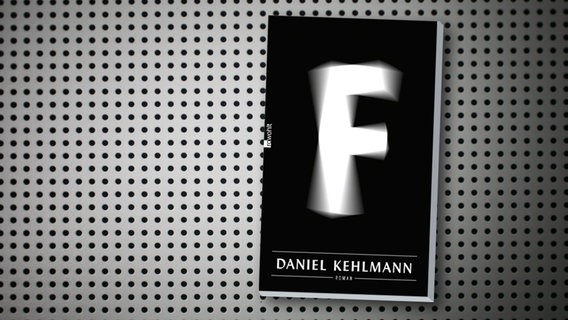
F by Daniel Kehlmann reviewed for the Guardian

It cannot be an easy thing to write a comic novel about the death of God. Still, the German novelist Daniel Kehlmann may just have pulled it off. “F” is the protagonist of a book within a book, the debut novel of Arthur Friedland, a rather disorganised buffoon who never had any success as a writer until an encounter with a hypnotist gave his life its chilly purpose: “This is an order, and you’re going to follow it because you want to follow it, and you want to because I’m ordering you, and I’m ordering you because you want me to give the order. Starting today, you’re going to make an effort. No matter what it costs. Repeat!”

My Name Is No One is so exuberantly nihilistic, its readers are throwing themselves off TV transmission towers. As Kehlmann says: “The sentences are well constructed, the narrative has a powerful flow, the reader would be enjoying the text were it not for a persistent feeling of somehow being mocked.”

If Kehlmann played this intertextual game to the hilt – if F itself were as unforgiving as Arthur’s novel – then we would be looking at a less important book, as well as a less enjoyable one: some Johnny-come-lately contribution to the French nouvelle vague. The spirit of Alain Robbe-Grillet, the movement’s greatest exponent, illuminates the scene in which Arthur takes his granddaughter to an art museum to study a picture by her missing uncle: “She stepped even closer, and immediately everything dissolved. There were no more people any more, no more little flags, no anchor, no bent watch. There were just some tiny bright patches of colour above the main deck. The white of the naked canvas shone through in several places, and even the ship was a mere assemblage of lines and dots. Where had it all gone?”

Sign up for Bookmarks: discover new books in our weekly email
Read more
There are many such moments, they are all as beautifully judged as this one, and they are not the point. The point of F is not its humour (though Kehlmann, like Robbe-Grillet, can be very funny indeed), but its generosity. Arthur’s three sons, in their turn, make superhuman efforts to give their lives significance, and these efforts tangle and trip over each other to generate the comic business of the book. The eldest, Martin, a Rubik’s Cube expert, embraces the priesthood despite his lack of faith. Of Arthur’s two sons by his second marriage, Eric enters the glass-and-steel world of high finance to help control his fear of cramped spaces. His twin brother, Ivan, is a would-be painter turned art dealer, and author of Mediocrity As an Aesthetic Phenomenon.

“When I was young, vain, and lacking all experience,” he recalls, “I thought the art world was corrupt. Today I know that’s not true. The art world is full of lovable people, full of enthusiasts, full of longing and truth. It is art itself as a sacred principle that unfortunately doesn’t exist.”

Advertisement
Ivan, like all the others, lives in a nihilistic universe, but he is not himself nihilistic. It worries him that the world cannot live up to his expectations and those of the people he admires. These people include his lover Heinrich Eulenboeck, an artist with a true calling but only mediocre ability. What kind of world is it that plays such a trick on a person? “How do you live with that, why do you keep on going?”

The answer seems to be love. In a godless world, love counts for a great deal. And failing love, ordinary human decency goes a long way. Since Kurt Vonnegut died, there has really been no one to tell us this; the reminder is welcome.

F is again translated by Carol Brown Janeway, but it is a better book than Kehlmann’s last, Fame, whose narrative gymnastics caused characters to lose or swap their identities, and even to topple into their own or other people’s fictions. Fame was knowing, driven by its own absurdity. F is about the world’s absurdity, and this makes a huge difference morally. The world is big, and ultimately unknowable, and life is short and memory pitifully limited.

In the absence of God, Kehlmann’s protagonists hold themselves to account, and they give themselves hell. Sometimes, they give each other hell. “Something terrible has happened and the people seem to be wanting to cover it up. If you were to look a little longer, hunt a little better for clues, you’d be able to figure it out, or at least you think so. But if you step back, the details disappear and all that remains is a colourful street scene: bright, cheerful, full of life.”

It is very hard to express how funny this all is. But laughter matters most in the dark.

“We don’t know why we did it”

Two views of the US space programme reviewed for New Scientist, 2 July 2014

“WE HAVE no need of other worlds,” wrote Stanislaw Lem, the Polish science fiction writer and satirist in 1961. “We need mirrors. We don’t know what to do with other worlds. A single world, our own, suffices us; but we can’t accept it for what it is.”

A few years later, as NASA’s advocates hunted for suitable justification for the US’s $24 billion effort to put a man on the moon, they began to invoke humanity’s “outward urge” – an inborn desire to leave our familiar surroundings and explore strange new worlds.

A hastily concocted migration instinct might explain tourism. But why astronauts visited the moon, described by the 1940s US columnist Milton Mayer as a “pulverised rubble… like Dresden in May or Hiroshima in August”, requires a whole other level of blarney.

In Marketing the Moon: The selling of the Apollo lunar program, released earlier this year, David Meerman Scott and Richard Jurek curated that blarney in their illustrated account of how Apollo was sold to a public already paying a bloody price for the Vietnam war.

Historian Matthew Tribbe, on the other hand, looks in an almost diametrically opposite direction. His No Requiem for the Space Age sweeps aside the Apollo programme’s technocratic special pleading – and the subsequent nostalgia – to argue that Americans fell out of love with space exploration even before Neil Armstrong took his first steps on the moon in July 1969.

There is no doubt that national disillusionment with the space programme swelled during the 1970s, as counter-cultural movements sent the US on “the biggest introspective binge any society in history has undergone”. But digging beneath this familiar narrative, Tribbe also shows that opposition to Apollo was both long-standing and intellectually rigorous.

The Nobel laureate physicist Max Born called Apollo “a triumph of intellect, but a tragic failure of reason”. And novelist Norman Mailer considered it “the deepest of nihilistic acts – because we don’t know why we did it”.

Apollo was the US’s biggest, brashest entry in its heart-stoppingly exciting – and terrifying – political and technological competition with the Soviet Union. By the time Apollo 11 was launched, however, that race was already won, and only a fanatic (or a military-industrial complex) would have kept running.

There was a fairly concerted attempt to sell Apollo as science. But that never rang true, and anyway what we really seek in space, as the science fiction writer Arthur C. Clarke told the American Aeronautical Society in 1967, is “not knowledge, but wonder, beauty, romance, novelty – and above all, adventure”. Apollo was supposed to offer the world’s most technologically advanced nation a peacetime goal as challenging and inspiring as war.

But the intractability of the war in Vietnam put paid to John F. Kennedy’s fine words to Congress on 25 May 1961, about sending an American safely to the moon before the end of the decade. As the Washington Evening Star columnist Frank R. Getlein observed: “The reason you have a moral equivalent of war is so you don’t have to have war… For us Americans, unfortunately, the moral equivalent of war has turned out to be war.”

Tribbe argues that popular enthusiasm was doused as soon as people realised just who was going into space – not them, but the representatives of the very technocratic power structure that was wreaking havoc on Earth.

This, you could argue, was hardly NASA’s fault. So it is reassuring, among all this starkly revealed futility, to see Tribbe expressing proper respect and, indeed, real warmth for NASA and its astronauts. NASA had labelled them “super-normal”; with such a moniker, it was perhaps inevitable that they failed to capture hearts and minds as easily as everyone had assumed they would. While public uninterest is Tribbe’s theme, he does not lay the blame for it at NASA’s door.

Explorations rarely inspire contemporary stay-at-homes. For example, over a century elapsed between Columbus’s initial voyage and the first permanent English settlements. Lem was right. We don’t need alien places. We need an ever-expanding supply of human ones. The moon may yet provide them. This, at least, is the compelling and technically detailed argument of Arlin Crotts’s forthcoming book The New Moon: Water, exploration, and future habitation – a perfect speculative antidote for those who find Tribbe’s history disheartening.

Tribbe quotes an unnamed journalist who wrote, during the Vietnam war: “The moon is a dream for those who have no dreams.” This may sum up many of the problems people had with Apollo in the 1970s. But Tribbe is no pessimist, and history need not demoralise us. Times and technologies change, so do nations, and so, come to think of it, do dreams.

Arctic nightmares

Russia's relentless quest for Arctic fuel treasure

Reading Paul Josephson’s The Conquest of the Russian Arctic for New Scientist, 25 June 2014

AT -15 °C, high-carbon steel cracks. At -30°C, pneumatic hoses split and cranes fail. At -40 °C, compressors stop working. Ball bearings shatter. Steel structures rupture on a massive scale.

Still Russia builds, and mines, and tries to settle its Arctic territories. President Vladimir Putin has revived the old Stalinist vision that saw slave labour assembling cities on beds of permafrost. This time around, in place of the inexhaustible human resources of the gulag, there are delays, cancellations and nervous foreign investors.

The Arctic contains 90 per cent of Russia’s recoverable hydrocarbons. Were the country to finally overcome its many and various technical challenges, after more than a century of trying, it would be vastly wealthy.

So the Arctic remains a burden Russia cannot bear to relinquish. This potentially great nation continues to saddle itself with the costs of transportation over great distances, of keeping warm, or just staying alive, in great cold.

Since the mid-1980s, Paul Josephson, a historian of science and technology, has charted the country’s heroic engineering projects. He has traced its gigantomanic ambitions back, more often than not, to Stalin’s Great Plan for the Transformation of Nature. Launched in 1948, it aimed to divert the flow of major waterways, industrialise Siberia, and turn the infertile steppe into a breadbasket.

The consequences for the environment have been at best ambiguous, at worst catastrophic. Natural resources had no price in Soviet economics. Since they were not owned privately, they had no value. Development had no regard for waste or loss. Little has changed under the current system of state capitalism; the Arctic’s underfunded environmental projects are smothered under state plans for “modernisation”.

Josephson is a well-travelled, well-connected and impassioned analyst. But his call for Putin’s Russia “to move more slowly, to adopt measured policies… forego impatience for circumspection” is unlikely to be heeded.

After 40 years writing sober, academic accounts of the world’s most hubristic, atrocity-littered engineering projects, it may be time for Josephson to bare his teeth a little.

Put out more flags

long

The meetngreet staff at NESTA, the UK’s National Endowment for Science, Technology and the Arts, have a lot invested in the idea that their bulgy Fetter Lane new-build is larger and more complex than it actually is.

There’s an open-plan space with a desk and two meeting pods made of safety glass and egg boxes. The cloakroom is to the left of the right-hand pod and the room where they’re launching the 2014 Longitude Prize is to the right. You go left (there isn’t a cloakroom as such, just a cupboard) and immediately you’re intercepted by a meetngreet following a clockwise orbit around the left-hand pod. “You must be lost,” she says, pointing you in a direction you don’t want to go. All this in a space about 400-foot square.

Inside the room, the brains behind the revivification of the British government’s Longitude Prize of 1714 are taking it in turns to downplay the significance of the enterprise. Iain Grey, chief executive of the Technology Strategy Board, worries at the value of prize before jettisoning the word entirely in favour of “challenge-led agendas”, whatever the hell they are.

Honestly, it’s as if the X-Prize had never happened. The razzmatazz, the music, the black T shirts. The working laptop presentations. Here it’s all apologies and self-deprecation and a recalcitrant Windows 7 install making everyone look like a bit of a tit.

The canapes were excellent but there should have been bunting, damn it. There should have been flags. A good, worthwhile prize is always welcome. True, there’s a world of difficulty to be got through, making a prize good and worthwhile. But so far, NESTA seem to have paid their dues, and anyone who watched the BBC’s Horizon documentary last night may reasonably conclude that they’ve come up with a winner.

Until June 25, the public can vote for one of six challenges which, if met, would go some way to changing the world for the better. Do you want ecologically sustainable air travel, nutrition sufficient to keep the world’s population going, something to replace defunct antibiotics, machines to ameliorate paralysis, clean water, or independent lives for those with dementia?

As a piece of public engagement with science, it’s a triumph – and that’s before the competition proper gets started. The winning challenge stands for a decade or so, and whoever meets it wins ten million quid. The expectation, I presume, is that consortiums representing commercial and academic interests will spend much, much more than they could possibly be recouped from the prize money. The victory’s the thing, after all. The kudos. The column inches, and venture capitalists waving their chequebooks outside the door.

“This prize, on it’s own, won’t change the world,” says the prize’s lead, health entrepreneur Tamar Ghosh, underselling all her hard work. She should read more aviation history. These sorts of prizes can, and do, precisely that.