11 April 2019: Smart Robots, Mortal Engines

Come to Cinema 3 at London’s Barbican Centre, where I’ll be kicking off a season of Stanislaw Lem on film with the Brothers Quay, artists Andrzej Klimowski and Danusia Schejbal, and Dr Mark Bould, author of the BFI Classics monograph on Andrei Tarkovsky’s Solaris.

We’ve got some short films kick off the evening at 6.45pm on Thursday 11 April. More details here.

And so we wait

Thinking about Delayed Response by Jason Farman (Yale) for the Telegraph, 6 February 2019.

In producer Jon Favreau’s career-making 1996 comedy film Swingers, Favreau himself plays Mike, a young man in love with love, and at war with the answerphones of the world.

“Hi,” says one young woman’s machine, “this is Nikki. Leave a message,” prompting Mike to work, flub after flub, through an entire, entirely fictitious, relationship with the absent Nikki.

“This just isn’t working out,” he sighs, on about his twentieth attempt to leave a message that’s neither creepy nor incoherent.” I — I think you’re great, but, uh, I — I… Maybe we should just take some time off from each other. It’s not you, it’s me. It’s what I’m going through.”

There are a couple of lessons in this scene, and once they’re learned, there’ll be no pressing need for you to read Jason Farman’s Delayed Response. (I think you’d enjoy reading him, quite a bit, but, in the spirit of this project, let those reasons wait till the end.)

First lesson of two: “non-verbal communication never stops; non-verbal cues are always being produced whether we want them to be or not.” Those in the know may recognise here Farman’s salute here to Edward T. Hall’s book The Silent Language (1980), for which Delayed Response is a useful foil. But the point — that any delay between transmission and reception is part of the message — is no mere intellectual nicety. Anyone who has had a love affair degenerate into an exchange of ever more flippant WhatsApp messages; or has waited for a prospective employer to get back to them about a job application, knows that silent time carries meaning.

Second lesson: delay can be used to manifest power. In Swingers, Mike crashes into what an elusive novelist friend of mine dubs, with gleeful malevolence, “the power of absence,” which is more or less the same power my teenage daughter wields when she “ghosts” some boy. In the words of the French sociologist Pierre Bourdieu, “Waiting is one of the privileged ways of experiencing the effect of power, and the link between time and power.” We’re none of us immune; we’re all in thrall to what Farman calls the “waiting economy”, and as our civics crumble (don’t pretend you haven’t noticed) the hucksters driving that economy get more and more brazen. (Consider, as an example, the growing discrepancy in UK delivery times between public and private postal services.)

Delays carry meanings. We cannot control them with any finesse; but we can use them as blunt weapons on each other.

What’s left for Farman to say?

Farman’s account of wait times is certainly exhaustive, running the full gamut of history, from contemporary Japanese smartphone messaging apps to Aboriginal message sticks that were being employed up to 50,000 years ago. (To give you some idea how venerable that communication system is, consider that papyrus dates from around 2900 BC.) He spans on-line wait times both so short as to be barely perceptible, and delays so long that they may be used to calculate the distance between planets. His examples are sometimes otherworldly (literally so in the case of the New Horizons mission to Pluto), sometimes unnervingly prosaic: He recounts the Battle of Fredericksburg in the American Civil War as a piling up of familiar and ordinary delays, conjuring up a picture of war-as-bureaucracy that is truly mortifying.

Farman acknowledges how much more quickly we send and receive messages these days — but his is no paean to technological progress. The dismal fact is: the instantaneous provision of information degrades our ability to interpret it. As long ago as 1966 the neurobiologist James L McGaugh reported that as the time increases between learning and testing, memory retention actually improves. And yet the purveyors of new media continue to equate speed with wisdom, promising that ever-better worlds will emerge from ever-more-efficient media. Facebook’s Mark Zuckerberg took this to an extreme typical of him in April 2017 when he announced that “We’re building further out beyond augmented reality, and that includes work around direct brain interfaces that one day will let you communicate using only your mind, although that stuff is pretty far out.”

This kind of hucksterism is harmless in itself, but it doesn’t come out of nothing. The thing we should be really afraid of is the creeping bureaucratisation of human experience. I remember, three years before Zuckerberg slugged back his own Kool-Aid, I sat listening to UCL neuroscientist Nilli Lavie lecturing about attention. Lavie was clearly a person of good will and good sense, but what exactly did she mean by her claim that wandering attention loses the US economy around two billion dollars a year? Were our minds to be perfectly focused, all year round, would that usher in some sort of actuarial New Jerusalem? Or would it merely extinguish all dreaming? Without a space for minds to wander in, where would a new idea – any new idea – actually come from?

This, of course, is the political flim-flam implicit in crisis thinking. So long as we are occupied with urgent problems, we are unable to articulate nuanced and far-reaching political ideas. “Waiting, ultimately, is essential for imagining that which does not yet exist and innovating on the knowledge we encounter,” Farman writes, to which I’m inclined to add the obvious point: Progressives are shrill and failing because their chosen media — Twitter and the like — deprive them of any register other than crisis-triggered outrage.

We may dream up a dystopia in which the populus is narcotised into bovine contentment by the instantaneous supply of undigested information, but as Farman makes clear, this isn’t going to happen. The anxiety generated by delay doesn’t disappear with quicker response times, it simply gets redistributed and reshaped. People under 34 years of age check their phones an average of 150 times a day, a burden entirely alien to soldiers waiting for Death and the postman at Fredericksburg. Farman writes: “Though the mythologies of the digital age continue to argue that we are eliminating waiting from daily life, we are actually putting it right at the centre of how we connect with one another.”

This has a major, though rarely articulated consequence for us: that anxiety balloons to fill the vacuum left by a vanished emotion: one we once considered pleasurable and positive. I refer, of course, to anticipation. Anticipation is no longer something we relish. This is because, in our world of immediate satisfactions, we’re simply not getting enough exposure to it. Waiting has ceased to be the way we measure projected pleasure. Now it’s merely an index of our frustration.

Farman is very good on this subject, and this is why Delayed Response is worth reading. (There: I told you we’d get around to this.) The book’s longueurs, and Farman’s persnickety academical style, pale beside his main point, very well expressed, that “the meaning of life isn’t deferred until that thing we hope for arrives; instead, in the moment of waiting, meaning is located in our ability to recognise the ways that such hopes define us.”

Tonight the World

Visiting Tonight the World, Daria Martin’s new show at the Barbican, for the Financial Times, 5 February 2019

The terrible thing about dreams is that you cannot look away. You cannot peek around corners. You cannot glance at your feet. You must see – and cannot unsee – what you are given.

And while video games sometimes offer you the opportunity to shift from first to third person, so that you can see your avatar operating in the game, for the most part you’re suspended, disembodied, in a dream.

Daria Martin’s gallery-sized installation Tonight the World, now occupying the Barbican Centre’s Curve Gallery, begins with a video game. In an eleven-minute screen capture, we explore a monochrome, abstracted version of the house in Czechoslovakia where Martin’s grandmother, Susi Stiassni, spent her early childhood.

The house is real enough: a modernist redoubt just outside Brno, built by architect Ernst Wiesner in the late 1920s for Susi’s father, the Jewish textile manufacturer Alfred Stiassni. Later, the house was home to a string of Czech presidents. House guests included Fidel Castro.

Students from Oxford University and from the University of Masaryk in Brno recorded the building using photogrammetry, and it’s their data that powers Martin’s videogame. They scanned most of the rooms, and more or less all the furniture, but none of the objects. This is one reason why the gameable villa Stiassni is furnished but unadorned. Blank white canvases in white frames hang from white walls. The shelves lining the library are empty. The only objects here are game objects, seeded into the scene so as to reveal, on a click, glimpses of the house’s history.

At this point, Martin’s show could go either way. We could be in for a rather stilted, tech-heavy exploration of her family’s fraught history. (Susi Stiassni fled Nazi occupation with her family in 1938, first to London, then to Brazil, finally to California.) But the way gallery has been decked out suggests (rightly) that a warmer, more intimate, ultimately more disturbing game is afoot. Past the first screen, fellow gallery-goers bleed in and out of view round a series of curved wooden walls painted a warm terracotta. Is the colour a reference to interwar architecture? All I can think of is the porn set in David Cronenberg’s existentialist shocker Videodrome. There is something distinctly fleshy going on.

Tonight the World turns out not to be a show about Susi Stiassni’s life; not, anyway, about those parts of her life that anyone else could have witnessed, or participated in. It’s about Susi’s dreams, which she recorded year after year in a colossal typewritten diary. We get to see some of her work, hung up like a vast storyboard, through a gap in one of the walls.

This diary provides the storyline for five short films, looping on a huge curved screen at the farthest end of the gallery. In each dream, four actresses play Susi at different life stages; chief among them, and the eldest, is Hayley Carmichael. She was the eponymous Hunger Artist in Martin’s 2017 film, which won the Film London Jerwood prize last year. Carmichael is extraordinary: she serves up pathos by the yard just by standing still and staring.

In one film Susi confronts an army patrol; in another, she discovers a proletarian man living in a wall space behind her living room. The page from Susi’s diary which describe these dreams are pinned on a wall nearby. In one, Susi writes: “I call in that we are the Korean army… Actually the Korean army isn’t us but they are just outside the house.”

We’re not just talking about disembodiment here. We’re talking about the dislocation of the survivor; about the strategies of identification and alienation by which a human psyche eludes mortal threat. These dreams are about being several people at once, in the hope that at least one of you will survive.

An episodic film about dislocation with four actresses playing the same person: what, one is tempted to ask, could possibly go right? But Martin maintains control — indeed, makes the dreams both comprehensible and gripping, in a way that other people’s dreams almost never are — by keeping an iron grip on the viewpoint. You never feel as if you’re looking through a camera; you’re always looking through the eyes of one or another Susi. Now and again, points of view are established before the characters doing the looking step into the appropriate part of the frame. It’s a neat trick and one that’s quite difficult to pull off: the same bit of film grammer Andrei Tarkovksy played with in Mirror.

Given her previous work — a Kafka adaptation, films about mirror synaesthesia, intimacy and robots — it’s hardly a surprise to find Daria Martin’s current show steeped in the uncanny. But how well does it all hang together?

Better in the viewing than in the telling, I suspect. Words imply chronology, and that’s very much not what this show is about. Susi’s dreams were shaped by her history, but they don’t depict that history. The men coming in through the windows of her half-forgotten family home are as likely to be Koreans as Nazis. They could be tourists, or players of a video game, or a Californian child (Daria Martin herself, perhaps) dressed as a cowboy. All times are one; all fears are universal.

Tonight the World is certainly an “immersive” experience, for what that word is worth. A dark, echoey interior, objects seen through chinks, and single pages that stand for whole manuscripts: there’s a little bit of Punchdrunk theatre company’s Tunnel 228 about the enterprise. There’s also an attempt, which doesn’t quite pay off, to have a piece of imagery from Martin’s video game bleed into the gallery space. This invasion comes across as more of a joke than a psychic rupture: a measure of how monomaniacally exact you have to be, if you want to conjure fantasy in real space.

What of that video game? Though it’s a chilly, jerky and rather daunting way to open the show, the mathematically rendered villa Stiassi — stripped of objects, provenance and affect — sets the right tone, I think, particularly in relation to the very next object Martin offers us: a chink in a wall, housing a small family photograph of the villa as it really was: a home filled with lace and rugs and books and bric-a-brac and life. The world is empty, until we ourselves enchant it — with monsters, or delights.

A place that exists only in moonlight

Visiting Turner Contemporary, Margate and Katie Paterson’s new show for the Financial Times, 30 January 2019

Cyril Connolly, literary lion of the 1930s, reckoned that the surest way of killing off writers was to baff on about their promise. Calling artists “visionary” might have the same effect now.

A new show at Turner Contemporary in Margate juxtaposes JMW Turner watercolours with work by Scottish-born conceptual artist Katie Paterson. The fit seems reasonable. Both artists are fascinated by light. But Turner was a visionary artist, while Paterson, born 1981, is not.. Her value (and it’s considerable) lies elsewhere.

Turner’s deft atmospheric squiggles hang next to an airfreight parcel, a shelving unit full of light bulbs and several thousand photographic slides depicting nothing. Paterson defends the wheeze with spirit: “I don’t find my work itself scientific,” she writes, on wall information at the head of the exhibition. “It deals with phenomena and matter, space-time, colour and light, the natural world as materials. Like Turner’s work, it is rooted in sensory experience.”

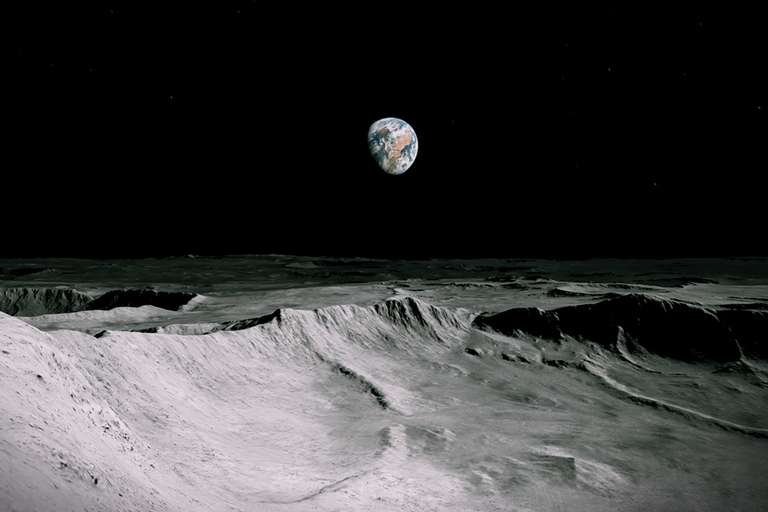
True, you can find sensory experience if you go looking for it. Her 2007 piece “Earth-Moon-Earth” used Morse code to bounce the score of Beethoven’s Moonlight Sonata off the Moon. An automated piano performs the rather gappy version that survived the round-trip. The moment you wonder where the missing notes went, you enter dreamland. 289 replacement light bulbs sit ready to power Light bulb to Simulate Moonlight (2008) through the course of an average human lifetime. They are tuned to exactly recreate the effulgence of a full moon. I stepped into the installation expecting nothing, only to be propelled in my imagination back to the night walks of my childhood.

But sensory experience doesn’t sit at the heart of every Paterson work, or even many of them.

There’s lots of precision. “It needs to be accurate to be imagined,” says the artist of a 2008 wheeze in which people phoned up Iceland’s Vatnajökull glacier to hear it melting in real time. If all you got was the artist splashing about in her kitchen sink, what would be the point of the work?

Her literalistic approach pushes Paterson into entertaining contortions. Alongside her concern for accuracy and truth, I think we should add a love of logistics. Second Moon (2013-14), a fragment of the Moon sent on a year-long journey counterclockwise around the earth via air freight, is a game of scale in which human and astronomical perspectives vie for contention. Other projects haven’t gone as smoothly. For five years Paterson sent letters of condolence to friendly astronomers, marking the deaths of individual stars. Dying Star Letters (2011-present) threatened to overwhelm her, however as improvements in observation caused her inbox to overflow with stellar deaths.

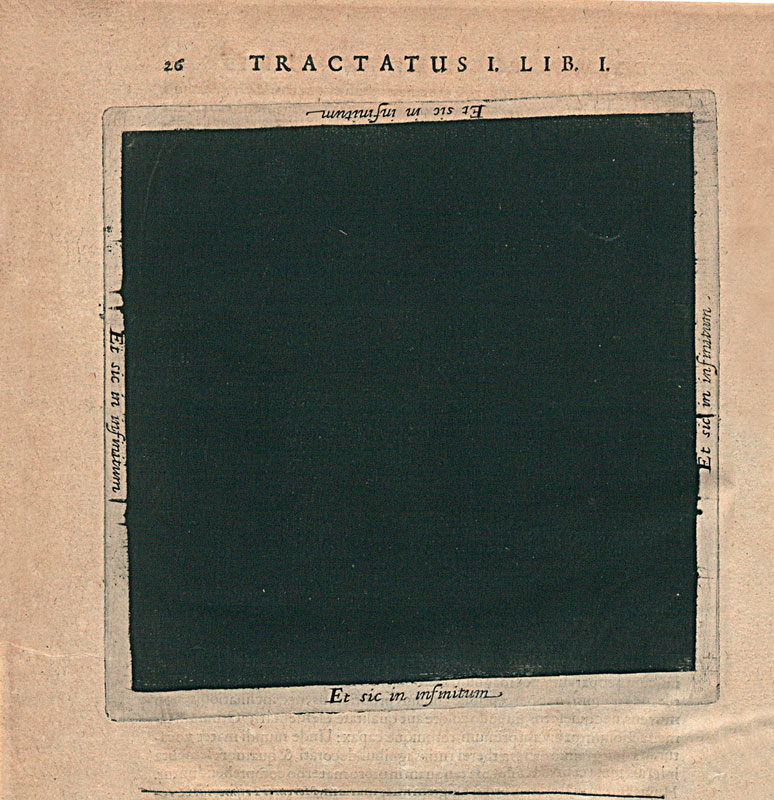
A core of necessary failure is present in many of Paterson’s pieces. Some projects are threatened by technological obsolescence. The 2,200 slides of empty space that make up The History of Darkness (begun in 2010) can only be added to for as long as someone makes slides (they’re already difficult to get hold of). A brand-new piece for this exhibition is a spinning wheel depicting the overall colour balance of the universe throughout its history. Its inks are pinpoint-accurate for now, but in two years’ time, when they have faded ever so slightly, what will The Cosmic Spectrum (2019) be worth?

Turner never had this problem. His criterion of truth was different. Paterson cares about measurement. He cared about witness. An honestly witnessed play of light against a cloud can be achieved through the right squiggle. An accurate measurement of the same phenomenon must be the collaborative work of meteorologists, atmospheric scientists, astronomers, colour scientists, and who knows how many other specialists, with Paterson riding everyone’s coat-tails as a sort of tourist.

As a foil for Paterson, we need someone who invents the world out of words, who thinks in conceits and metaphors, and who explores them with an almost naive diligence.

We need John Donne. “On a round ball / A workman that hath copies by, can lay / An Europe, Afric, and an Asia, / And quickly make that, which was nothing, all”. These lines from A Valediction: of Weeping come far closer to defining Paterson’s practice than anything Turner can offer. Donne’s Holy Sonnets, especially, are full of the sorts of questions that power Paterson’s art. “Thou hast made me, and shall thy work decay?” “Why are we by all creatures waited on?” “What if this present were the world’s last night?”

Mounted on the wall of Turner Contemporary, Paterson’s ideas include “The universe rewound and played back in real time;” “A wave machine hidden inside the sea;” “A foghorn set off at sea every time a star dies.” Not content with setting down her ideas in words (though you can buy a book of them here, printed in ink mixed with ground-up meteorite), Paterson tries to make the more doable ones actually happen. Her artworks are the koans of Zen meditative practice made real — or as real as the world allows.

Paterson’s out to celebrate the hugeness of our imaginations, while recognising our physical and temporal littleness. She’s not visionary; she’s metaphysical. The show’s terrific, but Turner’s not the right foil.

Making abstract life

Talking to the design engineer Yamanaka Shunji for New Scientist, 23 January 2019

Five years ago, desktop 3D printers were poised to change the world. A couple of things got in the way. The print resolution wasn’t very good. Who wants to drink from a tessellated cup?

More important, it turned out that none of us could design our way out of a wet paper bag.

Japanese designer Yamanaka Shunji calls forth one-piece walking machines from vinyl-powder printers the way the virtuoso Phyllis Chen conjures concert programmes from toy pianos. There’s so much evident genius at work, you marvel that either has time for such silliness.

There’s method here, of course: Yamanaka’s X-Design programme at Keio University turns out objects bigger than the drums in which they’re sintered, by printing them in folded form. It’s a technique lifted from space-station design, though starry-eyed Western journalists, obsessed with Japanese design, tend to reach for origami metaphors.

Yamanaka’s international touring show, which is stopping off at Japan House in London until mid-March, knows which cultural buttons to press. The tables on which his machine prototypes are displayed are steel sheets, rolled to a curve and strung under tension between floor and ceiling, so visitors find themselves walking among what appear to be unfolded paper scrolls. If anything can seduce you into buying a £100 sake cup when you exit the gift shop, it’s this elegant, transfixing show.

“We often make robots for their own sake,” says Yamanaka, blithely, “but usefulness is also important for me. I’m always switching between these two ways of thinking as I work on a design.”
The beauty of his work is evident from the first. Its purpose, and its significance, take a little unpacking.

Rami, for example: it’s a below-the-knee running prosthesis developed for the athlete Takakura Saki, who represented Japan during the 2012 Paralympics. Working from right to left, one observes how a rather clunky running blade mutated into a generative, organic dream of a limb, before being reined back into a new and practical form. The engineering is rigorous, but the inspiration was aesthetic: “We hoped the harmony between human and object could be improved by re-designing the thing to be more physically attractive.”

Think about that a second. It’s an odd thing to say. It suggests that an artistic judgement can spur on and inform an engineering advance. And so, it does, in Yamanaka’s practice, again, and again.

Yamanaka, is an engineer who spent much of his time at university drawing manga, and cut his teeth on car design at Nissan. He wants to make something clear, though: “Engineering and art don’t flow into each other. The methodologies of art and science are very different, as different as objectivity and subjectivity. They are fundamental attitudes. The trick, in design, is to change your attitude, from moment to moment.” Under Yamanaka’s tutelage, you learn to switch gears, not grind them.

Eventually Yamanaka lost interest in giving structure and design to existing technology. “I felt if one could directly nurture technological seeds, more imaginative products could be created.” It was the first step on a path toward designing for robot-human interaction.

2nd_Prototyping_in_Tokyo_exhibition_at_Japan_House_London_16Jan-17Mar2019_showing_work_by_Professor_Yamanaka_Shunji_Image©Jeremie_Souteyrat-(2)

Yamanaka – so punctilious, so polite – begins to relax, as he contemplates the work of his peers: Engineers are always developing robots that are realistic, in a linear way that associates life with things, he says, adding that they are obsessed with being more and more “real”. Consequently, he adds, a lot of their work is “horrible. They’re making zombies!”

Artists have already established a much better approach, he explains: quite simply, artists know how to sketch. They know how to reduce, and abstract. “From ancient times, art has been about the right line, the right gesture. Abstraction gets at reality, not by mimicking it, but by purifying it. By spotting and exploring what’s essential.”

Yamanaka’s robots don’t copy particular animals or people, but emerge from close observation of how living things move and behave. He is fascinated by how even unliving objects sometimes seem to transmit the presence of life or intelligence. “We have a sensitivity for what’s living and what’s not,” he observes. “We’re always searching for an element of living behaviour. If it moves, and especially if it responds to touch, we immediately suspect it has some kind of intellect. As a designer I’m interested in the elements of that assumption.”

So it is, inevitably, that the most unassuming machine turns out to hold the key to the whole exhibition. Apostroph is the fruit of a collaboration with Manfred Hild, at Sony’s Computer Science Laboratories in Paris. It’s a hinged body made up of several curving frames, suggesting a gentle logarithmic spiral.

Each joint contains a motor which is programmed to resist external force. Leave it alone, and it will respond to gravity. It will try to stand. Sometimes it expands into a broad, bridge-like arch; at other times it slides one part of itself through another, curls up and rolls away.

As an engineer, you always follow a line of logic, says Yamanaka. You think in a linear way. It’s a valuable way of proceeding, but unsuited to exploration. Armed with fragile, good-enough 3D-printed prototypes, Yamanaka has found a way to do without blueprints, responding to the models he makes as an artist would.

In this, he’s both playing to his strengths as a frustrated manga illustrator, and preparing his students for a future in which the old industrial procedures no longer apply. “Blueprints are like messages which ensure the designer and manufacturer are on the same page,” he explains. “If, however, the final material could be manipulated in real time, then there would be no need to translate ideas into blueprints.”

Rami---Additively-manufactured-running-specific-prosthetics_Image-©-KATO-Yasushi-

It’s a seductive spiel but I can’t help but ask what all these elegant but mostly impractical forms are all, well, for.


Yamanaka’s answer is that they’re to make the future bearable. “I think the perception of subtle lifelike behaviour is key to communication in a future full of intelligent machines,” he says. “Right now we address robots directly, guiding their operations. But in the future, with so many intelligent objects in our life, we’ll not have the time or the patience or even the ability to be so precise. Body language and unconscious communication will be far more important. So designing a lifelike element into our machines is far more important than just tinkering with their shape.”

By now we’ve left the gallery and are standing before Flagella, a mechanical mobile made for Yamanaka’s 2009 exhibition Bones, held in Tokyo Midtown. Flagella is powered by a motor with three units that repeatedly rotate and counter-rotate, its movements supple and smooth like an anemone. It’s hard to believe the entire machine is made from hard materials.

There’s a child standing in front of it. His parents are presumably off somewhere agonising over sake cups, dinky tea pots, bowls that cost a month’s rent. As we watch, the boy begins to dance, riffing off the automaton’s moves, trying to find gestures to match the weavings of the machine.

“This one is of no practical purpose whatsoever,” Yamanaka smiles. But he doesn’t really think that. And now, neither do I.

Praying to the World Machine

In late spring this year, the Barbican Centre in London will explore the promise and perils of artificial intelligence in a festival of films, workshops, concerts, talks and exhibitions. Even before the show opens, however, I have a bone to pick: what on earth induced the organisers to call their show AI: More than human?

More than human? What are we being sold here? What are we being asked to assume, about the technology and about ourselves?

Language is at the heart of the problem. In his 2007 book, The Emotion Machine, computer scientist Marvin Minsky deplored (although even he couldn’t altogether avoid) the use of “suitcase words”: his phrase for words conveying specialist technical detail through simple metaphors. Think what we are doing when we say metal alloys “remember” their shape, or that a search engine offers “intelligent” answers to a query.

Without metaphors and the human tendency to personify, we would never be able to converse, let alone explore technical subjects, but the price we pay for communication is a credulity when it comes to modelling how the world actually works. No wonder we are outraged when AI doesn’t behave intelligently. But it isn’t the program playing us false, rather the name we gave it.

Then there is the problem outlined by Benjamin Bratton, director of the Center for Design and Geopolitics at the University of California, San Diego, and author of cyber bible The Stack. Speaking at Dubai’s Belief in AI symposium last year, he said we use suitcase words from religion when we talk about AI, because we simply don’t know what AI is yet.

For how long, he asked, should we go along with the prevailing hype and indulge the idea that artificial intelligence resembles (never mind surpasses) human intelligence? Might this warp or spoil a promising technology?

The Dubai symposium, organised by Kenric McDowell and Ben Vickers, interrogated these questions well. McDowell leads the Artists and Machine Intelligence programme at Google Research, while Vickers has overseen experiments in neural-network art at the Serpentine Gallery in London. Conversations, talks and screenings explored what they called a “monumental shift in how societies construct the everyday”, as we increasingly hand over our decision-making to non-humans.

Some of this territory is familiar. Ramon Amaro, a design engineer at Goldsmith, University of London, drew the obvious moral from the story of researcher Joy Buolamwini, whose facial-recognition art project The Aspire Mirror refused to recognise her because of her black skin.

The point is not simple racism. The truth is even more disturbing: machines are nowhere near clever enough to handle the huge spread of normal distribution on which virtually all human characteristics and behaviours lie. The tendency to exclude is embedded in the mathematics of these machines, and no patching can fix it.

Yuk Hui, a philosopher who studied computer engineering and philosophy at the University of Hong Kong, broadened the lesson. Rational, disinterested thinking machines are simply impossible to build. The problem is not technical but formal, because thinking always has a purpose: without a goal, it is too expensive a process to arise spontaneously.

The more machines emulate real brains, argued Hui, the more they will evolve – from autonomic response to brute urge to emotion. The implication is clear. When we give these recursive neural networks access to the internet, we are setting wild animals loose.

Although the speakers were well-informed, Belief in AI was never intended to be a technical conference, and so ran the risk of all such speculative endeavours – drowning in hyperbole. Artists using neural networks in their practice are painfully aware of this. One artist absent from the conference, but cited by several speakers, was Turkish-born Memo Akten, based at Somerset House in London.

His neural networks make predictions on live webcam input, using previously seen images to make sense of new ones. In one experiment, a scene including a dishcloth is converted into a Turneresque animation by a recursive neural network trained on seascapes. The temptation to say this network is “interpreting” the view, and “creating” art from it, is well nigh irresistible. It drives Akten crazy. Earlier this year in a public forum he threatened to strangle a kitten whenever anyone in the audience personified AI, by talking about “the AI”, for instance.

It was left to novelist Rana Dasgupta to really put the frighteners on us as he coolly unpicked the state of automated late capitalism. Today, capital and rental income are the true indices of political participation, just as they were before the industrial revolution. Wage rises? Improved working conditions? Aspiration? All so last year. Automation has  made their obliteration possible, by reducing to virtually nothing the costs of manufacture.

Dasgupta’s vision of lives spent in subjection to a World Machine – fertile, terrifying, inhuman, unethical, and not in the least interested in us – was also a suitcase of sorts, too, containing a lot of hype, and no small amount of theology. It was also impossible to dismiss.

Cultural institutions dabbling in the AI pond should note the obvious moral. When we design something we decide to call an artificial intelligence, we commit ourselves to a linguistic path we shouldn’t pursue. To put it more simply: we must be careful what we wish for.

Design news from the sandbox

Visiting Dubai Design Week for New Scientist, 20 December 2018

For a while now, I have been barracking my betters (and with a quite spectacular lack of success) to send me to cover the science and technology of the Middle East. True, it’s a region abuzz with boosterism and drowning in vapourware, but big issues do get addressed here, in a bullish, technocratic sort of way.

Is the planet in trouble? Certainly. The scale of the problem is easier to accept if you live in a climate and an ecosystem that was barely habitable to begin with. Is this state of affairs a consequence of human action? Obviously: the Gulf used to be green, with the whole coast once threaded with irrigation channels. No one here is ignorant of the fact. Should we bail out for Mars at the earliest available opportunity? Hell, yes – and Dubai, where the air-con (if not yet the air) has to be paid for, is the closest Earth has to a civic blueprint for Mars.

At the Dubai Design Week last November, I met a new generation of graduates sharing designs for the end of the world.

They had come for the fourth edition of the city’s annual Global Grad Show. The show featured 150 works this year, representing 100 of the world’s best design schools in 45 countries – and this explains, even if it does not quite justify, the show’s claim that it is “the most diverse student gathering ever assembled”. Locating the show is not so easy, I find, traipsing cluelessly among the super-symmetrical towers of d3 (the Dubai Design District, and one of Dubai’s many enterprise zones). I elbow through crowds gathered in knots around maps, there to guide them to Downtown Design, an enormous trade fair drawing in hundreds of brands from all over the world, or queueing for any one of the 230-odd other events, workshops and product launches that make this week the largest creative festival in the Middle East.

What’s driving this ferment? You may as well ask what’s driving Dubai itself – a liberal-ish responsive-while-undemocratic metropolis less than a generation old, emerging like a toadstool after spring rains in one of the most inhospitable ends of the Earth. Dubai, built by South Koreans, bankrolled by Iranian exiles, administered by European blow-ins, is global capitalism’s last great sandbox experiment before the Red Planet. The Emiratis themselves direct the design effort, and three projects dominate: mass housing; sustainable technology (because Dubai is already living the low-carbon inhospitable-climate nightmare);  and, yes, I wasn’t joking, building for space exploration.

Set against the grandiloquence of the government’s plans, Global Grad Show is humble indeed.  There’s a guide dog harness called Guidog by Paulina Morawa from Krakow, which, because it’s made of rigid plastic, communicates the dog’s subtlest movements to its handler, allowing users to traverse even the roughest ground. There’s a box of watery jellies by Londoner Lewis Hornby, who noticed that his grandmother, who lives with Alzheimer’s, finds drinking difficult. Eating a box of Jelly Drops (above) is equivalent to drinking a litre of water. There’s even a washtub by Masoud Sistani and Mohammad Ghasemi, an Iranian design team, which clips into the hubcap of a long-distance lorry, so that drivers pulling a 24-hour haul over the Hindu Kush can change into clean underpants once in a while.

If this last design makes you pause: well, so it should. Naji, another design from Iran (this time from a team at the Art University of Isfahan) hits the same nerve: a flotation device that deploys from street lamps whenever a road gets seriously flooded – presumably because some bright spark thought to build across a flood plain. Either these designs are absurdly naive or they are very astute, forcing us to confront some of the unspoken infrastructures underlying our ways of life.

There is, for sure, a mischievous side to this show.  There’s Camilla Franchini’s plan for handing Naples, the third most populous city in Italy, entirely over to fulfilment-centre robots. Seray Ozdemir, meanwhile, has grown so fed up of London’s overcrowding that he’s designed a suite of furniture to turn narrow corridors into living spaces. Yiannis Vogdanis’s wearable devices simulate environmental problems; there’s a mask here that has users gasping for air whenever they pass bodies of oxygen-starved water.

Other exhibits argue, with some force, that the time for provocation is over, and what we need now are simple, cheap, reproducible devices to strengthen our ever-more precarious hold on a hot, spent, resource-stripped planet. There is a fog-harvesting machine, a wind-powered sea-water desalination device, a dry toilet styled for the European market and a portable urinal designed for women and girls in refugee camps. And since we can look forward to many more mass-migrations in the coming years of famine, drought and resource war, there’s a rescue vessel concept to improve rescue missions at sea.

“I’ve started seeing, year on year, a growing assumption that climate change won’t be solved,” the show’s director Brendan McGetrick says.”It’s depressing, but it’s also reassuring, in that these young designers recognise what I think most of us recognise: that the people in charge aren’t going to do anything at a big enough scale to be meaningful.”

Within their limited capacity, the designers at this year’s Global Grad Show are at least trying to get ahead of things.

“The best cities are the ones that don’t leave ruins”

Talking to Arthur Mamou-Mani for the Financial Times, 22 December 2018

Sir John Soane’s Museum, on the north side of Lincoln’s Inn Fields in London, is very carefully arranged. This is as well. The eighteenth century architect and antiquarian made it a condition of his bequest to the nation that future custodians can’t go fiddling about with its layout.

Still, the current management contrive all manner of mischief — witness the robot playing Jenga in one uncharacteristically uncluttered corner.

Suspended from its gantry on four wires, this digitally-controlled robot is building something out of hand-size wooden blocks. It’s a slow beast, and some hours must pass before its construction becomes apparent: a dome, of the sort that John Soane produced for the Bank of England and Dulwich Picture Gallery.

Polibot does not look like a game changer. But according to Arthur Mamou-Mani, whose architectural practice built it, Polibot’s children are going to change the world.

Mamou-Mani, who studied at the École nationale supérieure d’architecture de Paris-Malaquais, now lectures at Westminster University. He also runs FabPub, a commercial, community-minded digital fabrication space. “I think a lot of people see the work we do as not real architecture,” he says, “but I think things could be a bit different, and that’s why I have my own practice.”

When Mamou-Mani was studying at the Architectural Association, around 2003, computer-generated design was a fairly dry topic. Patrik Schumacher (the principal of the architecture practice Zaha Hadid Architects) had already given this style of working (using computers to evolve forms according to a set of parameters) — its own term of art: parametricism. “But by styling this work, we’re constraining something that, so far as I can see, hasn’t blossomed yet,” Mamou-Mani says. “I feel it’s evolving into a much more material craft. It’s not about computers. It’s about developing and understanding the craft of marrying new machines and new materials. It goes way beyond code.”

Festival-goers at this year’s Burning Man in Nevada got a taste of his aesthetic as they helped assemble — and then ritualistically burned — Mamou Mani’s Galaxia temple, its distinctive spiral shape formed from twenty timber trusses that converged towards the sky. Documentation of the project appears here alongside some of Soane’s own more jaw-dropping architectural imagery. Joseph Michael Gandy’s watercolour
A bird’s-eye view of the Bank of England springs to mind: the building rendered as ruins, laid out as though for archaeologists of the future.

Through experiments in robotics, Mamou-Mani’s practice is out to develop new ways of building that will make architects, engineers and contractors work more closely together, to the point where design, technology and construction become a single, more or less collegiate field. The point, then, is not what Polibot is, but what it could become. It’s not just a pick-and-place machine. It’s the early prototype of a universal builder.

There have been many experiments in the large-scale 3D printing of buildings. But the kinds of hefty, industrial robot arms that are usually employed for this work are far too cumbersome and delicate to wheel onto a building site. MX3D’s exceedingly elegant 3D-printed steel bridge, for example, years in the developing, will be installed on the Oudezijds Achterburgwal in Amsterdam’s red light district around the middle of 2019. It was supposed to be printed on-site, but whole business –with six-axis robots building a six-metre-wide structure from layers of molten steel — proved far too dangerous to set going in a public space.

Gigantic mecha robot arms will never spew out quick-setting skyscrapers at a single sweep, Mamou-Mani says, for the simple reason that it would make construction less, not more efficient. “Really, construction is mostly about bringing big chunks of stuff together. Currently, concrete is still the material of choice for the construction industry, but we’re slowly switching to timber, and this will be a revolution, because once you start working with timber, you’re no longer casting anything on site. You’re thinking entirely in terms of prefabrication and assembly.”

Mamou-Mani dreams of building simple towers from elements (“prefabricated properly, by robotic arms, like cars”), and assembled on-site by gigantic Polibots. In the exhibition that accompanies his dome-building robot show, hangs a visualisation of his practice’s “DNA Blockchain skyscraper”, soaring above its fictive city’s skyline like a monstrous chromosome. As I stare, somewhat aghast, Mamou-Mani explains his vision of buildings that can expand and contract, depending on the economy. “We don’t need to surround ourselves with buildings that we construct when everything is going well, only to leave them empty when their time is past. Why do we think that permanence is necessary?” Elsewhere in the exhibition, the wall information proclaims that “the best cities are the ones that don’t leave ruins.”

Soane’s antiquarian ghost must surely be clanking his chains over that one. Indeed, its by no means obvious at first how this exhibition relates to its hallowed venue. The more the visitor learns, however, the nicer the fit appears. This museum, in Soane’s lifetime, was more an experimental workshop than a collection of architectural curios. Soane — no slouch when it came to technical innovation — filled it with peculiar and playful juxtapositions, with originals and fakes, copies and fantasias, in his pursuit of new concepts and techniques.

Mamou-Mani — the man who would rob future generations of their ruins — puts it well: “There is a reason we protect things, and build traditions around them. It’s because these things were revolutionary. We preserve them because they still have the power to inspire us. We can’t go on like the modernists, constantly wiping the slate clean.”

If there is a contradiction here, so be it. There is never just one style of architecture at work in the world. As for the evident gap between little Polibot’s game of solitaire, and its creator’s vision of a transformed construction culture, I know better than to huff about it. All great advances in industrial culture are prefigured by model-making. Model aircraft, to take an obvious example, have been flying a great deal longer than people have. Nor is the toy and model scene any less relevant to that industry today, witness the stellar career of SpaceShip One’s designer Burt Rutan — a man who still turns up at modelling conventions to complain about the lack of balsa wood.

Mamou-Mani’s animated wooden construction kit at the Soane is both a charming toy and an important vision of our necessary future. “Depending on trees for construction will give us lots of trees, but more than that, it’ll make us think about our materials in a new way, from their growth to their assembly, to their disassembly and their reuse or recycling.” Mamou-Mani’s sense of urgency is compelling, and rooted in some hard truths. Construction is arguably the least sustainable industry on earth. “We’re going to need to rethink everything. If architects and planners think they can just continue doing business as normal, then we’re doomed,” he says. “It’s as bad as that.”

Whose head is it anyway?

Reading Hubert Haddad’s novel Desirable Body for the Guardian, 22 December 2018

English speakers have only two or three translations from the French by which to judge the sometimes dreamy, sometimes nightmarish output of Tunisian poet and novelist Hubert Haddad. He began writing long prose in the 1970s and has been turning out a novel a year, more or less, since the turn of the century.

First published as Corps désirable in 2015, this novel sews a real-life maverick neurosurgeon, Sergio Canavero, into a narrative that coincides with the bicentenary of the first ever neurosurgical horror story, Mary Shelley’s Frankenstein.

Cédric Allyn-Weberson, scion of a big pharma plutocrat, has set sail for the coast of Paros with his war correspondent girlfriend Lorna Leer, on a yacht called Evasion. A horrible accident crushes his spine but leaves his head intact. Funded by Cédric’s estranged father Morice, Canavero sets about transplanting Cédric’s head on to a donor body. Assuming the operation succeeds, how will Cédric cope?

Nevertheless, this short, sly novel is not about Canavero’s surgery so much as about the existential questions it raises. Emotions are physiological phenomena, interpreted by the mind. It follows that Cédric’s head, trapped “in a merciless battle … abandoned to this slow, living enterprise, to the invading hysteria of muscles and organs”, can’t possibly know how to read his new body. His life has, sure enough, been reduced to “a sort of crystalline, luminous, almost abstract dream”.

Cédric doesn’t forget who he is; he simply ceases to care, and adopts a creaturely attitude in which self hardly matters, and beings are born and die nameless. In his world, “There was no one, with the exception of a few chance encounters and sometimes some embraces. Did birds or rats worry about their social identity?”

There is something dated about Haddad’s book: an effect as curious as it is, I am sure, deliberate, with piquant hints of Ian Fleming in his use of glamorous European locations. It’s in its glancing, elliptical relationship to technology that Desirable Body takes its most curious backward step. Yet this elusive approach feels like a breath of fresh air after decades spent wading through big infrastructure-saturated fictions such as Don DeLillo’s Underworld and Richard Powers’s The Overstory. Haddad focuses succinctly on formal existential questions: questions for which there are no handy apps, and which can in no way be evaded by the application of ameliorating technology.

The besetting existential problem for the book, and, indeed, for poor Cédric himself, is pleasure. He discovers this with a vengeance when he once again (and at last) goes to bed with his girlfriend: “Getting used to this new body after so much time seems like an appropriation of a sexual kind, a disturbing usurpation, a rape almost.” Lorna’s excitement only adds to his confusion: “The last straw is the jealous impulse that overtakes him when he sees her writhing on top of him.”

French critics have received Desirable Body with due solemnity. Surely this was a mistake: Haddad’s nostalgic gestures are playful, not ponderous, and I don’t think we are required to take them too seriously. Following Cédric’s dismal post-operative sexual experience, the book changes gear from tragedy to farce; indeed, becomes laugh-out-loud funny as he finds himself king-for-a-day in a buffoonish and clockwork world where “no one is really loved because we constantly go to the wrong house or the wrong person with the same extraordinary obstinacy”.

Desirable Body is about more than one decapitated man’s unusual plight; it’s about how surprisingly little our choices have to do with our feelings and passions. A farce, then, and a sharp one: it’s funny to contemplate, but if you fell into its toils for a second, you’d die screaming in horror.

Implausible science and ambiguous art

Visiting Broken Symmetries at FACT, Liverpool for the Financial Times, 30 November 2018

In The Science of Discworld 4: Judgement Day, mathematician Ian Stewart and reproductive biologist Jack Cohen have fun at the expense of the particle-physics community.

Imagine a group of blind sages in a hotel, poking at a foyer piano. After some hours, they arrive at an elegant theory about what a piano is — one that involves sound, frequency, harmony, and the material properties of piano strings.

Then one of their number suggests that they carry the piano upstairs and drop it from the roof. This they do — and spend the rest of the day dreaming up and knocking over countless ugly hypotheses involving hypothetical “twangons” and “thudons” and, oh, I don’t know, “crash bosons”.

The point — that the physicists working at CERN’s Large Hadron Collider in Geneva might be constructing the very quantum reality they were hired to study — is lost on none of the 10,000-odd scientists and engineers involved with the project. And this awareness — that the very idea of science is up for grabs here — may explain why CERN’s scientists have taken so warmly to the artists dropped in their midst.

They come on brief visits from the 22 countries that contribute to CERN’s budget. The more established of them — people like Trevor Paglen and Tomás Saraceno — stay for weeks at a time, pursuing some special project. There are joint residencies next year that will see artists shuttling between CERN and astronomical observatories in Chile. Most productive of all are the lucky few chosen for CERN’s Collide International residency programme.

Winning the Collide International gets you two fully funded months in CERN’s labs and labyrinths, rubbing shoulders with arguably the best (and certainly the strangest) minds in physics.

For the exhibition Broken Symmetries at FACT in Liverpool, Arts at CERN director Monica Bello and Peruvian scientist and curator Jose Carlos Mariategui have commissioned new work by CERN’s recent residents, runners-up and honorable mentions. It’s a celebration of CERN’s three-year curatorial collaboration with FACT, the Foundation for Art and Creative Design. Next April the show moves to CCCB , the Centre for Contemporary Culture in Barcelona, where it will effectively advertise CERN’s next three-year partnership, with Barcelona’s city council.

From there, Broken Symmetries travels to Le Lieu Unique in Nantes, France and iMAL, the centre for digital cultures and technology in Sint-Jans-Molenbeek, Belgium, where it finally shuts up shop in the summer of 2020. All this travelling has a point. Since the end of the nineteenth century, physics has been — out of intellectual and financial necessity — an international institution.

So there is a nice double-meaning to the title of the video made for this show by Ruth Jarman and Joe Gerhardt, who work under the name Semiconductor. The View from Nowhere refers to the scientific ideal of objective observation. But by echoing PM Theresa May’s notorious “citizens of nowhere” jibe, it just as effectively trumpets the rootless cosmopolitanism of the scientific community.

The video itself is almost pure anthropology, as the pair explore why it is that people working on the same project explain what they’re doing in so many different ways. Language is full of traps. The hidden world of particles can only be conceptualised by analogies and metaphors, which themselves are limited or misleading. The visual stylings of artists are just as unreliable, of course, but at least they supplement the vocabulary available to researchers. This is one of the possibilities that excites the architect of the residency programme, Monica Bello: “Since I began, it has been very important to me to bring artworks and experiences to the scientific community. This,” she points out, “is an audience in itself.”

Some art here addresses its patrons directly, in the eighteenth-century manner. Through narrative, memoir and archive, Taiwan-born Londoner Yu-Chen Wang explores the human scale of the CERN project. Her video installation We aren’t able to prove that just yet, but we know it’s out there seeks to acknowledge CERN’s unsung multitudes: its technicians, analysts and engineers.

South Korean artist Yunchul Kim reveals the aesthetic elements of his patrons’ work. His sketchbooks, recently on show at the Korean Cultural Centre in London, stripped the components of the Large Hadron Collider (almost all hand-turned — there’s nothing mass-produced about the LHC) down to their design elements. Here, with a three-part sculpture called Cascade, Kim fashions a mechanism that, in homage to the LHC, makes sub-atomic activities visible. Each time a cosmic particle hits his handmade detector, a signal is sent to a gigantic chandelier-like structure. This, in response, pumps a clear, viscous liquid through countless narrow capillary tubes which trail across the floor of the gallery and up into swooping tubes of clear Perspex. Because the refractive index of the capillaries matches the refractive index of the Perspex, the capillaries vanish inside the tubes, leaving beads of liquid apparently suspended in mid-air, rather as one might imagine particles suspended in the magnetic ring of CERN’s collider.

Visitors to CERN run the risk of being inundated by information, and some artists here have saved themselves from drowning by clutching at esoteric straws. Works like Lea Porsager’s Cosmic Strike (a concoction of 3D-animated strings and a neutrino horn from the LHC stores) and Haroon Mirza and Jack Jelfs’s one1one — a bopping 100bpm disco floor drawing on incantation, ritual, and the relationship between written and spoken word — are not the betrayals of hard science they might at first seem. Physics at this extreme tips into metaphysics very easily, witness the ongoing arguments over whether elegant but untestable string theories count as science at all.

Diann Bauer’s Scalar Oscillation, a collaboration with the sound artist Seth Ayyaz, tackles the science head-on. How are we to encapsulate, in painting or poetry or any human medium, the scalar richness of the world, which is so much bigger than we are and so much more intricate than we can possibly perceive? A single sound shrinks to a click, then expands to reveal the oceanic reverberations hidden at its heart. Clean-edged, constructivist visuals try, and fail, to reduce the world to a single sign. Suzanne Treister takes an even more literal approach with The Holographic Universe Theory of Art History, which treats images like particles in an accelerator, projecting over 25,000 pictures from art history (from cave paintings to contemporary art) at 25 frames per second in a looped sequence.

James Bridle’s State of Sin simply offers the scientists of CERN something they can use: random numbers. A family of goofy tripods gathers numbers from the gallery environment: the temperature of the air, the airflow generated by a desk fan, from sounds in the gallery and from fluctuations in the light spilling from a neon tube. Bridle’s point being, CERN’s complex computations require a constant supply of random numbers, and such true randomness cannot be computed, but must be fetched from the messiness of the world.

How many visitors will “get” Bridle’s work? How many, resting their chins on the frame of Juan Cortes’s ingenious clockwork galaxy Supralunar, will realise that the sounds shivering through their jawbones are drawn in real time from the movements of optic fibres inside the clockwork, and that they echo with surprising accuracy the patterns in astronomical data from which scientists have inferred the existence of dark matter? The answer to such boorish questions has traditionally been, “You get out of art what you bring to it, so it doesn’t matter.”

But with this sort of art, I think it does matter. Art that derives from other cultural production must always contend with a creeping sense of its own bankruptcy. Pop art succeeded in making art out of pre-existing media because it flaunted that bankruptcy, chose mass media, and was prepared to laugh at itself.

The art of Broken Symmetries, on the other hand, feeds off highly abstruse media — off bubble-chamber drawings and statistical analyses, all of them generated in pursuit of one fixed and timeless standard cosmological model. This art can’t but struggle to find a purchase in a world full of (indeed, glutted with) other, more familiar, more lively aesthetic vocabularies.

My uneasy feeling is that the artists have done rather too good a job of pointing up the existential implausibility of the whole enterprise. I was reminded of John Gardner’s short, savage novel Grendel, which tells the Beowulf legend from the monster’s point of view.

“They only think they think,” grumbles Grendel, who has the measure of both our intellect and our vanity. “No total vision, total system, merely schemes with a vague family resemblance, no more identity than bridges and, say, spider-webs. But they rush across chasms on spider-webs, and sometimes they make it, and that, they think, settles that!”